
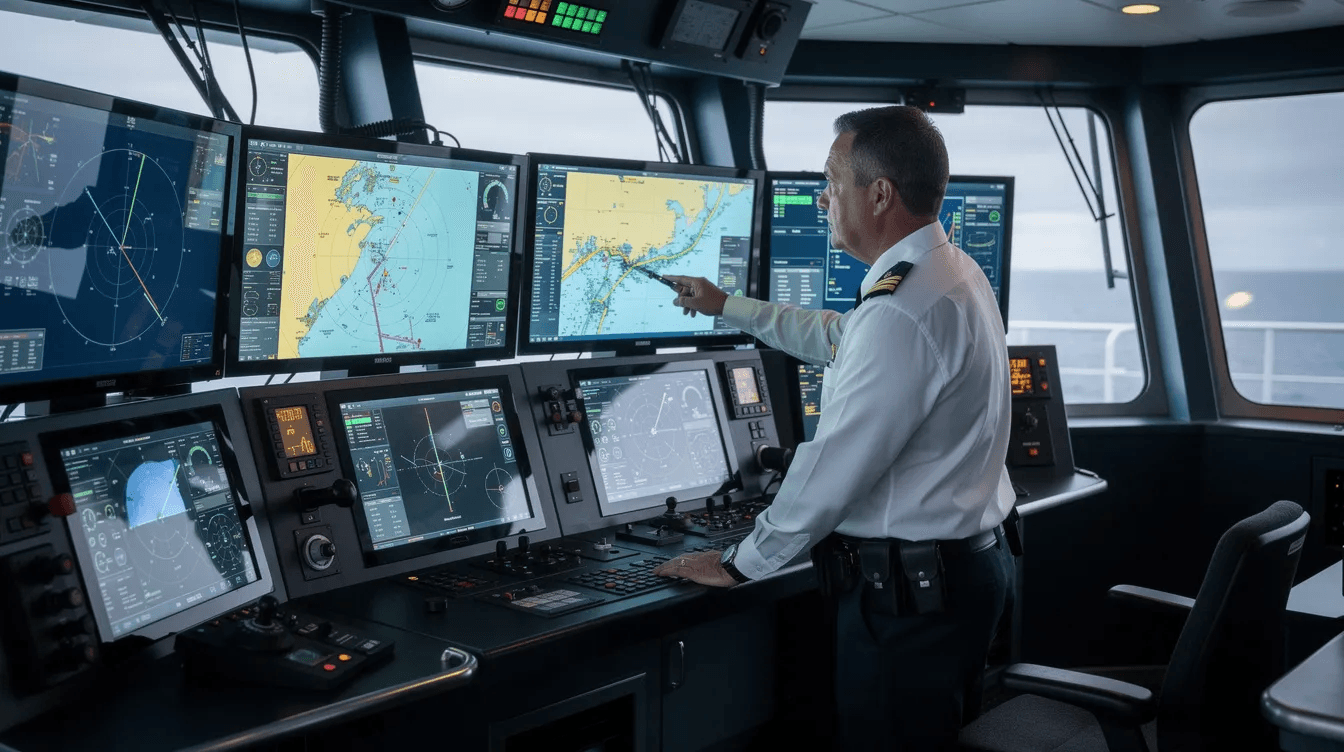
Learn everything about Chief Mate certification, including eligibility, training requirements, STCW courses, DG Shipping regulations, exams, and career opportunities in the maritime industry.
For many deck officers, becoming a Chief Mate is a defining milestone in their maritime career, and many officers pursue it for stronger career progression and higher pay. It marks the transition from operational responsibilities to management-level leadership onboard a vessel. As the second-in-command after the Master, the Chief Mate plays a critical role in ensuring the safe operation of the ship, efficient cargo handling, crew management, and regulatory compliance.
Whether your long-term goal is to become a Master Mariner or strengthen your leadership credentials at sea, obtaining Chief Mate certification is an essential step in that journey.
What Is a Chief Mate?
The Chief Mate, also known as the Chief Officer or First Mate, is the senior-most deck officer onboard a merchant vessel. Reporting directly to the Master, the Chief Mate oversees all deck operations and manages the deck department.
A Chief Mate’s responsibilities extend far beyond navigation, with core duties covering cargo operations, vessel stability, safety management, crew safety, environmental protection, crew supervision, maintenance planning, security procedures, and emergency preparedness; they may also act as vessel security officers and medical officers.
On most commercial vessels, the Chief Mate serves as the operational leader of the ship’s day-to-day activities, often balancing operational needs with budget constraints, and is often being prepared for future command responsibilities. The Chief Mate supports the captain, while the captain retains ultimate responsibility for the ship, cargo, and crew.
Key Responsibilities of a Chief Mate
Cargo Operations and Stability Management
The Chief Mate supervises cargo loading, stowage, securing, discharge operations, ballast management, and ship stability calculations. Proper cargo management is critical to maintaining vessel safety and operational efficiency.
Crew Leadership and Deck Department Management
As head of the deck department, the Chief Mate manages officers and ratings, including able seafarers as experienced deck crew within the deck department, schedules work assignments, monitors rest hours, and ensures compliance with international labour regulations.
Navigation and Watchkeeping
Chief Mates often stand navigation watch and assist in voyage planning, route monitoring, collision avoidance, emergency response procedures, and the duties associated with a navigational watch. For certification, officers are typically expected to complete substantial seagoing service in watchkeeping roles, including 18 months of watchkeeping service where applicable.
Safety and Emergency Preparedness
Safety management forms a major part of the role. Chief Mates oversee fire-fighting equipment maintenance, emergency drills, risk assessments, crew training, and survival craft readiness. This proficiency is demonstrated through practical instruction and drills.
Security and Environmental Compliance
Many Chief Mates also act as Ship Security Officers, ensuring compliance with the International Ship and Port Facility Security (ISPS) Code and environmental regulations such as MARPOL requirements.
Medical and Welfare Responsibilities
On many merchant vessels, the Chief Mate is responsible for medical inventories, first-aid response, and coordinating medical emergencies onboard. ,
Why Pursue Chief Mate Certification?
Chief Mate certification offers several professional advantages:
-
Advancement to management-level responsibilities
-
Increased earning potential and the ability to obtain senior management-level appointments across the merchant navy
-
Enhanced leadership and decision-making skills
-
Eligibility for Master Mariner certification
-
Greater employment opportunities across vessel types and shipping sectors
-
Increased responsibility in vessel operations and safety management
For ambitious maritime professionals, it is one of the most significant career progression opportunities available.
Chief Mate Certificate of Competency Requirements
Certification requirements vary by flag state and maritime administration. However, most pathways are aligned with the International Convention on Standards of Training, Certification and Watchkeeping for Seafarers (STCW) and the STCW Code, with STCW II/2 applying to masters and chief mates on ships over 500 GT where applicable.
Generally, candidates must:
-
Hold a valid Second Mate or Officer of the Watch certification
-
Complete the required sea service as a navigational watchkeeping officer, often around 18 months, and formally verify that time on the water
-
Undertake approved management-level training courses
-
Complete mandatory assessments; some administrations, such as the U.S. Coast Guard, also require qualifying service as an officer in charge of a Navigation Watch, with at least 360 days for Chief Mate
-
Successfully pass competency examinations
-
Meet medical fitness requirements
Age thresholds, physical standards, license tonnage limits, and near-coastal versus unlimited routes depend on the applicable flag-state pathway. For unlimited tonnage routes, part of the required sea service may need to be on larger vessels.
Chief Mate Certification in India (Foreign Going Vessels)
For Indian seafarers, the Directorate General of Shipping (DG Shipping) governs the certification process.
Sea Service Eligibility Requirements
To enroll in the Chief Mate (Foreign Going) certification pathway for a chief mate coc, candidates typically require:
-
A valid Second Mate (FG) Certificate of Competency
-
18 months of approved sea service as a watchkeeping officer on foreign-going vessels (not 18 months sea service + 18 months watchkeeping — it’s 18 months total
-
Valid Continuous Discharge Certificate (CDC)
-
Valid medical fitness certification from a DG Shipping-approved doctor
-
Passport and INDoS registration
Sea service requirements vary by administration. For example, the Indian DG Shipping pathway requires a minimum of 18 months approved sea service as a watchkeeping officer, while the UK MCA requires 18 months of seagoing service as a deck officer while holding an OOW Unlimited certificate.
Candidates should also follow official certification guidance and application guidance from the relevant administration, including submission timelines where applicable. For the UK CoC, the MCA aims to issue a Notice of Eligibility within 28 days and process CoC applications within 14 days after receiving all required documents.
Chief Mate (FG) Phase I Competency Course
The Chief Mate (FG) Phase I Competency Course is a DG Shipping-approved programme designed to prepare candidates for management-level responsibilities.
The course generally spans approximately three months and covers:
Navigation
-
Advanced navigation
-
Celestial navigation
-
Passage planning
-
Bridge management
Cargo Handling and Stowage
-
Cargo planning and securing
-
Stability calculations
-
Tanker cargo operations
-
Hazard management
Meteorology
-
Weather systems and forecasting
-
Oceanographic conditions
-
Voyage weather routing
Ship Operations and Management
-
Maritime legislation
-
Safety management systems
-
Pollution prevention
-
Emergency response procedures
Tanker Safety Awareness
-
Hazard identification
-
Safety Data Sheets (SDS)
-
Gas measurement equipment
-
Fire prevention and firefighting procedures
Mandatory STCW Code Management-Level Training
Chief Mate candidates are also required to complete management-level STCW training, with mandatory training forming part of maritime education for management-level progression, that may include:
-
Advanced Ship Handling
-
Advanced Stability
-
Advanced Meteorology
-
Leadership and Managerial Skills
-
Search and Rescue
-
Medical Care or Medical Person in Charge
-
Advanced Fire Fighting
-
Basic Safety Training Refresher
-
Electronic Chart Display and Information Systems (ECDIS)
Certain STCW courses, as applicable, must be refreshed every five years.
Additional certifications such as Radar, ARPA, and GMDSS may further enhance employability.
Assessments and Examinations
Candidates must complete approved practical assessments, documented where required in a training record book, demonstrating competence in management-level functions; the exact total varies by administration, though some pathways require 94 assessments for Chief Mate certification, including:
-
Navigation
-
Cargo operations
-
Shipboard management
-
Emergency response
-
Safety leadership
-
Resource management
Following successful completion of training and assessments, candidates must pass competency examinations conducted by the maritime administration.
Typical examination subjects include:
-
Terrestrial and Celestial Navigation
-
Meteorology
-
Cargo Handling and Stowage
-
Naval Architecture
-
Maritime Legislation
The exact exam structure also varies by administration, but some pathways require a 9-module exam, and in some cases the process also includes an oral examination.
Career Opportunities After Chief Mate Certification
Once certified, Chief Mates can serve on a wide range of vessels, including:
-
Container Ships
-
Bulk Carriers
-
Oil Tankers
-
Chemical Tankers
-
LNG and LPG Carriers
-
Offshore Support Vessels
-
Passenger Ships
-
Cruise Vessels
The certification also serves as the primary stepping stone toward obtaining a Master Mariner Certificate of Competency.
Essential Skills for a Successful Chief Mate
Technical expertise alone is not enough. Successful Chief Mates combine operational competence with strong leadership abilities.
Key skills include:
-
Leadership and team management
-
Communication and interpersonal skills
-
Decision-making under pressure
-
Risk assessment and safety management
-
Cargo planning and vessel stability expertise
-
Regulatory compliance knowledge
-
Crisis and emergency management
These competencies help ensure safe, efficient, and compliant vessel operations.
Final Thoughts
Chief Mate certification represents more than a promotion—it is a transition into maritime leadership. The role demands technical knowledge, operational expertise, sound judgement, and the ability to lead diverse crews in challenging environments.
For seafarers aspiring to command vessels in the future, becoming a Chief Mate is one of the most important and rewarding milestones in a maritime career. By meeting sea service requirements, completing approved training, and demonstrating management-level competence, officers can position themselves for long-term success in the global shipping industry.
At Nautilus Shipping, we recognise the vital contribution of Chief Mates in maintaining safety, operational excellence, and leadership at sea. As the maritime industry continues to evolve, highly trained and certified officers remain essential to the future of global trade.