

Staying fit on a vessel is one of the most overlooked aspects of maritime life. Between demanding nature of watchkeeping, space limitations, and irregular schedules, seafarers face unique obstacles to maintaining fitness. This guide covers practical strategies that work within the realities of life at sea.
Key Takeaways
-
Physical fitness is essential for seafarers’ overall health and well being, directly supporting safety, job performance, and mental wellbeing on board.
-
Twenty-five to thirty minutes of exercise daily-combining cardio exercises, strength, and mobility-is realistic even on a small ship.
-
Staying fit helps seafarers pass mandatory medical certificate exams and remain fit for sea service across extended periods and long contracts.
-
Maintaining fitness on a vessel requires creativity and consistency rather than a perfect gym.
-
Nautilus Shipping integrates crew welfare and fitness support into its ship and crew management practices.
Why Staying Fit on a Vessel Matters
Modern vessels combine heavy physical demands-handling heavy equipment, mooring lines, confined-space entry-with long periods of sedentary watches. This combination makes incorporating regular exercise essential for both physical health and mental health.
-
Better physical fitness improves balance in rough seas, safer handling of equipment, and faster emergency response during situations like man-overboard or engine-room fires.
-
Regular exercise enhances mental well being and job performance: lower stress, better sleep quality, and improved mental focus during night watches.
-
Regular exercise boosts mental resilience for seafarers facing family separation and isolation, helping them stay mentally fit throughout a contract.
-
Flag states require periodic medical certificate renewals, and good cardiovascular health improves the chance of passing without restrictions.
-
As a ship management company, Nautilus Shipping treats seafarer fitness as part of overall health, vessel performance, and risk management.
Understanding Fitness Requirements and Medical Certificates
Seafarers must hold valid medical certificates to serve at sea. The pre-employment medical examination (PEME) typically assesses blood pressure, cardiovascular risk, vision, and Body Mass Index (BMI), which is crucial for seafarers’ health assessments.
-
Standards under MLC 2006 and STCW-aligned requirements expect seafarers to remain fit for the full voyage duration.
-
A high BMI can restrict seafarers from service, and a high BMI increases the risk of chronic conditions including cardiovascular disease and uncontrolled hypertension.
-
A consistent fitness routine between and during contracts reduces the risk of surprise medical issues during renewal examinations.
-
Officers and ratings should keep basic health records-weight, BMI trend, blood pressure-throughout each contract to monitor overall health.
Challenges of Maintaining Fitness at Sea
The shipboard environment poses real barriers to keeping fit. Recognizing them helps crew members design realistic routines.
-
Limited space on ships complicates fitness routines-many vessels offer only a small room with a treadmill, basic weights, or no dedicated gym at all.
-
Irregular schedules, night watches, and port calls disrupt normal exercise and sleep patterns for long periods.
-
Extreme weather can make outdoor exercise dangerous and safety should be prioritized; rough seas in the North Atlantic or Bay of Biscay make certain movement unsafe.
-
Mixed-nationality crews may have different attitudes to physical activity, making team sports or group workouts harder to initiate.
-
Mental fatigue and stress during heavy cargo operations reduce motivation, which is why short consistent daily workouts are usually more sustainable than sporadic intense sessions.
Designing a Practical Fitness Routine On Board
Seafarers need 25-30 minutes of exercise regularly to maintain body composition and endurance across a 4–6 month contract. Structure your daily routine around three pillars: cardio, strength, and mobility.
-
Sample weekly plan: 3 days cardio-focused, 2 days strength-focused, 1 day mixed circuit training, 1 rest or active recovery day.
-
Adapt to shift patterns: early-morning sessions for dayworkers, split 15+15 minute sessions for watchkeepers on 6-on/6-off rotations.
-
Twenty-five to thirty minutes of exercise improves heart health and helps maintain muscles, stamina, and endurance over the contract.
-
Senior officers-Master, Chief Engineer-should set the tone by visibly following their own fitness routine on a regular basis.
Cardio Training in Limited Space
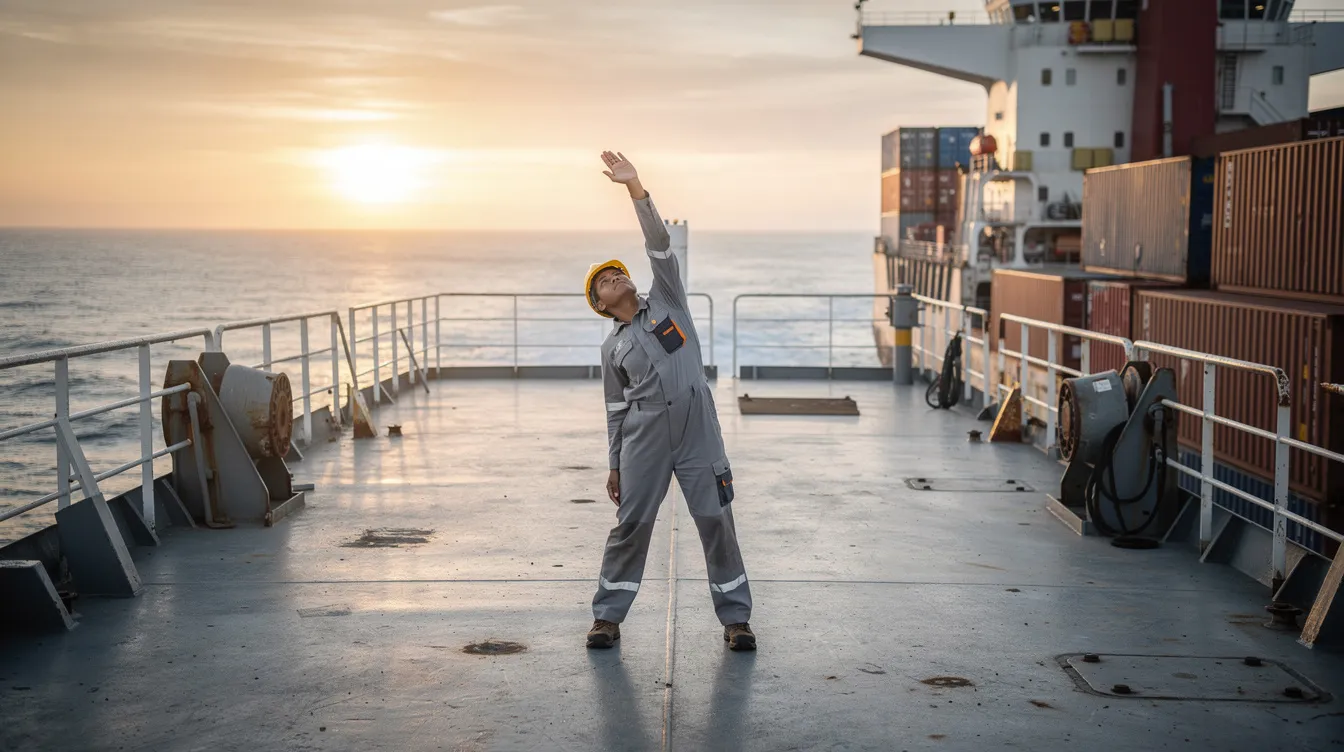
Using vessel architecture can help create effective cardio workouts even without a gym. Stair climbs between accommodation decks, brisk walking on the main deck, and timed step-ups all build cardiovascular endurance.
-
Utilizing onboard gyms can help maintain fitness while at sea-use a treadmill, stationary bike, or rowing machine for 20–40 minute sessions.
-
High intensity interval training workouts can be performed in limited ship space: jumping jacks, high knees, mountain climbers, or shadow boxing in a cabin or recreation room.
-
Swimming is recommended 2-3 times per week on ships with pools, as swimming 2-3 times a week maximizes physical benefits for the whole body.
-
On rough-sea days, adapt to seated options like a stationary bike or chair-based marching to reduce risk of injury.
Strength and Mobility Workouts Without a Full Gym
You don’t need much space or equipment to maintain strength. Bodyweight exercises require no equipment and can be performed in small spaces, making them ideal for maritime work.
-
Full-body circuits: squats, lunges, push ups (wall, knee, or full), planks, and glute bridges target major muscles and build endurance.
-
Calisthenics are effective for small spaces and require no equipment-a creative use of cabin or mess room floor space is all you need.
-
Resistance bands are effective for strength training and are space-saving, perfect for rows, banded squats, and shoulder presses using available resources.
-
Core stability work-planks, side planks, dead bugs-supports balance and reduces injury risk during heavy lifting or rolling conditions.
-
Prioritize stretching and yoga: 5–10 minutes of shoulder, hip, hamstring, and back stretches at the end of each shift counters the effects of long standing or sitting.
-
Take short movement breaks during watch duties-standing stretches or shoulder rolls every 45–60 minutes benefit both physical and mental well being.
Nutrition, Hydration, and Rest on Board
Exercise alone won’t keep you physically fit. A balanced diet and proper recovery are equally beneficial.
-
Ship food can be calorie-dense; focus on portion control and healthy choices-prioritize vegetables, lean proteins, and whole grains over deep-fried items.
-
Practical swaps: water instead of soda, fruit instead of biscuits during watches, smaller dessert portions.
-
Hydration is crucial especially in high-temperature environments to maintain performance-aim for 1.5–2 litres daily, more when sweating heavily on tankers or bulk carriers in the Arabian Gulf.
-
Schedule at least one rest day per week to allow muscle recovery and reduce stress on the body.
-
Good sleep hygiene-dark cabin, earplugs, limiting caffeine-improves training effectiveness and supports the immune system.
Team Activities, Motivation, and Crew Culture
Turning individual workouts into shared activities transforms crew culture. Team sports improve morale and reduce isolation at sea, which is especially important on long ocean crossings.
-
Propose informal group sessions: deck walks after dinner, stretching in the recreation room, or circuit training led by a fellow crew member.
-
Simple fitness challenges-step-count targets, push-up contests, “walk the distance” competitions on a mess room whiteboard-keep other crew members engaged.
-
Engaging in team sports reduces feelings of isolation at sea, while team sports improve camaraderie among crew members and enhance overall morale among seafarers.
-
Playing team sports boosts mental well-being for seafarers, making them a crucial part of any wellness program.
-
Masters and senior officers should support reasonable recreation time for exercise, balancing operational demands with seafarer welfare.
How Nautilus Shipping Supports Seafarer Fitness and Well Being
At Nautilus Shipping, crew welfare is woven into every aspect of ship and crew management.
-
Our crew management processes include verifying valid medical certificates and encouraging preventative health measures between contracts, helping seafarers see a doctor before issues escalate.
-
Vessel inspections and technical management review onboard welfare facilities, including gym rooms, safe open-deck areas, and recreation spaces.
-
Fleet efficiency and safety KPIs are linked to well-rested, fit crews who handle emergencies, complex cargo, and navigation operations more effectively.
-
We maintain a commitment to regulatory compliance with MLC 2006 seafarer welfare requirements and continuous improvement of seafarer support programs.
If you’re considering a career switch to the maritime industry, Nautilus Shipping has current openings. Check our careers page here: https://www.nautilusshipping.com/careers
FAQ: Staying Fit on a Vessel
-
How many days per week should a seafarer exercise while on board?
Aim for at least 5 days per week of purposeful physical activity, with sessions of 25–30 minutes each. Allow 1–2 lighter recovery days, adjusting to your workload and fatigue levels. Regular exercise on this schedule delivers measurable improvements in stamina, cardiovascular fitness, and mental focus.
-
What can I do if my vessel has no gym or fitness equipment?
An effective routine can be built entirely from bodyweight movements—squats, push-ups, planks, lunges, step-ups—plus walking on deck and stair climbs.
-
Does being fit really affect my chances of passing a medical certificate exam?
Yes. Maintaining a healthy weight, blood pressure, and cardiovascular fitness significantly lowers the risk of restrictions or failure during mandatory seafarer medical examinations. A high Body Mass Index can restrict seafarers’ service, so regular exercise and a balanced diet directly protect your career.
-
How can I stay motivated to work out during long voyages?
Set small, time-bound goals each month of your contract—for example, a target number of push-ups or a walking distance. Track progress in a notebook, train with at least one fellow crew member, and vary your workouts weekly. Regular exercise reduces stress and builds the mental resilience needed during extended periods away from home.
-
Is high-intensity training safe on a moving vessel?
HIIT workouts can be performed in limited onboard space when conditions are stable, with calm weather, secure footing, and a suitable area. When the ship is rolling or pitching, switch to lower-impact, controlled movements. Always warm up properly and prioritize safety over intensity.