
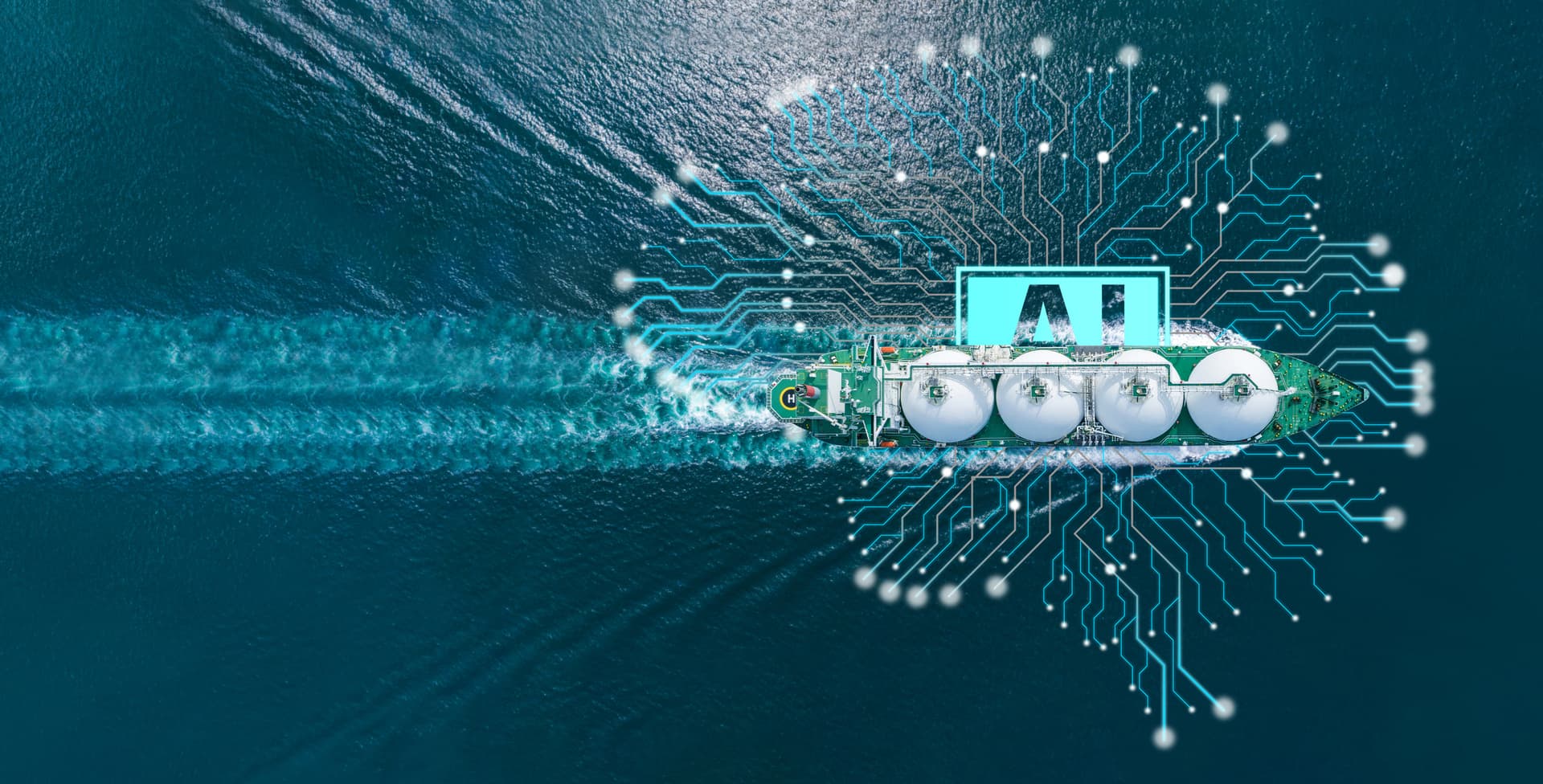
Every day, hundreds of gas carriers cross open sea loaded with liquefied natural gas or liquefied petroleum gas cooled to temperatures that would shatter ordinary steel on contact. LNG shipping operations require the cargo to be maintained between −160 °C and −162 °C, while LPG cargoes such as propane are carried at roughly −42 °C. Reducing natural gas and petroleum gas to liquid form cuts their volume dramatically, making long-distance transportation by ship commercially viable.
LNG tankers and LPG tankers are both classified as gas carriers, yet their cargo tanks, cargo containment, pressure and temperature regimes, and cargo systems differ in fundamental ways. An LNG ship operates at near-atmospheric pressure with cryogenic insulation, while a pressurised LPG gas tanker may hold cargo at ambient temperature under several bars of pressure. These differences cascade into every aspect of cargo operations, crew training, and technical management.
The global LNG and LPG trade continues to expand through 2024–2026, driven by new export projects, dual-fuel propulsion adoption, and tightening IMO and IGC code requirements. Liquefaction plants process natural gas to remove impurities before LNG transport, feeding a supply chain that now counts roughly 740 LNG carriers in service with approximately 180 on order.
Nautilus Shipping operates as a B2B ship manager supporting owners of LNG, LPG, ethylene, and multi-gas carriers with end-to-end operational oversight, from crewing and maintenance planning to regulatory compliance and voyage optimisation.
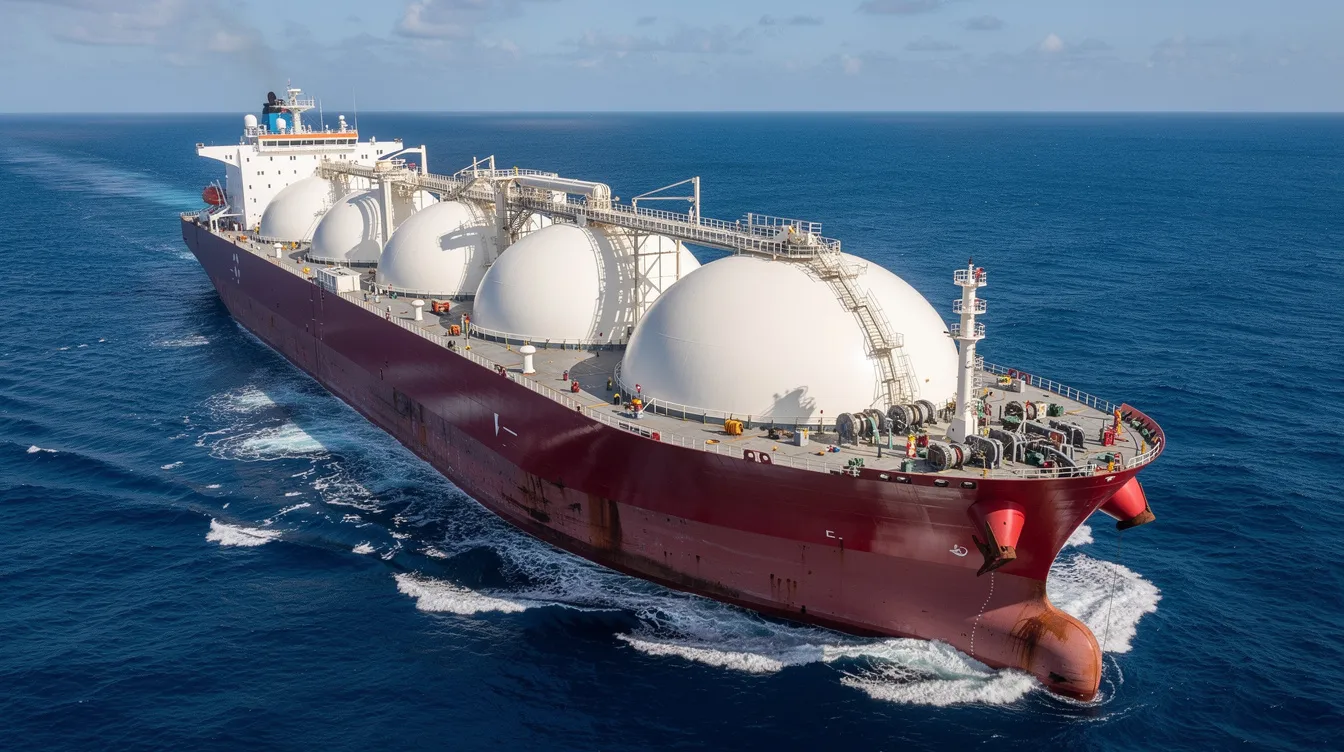
Types of LNG & LPG Gas Carriers
Gas carriers span a wide range of sizes, containment designs, and temperature capabilities. Understanding these distinctions matters because each vessel type demands specific operational procedures, crew competencies, and maintenance programmes.
LNG carriers typically range from 125,000 to 135,000 m³ in capacity for conventional tonnage, using membrane or Moss-type cargo tanks designed for cargo at roughly −163 °C and low pressure. Larger variants include Q-Flex vessels at around 210,000–217,000 m³ and Q-Max at approximately 266,000 m³, purpose-built for Qatar’s export routes.
LPG carriers fall into several classes:
-
Fully pressurised LPG carriers have capacities between 20,000 m³ and 90,000 m³, carrying cargo at ambient temperature in cylindrical or spherical Type C tanks at pressures around 8–8.5 bar.
-
Semi-pressurised carriers operate at 8.5 kg/cm² and −10 °C, handling products like propylene or vinyl chloride monomer.
-
Fully refrigerated VLGCs are LPG carriers with capacities between 50,000 and 80,000 m³, operating at near-atmospheric pressure for intercontinental propane and butane transport.
Ethylene and multi-gas carriers feature stainless steel cargo tanks rated to −104 °C, adding operational complexity compared to standard LPG tankers because they must handle a wider range of chemical cargoes and temperature regimes.
CNG carriers occupy a niche role. CNG carriers operate at pressures over 250 bar (2,900 psi), using high-pressure cargo tanks that contrast sharply with the low-pressure containment used on LNG carriers.
Type C tanks are used for LPG and small-scale LNG carriers, while Type B tanks are used for LNG and allow reduced secondary barriers. Nautilus Shipping supports mixed fleets across all these categories with unified ship management and operational standards.
Cargo Containment and Cargo Tanks on LNG & LPG Vessels
The cargo containment system is the single most critical engineering feature on any gas carrier. Its purpose is straightforward: keep the liquefied gas safely inside the tanks while protecting the ship’s hull from extreme cold. LNG must never contact the ship’s steel hull to prevent brittle fracture, a catastrophic structural failure that can occur when cryogenic liquid meets carbon steel.
Independent tank types for LPG include Type A (prismatic, gravity tanks at low pressure), Type B (spherical or prismatic with reduced secondary barrier requirements), and Type C (pressure vessels, cylindrical or bi-lobe). Insulation arrangements vary from polyurethane foam to perlite-filled annular spaces.
Membrane containment systems used on LNG carriers, such as GTT No.96, Mark III, and CS1, rely on a thin primary metallic membrane backed by insulation, a secondary barrier, and further insulation against the hull. The interbarrier space between primary and secondary membranes is pressurised with nitrogen and continuously monitored for leakage.
Moss spherical cargo tanks (IMO Type B) sit above the deck on equatorial skirt supports that allow thermal expansion. Foam insulation surrounds each sphere, with a nitrogen-filled annular space providing leak detection and insulation integrity monitoring.
Key containment safety elements include:
-
Cargo tanks are fitted with two pressure/vacuum relief valves each, with cargo tank relief valves fitted at the liquid domes of each tank.
-
Cargo containment systems must monitor temperature, volume, and pressure continuously.
-
Nitrogen purging lines enable inerting of insulation space and interbarrier space zones.
-
Cargo piping is typically made of welded stainless steel to reduce leakage risk.
-
Cargo containment systems must comply with the IGC Code provisions.
Design choices between membrane, Moss, and Type C containment directly affect operational practices: sloshing limits, heel volume requirements, cool-down rates, and boil-off rates all vary by system. Digital condition monitoring, including remote level and temperature trending, boil-off prediction, and leak detection, is increasingly standard and forms part of Nautilus Shipping’s technical management approach.
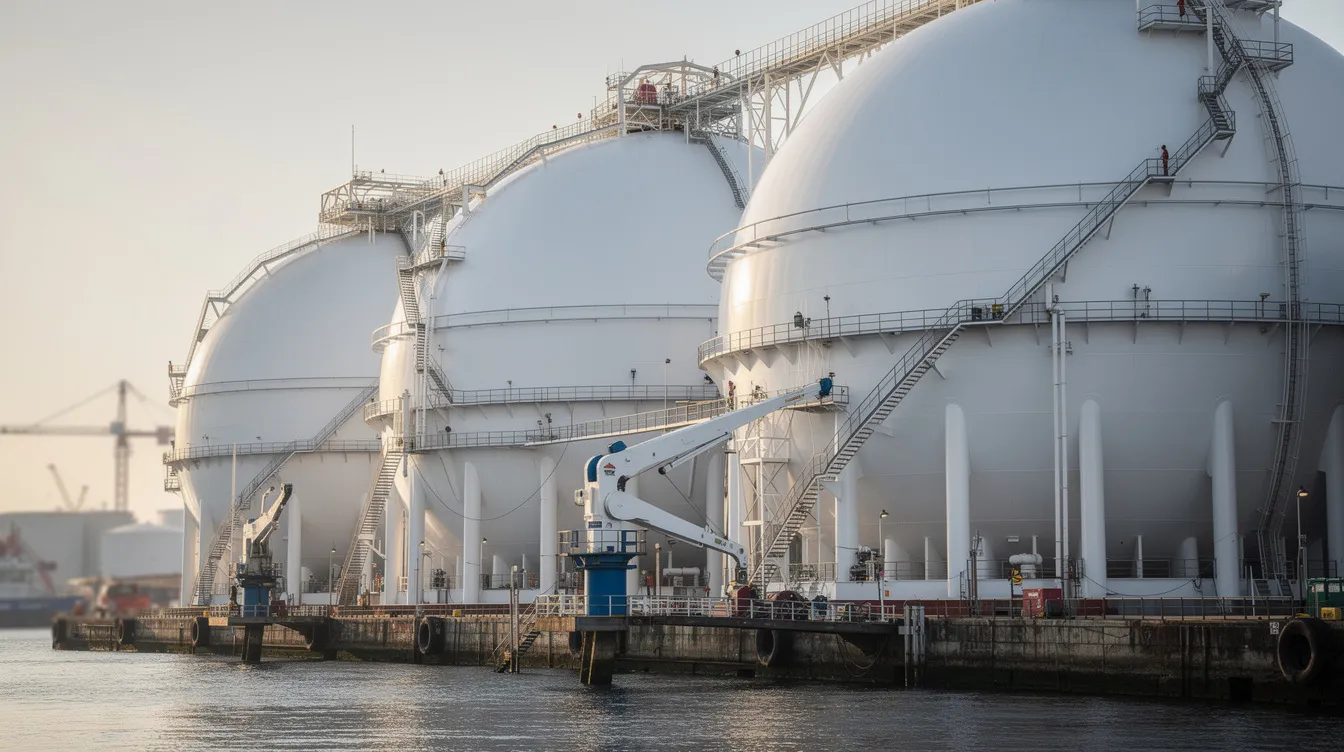
Cargo Systems and Cargo Pumps
On a membrane LNG carrier, the cargo system layout connects each cargo tank’s liquid dome to a common pipeline running to the cargo manifolds on deck. A separate vapor main links all cargo tank vapor domes. Auxiliary lines include spray lines for cool-down and sub-cooling, stripping lines for residual liquid removal, and crossovers between tanks for cargo redistribution.
Main cargo pumps on large LNG carriers are submerged electric units with typical capacities of 1,500–2,500 m³/h per pump. Smaller spray and stripping pumps handle residual draining and feed the spray line during cool-down. On LPG carriers, Framo-type or submerged centrifugal refrigerated cargo pumps are common.
Vapor handling involves connecting vapor domes to a vapor main for ship-shore vapor return during cargo loading. During discharge, compressors manage tank pressure while vapor crossover lines supply displaced gas back to shore. Emergency Shut Down System valves close during emergencies, cutting cargo flow within seconds.
Pressure relief valves, vent masts, and emergency venting arrangements, including one tank operation configurations with dedicated emergency vent lines, provide backup protection. Instrumentation includes cargo system control consoles, remote-operated valves, and ESD logic integrated between the ship and the terminal. Crew continuously monitor tank pressure, liquid level, and temperature from the cargo control room.
Nautilus Shipping’s technical management ensures cargo systems remain compliant through pressure testing of pipelines, calibration of relief valves, and periodic overhauls of cargo pumps and compressors under a planned maintenance system.
Typical LNG Cargo Cycle and Cargo Operations
A typical LNG voyage follows a tightly scripted sequence. Here is how normal operation unfolds from a gas-free condition to post-discharge:
-
Gas-free condition: Cargo tanks are open to air for maintenance or inspection. Before loading, tanker tanks are purged with nitrogen gas to remove oxygen, bringing the oxygen level below approximately 4%.
-
Gassing-up: LNG vapor is introduced via the spray line and main vaporiser to displace inert gas through vent masts or shore return, transitioning the atmosphere from inert to hydrocarbon.
-
Cool-down: Cold LNG is sprayed via spray lines to gradually reduce cargo tank steel and insulation temperature toward operating range. Temperature gradients are closely monitored to avoid thermal shock.
-
Bulk cargo loading: Shore flow ramps up, filling the tanks while crews manage levels, pressures, and routine checks on cargo system valves and instrumentation. The high duty phase of loading demands constant attention to flow rates and cargo manifolds alignment.
-
At-sea passage: Boil off gas, typically 0.10–0.15% of cargo volume per day, is managed via reliquefaction plant or burned as fuel in dual-fuel engines and boilers, keeping tank pressure within design values.
-
Discharge: Cargo pumps start, vaporisers or vapor crossover supply gas to shore, and compressors control tank pressure. Vent masts serve as backup only.
-
Post-discharge: Warm-up, inerting, and dry air production dry the tanks and pipeline system for the next cargo or dry-docking. Tankers take on seawater into ballast tanks after unloading to maintain stability.
Nautilus Shipping standardises checklists across its managed fleet to ensure each phase is executed consistently regardless of vessel or trade route.
Boil-Off Gas (BOG) and Pressure Management
When liquid LNG sits in storage at −163 °C, ambient heat gradually penetrates the insulation and causes a fraction of the cargo to vaporise. This boil-off gas increases tank pressure over time and must be actively managed on every voyage.
-
Boil off rate: Modern membrane LNG carriers experience roughly 0.10–0.15% cargo loss per day. Over a 20-day voyage, cumulative unmanaged losses could reach 2–6% of cargo.
-
BOG as fuel: Dual-fuel engines and boilers burn boil-off gas directly, reducing fuel oil consumption and supporting CII compliance. Modes range from minimum boil off (more fuel oil) to 100% gas fuel with forced vaporisation.
-
Reliquefaction: Onboard plants can recover 95–99% of BOG as liquid. The Kool Glacier (162,000 m³) was recently retrofitted with a sub-cooler reliquefaction system processing 2.1 tonnes per hour, and the gas condenses back into the tanks.
-
LPG vapor handling: LPG ships generate vapor at warmer temperatures and higher pressures. Cargo condensers and reliquefaction plants handle this vapor; the cargo is re-liquefied and returned to the tanks rather than being burned as fuel.
-
Regulatory context: The IMO sulphur cap, EEXI, and CII frameworks favour burning BOG as low-sulphur fuel, while the industry works to reduce methane slip from gas-fuelled propulsion.
Digital tools under Nautilus Shipping’s fleet efficiency programmes enable speed optimisation, weather routing, and tank pressure forecasting to minimise BOG losses and improve cooling efficiency.
Inert Gas, Nitrogen and Dry Air Production
Tankers maintain an inert atmosphere in cargo tanks to eliminate the risk of combustion. The inert gas system supplies inert gas to cargo tanks to prevent combustion, and inert gas systems prevent combustion in cargo tanks by keeping oxygen content well below flammable thresholds.
Main components of an LNG carrier’s inert gas plant include an inert gas generator, scrubber, blower, refrigeration and desiccant dryers, oxygen analyser, dew point monitor, and discharge lines to the cargo system.
Nitrogen production uses membrane-type generators or PSA units with buffer tanks and regulating valves. Nitrogen pressurises interbarrier space and insulation space on membrane LNG tankers, providing both inerting and leak detection capability.
Targets: Oxygen level is maintained below 1–5% depending on the application. High-purity inerting targets under 1% O₂. Dew point targets of −55 to −65 °C prevent ice formation in cargo lines, an essential requirement during cooling operations.
Dry air production mode dries cargo tanks and piping after inspections or dry-docking, preparing them for safe inerting and subsequent cool-down. Routine monitoring includes checks of O₂ analysers, periodic calibration, draining condensate from vent lines, and verifying alarm and trend data.
Nautilus Shipping’s technical procedures cover inert gas system testing schedules and crew training so that chief officers and one engineer on watch operate these systems consistently across every managed vessel.
Safety, Hazards and Risk Controls on LNG & LPG Tankers
Modern LNG and LPG tankers maintain strong safety records. No large gas carrier over 5,000 m³ has been totally lost due to containment failure since the 1980s. However, the hazards are real and demand systematic controls.
Physical hazards: Extreme cold (−163 °C for LNG, down to −48 °C for certain LPG cargoes) creates frostbite risk from liquid and cold vapor. Most cargo vapors are highly flammable, with potential for pool fires, jet fires, and vapor cloud explosions.
Asphyxiation: Oxygen displacement in enclosed spaces around cargo tanks, compressor rooms, and ballast tanks requires gas detection equipment and strict entry procedures.
Chemical health risks: Cargoes such as anhydrous ammonia or vinyl chloride demand full PPE, SCBA, and decontamination procedures.
Design protections include:
-
Double hulls and segregated ballast tanks
-
Robust cargo containment with excess flow valves
-
ESD systems integrated with terminal safety devices
-
Fire detection and fixed extinguishing systems in cargo and machinery spaces
Regulatory framework: The IMO established three regulatory frameworks for gas carriers. Gas carriers built after July 1, 1986 follow the IGC Code. The GC Code governs gas carriers built between July 1, 1976 and June 30, 1986. Existing ships built before July 1, 1976 follow the Existing Ship Code. Cargo tank relief valves are required by the IGC Code, and recent amendments at MSC 109 address ESD systems, ammonia as fuel, and filling limits.
Operational controls include cargo tank atmosphere testing, hot work permits, toolbox talks, cargo transfer checklists, and joint ship-shore safety checklists. Nautilus Shipping embeds this safety culture through fleet audits, near-miss reporting, and continuous improvement in procedures aligned with the ISM Code.
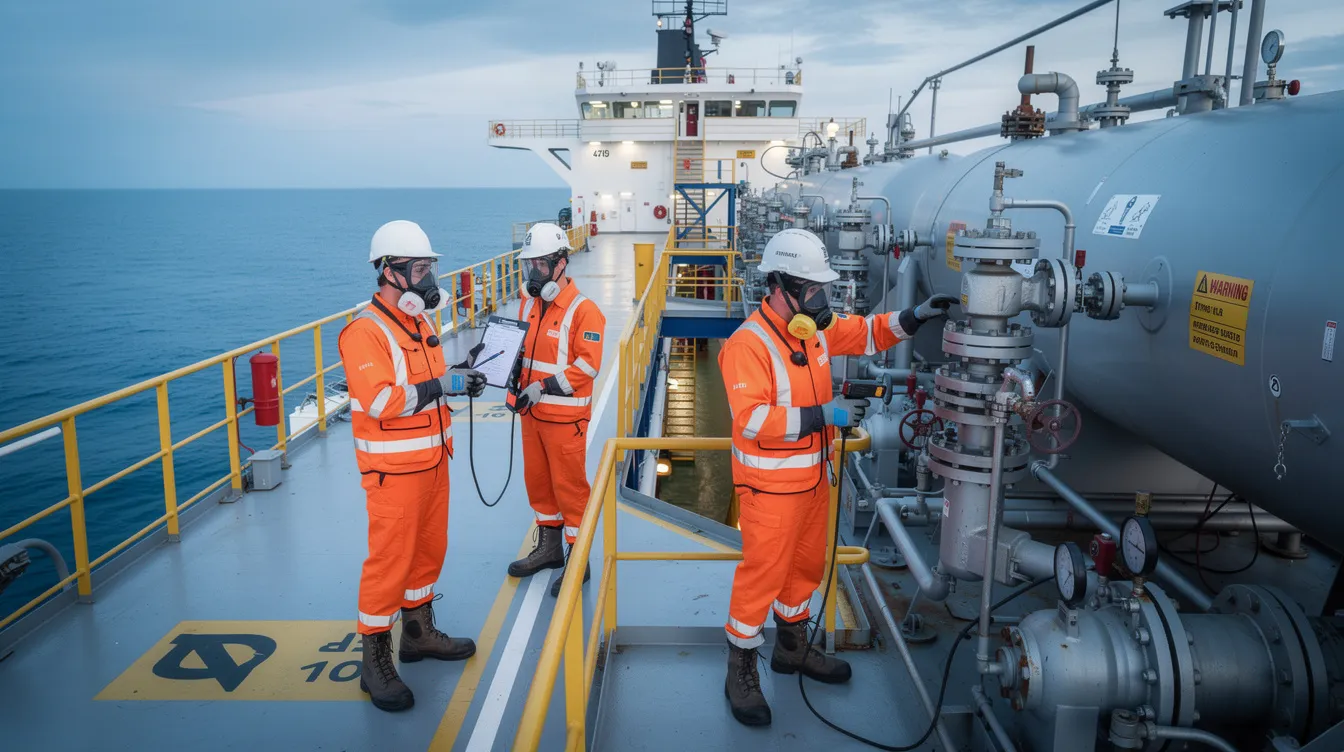
Crew Roles, Competence and Nautilus Shipping’s Crew Management
People make or break gas tanker safety. Every LNG shipment depends on coordinated action across deck and engine room teams.
Key positions and responsibilities:
| Role | Primary Responsibilities |
|---|---|
| Captain | Oversees the entire operation of the LNG tanker, approves cargo plans |
| Chief Officer | Manages the deck crew and cargo operations, stability, and tank planning |
| Second Officer | Responsible for navigation and watchkeeping duties |
| Chief Engineer | Oversees engine room operations and maintenance, reliquefaction, and propulsion |
| ETO | Cargo system electronics, automation, alarm management |
| Ordinary Seamen | Assist with everyday tasks on the LNG tanker, including mooring and deck maintenance |
LNG operational procedures demand a higher certification standard than LPG. Officers need STCW basic and advanced training for liquefied gas tankers, plus documented cargo operations time and familiarity with specific cargo containment systems. Simulator-based courses cover emergency shutdowns, spill response, and inerting procedures.
Nautilus Shipping’s crew management services focus on recruiting gas-experienced officers and ratings, maintaining competence matrices aligned with STCW and industry best practice, and running continuous training programmes. Rotation patterns are designed for the demanding nature of gas tanker operations, with attention to seafarer welfare and retention of experienced crew.
Technical Management of LNG & LPG Tankers by Nautilus Shipping
Nautilus Shipping’s ship management services provide owners of LNG, LPG, and multi-gas carriers with structured technical oversight covering every aspect of vessel performance.
Core offerings include maintenance planning for cargo systems, dry-docking support, spare parts procurement, and OEM liaison for cargo pumps, compressors, and reliquefaction plants. Regulatory compliance spans IGC Code surveys, class inspections, flag-state requirements, and vetting inspections such as SIRE 2.0.
On the performance side, Nautilus monitors boil-off rates, fuel consumption, and cargo heel optimisation, implementing technical upgrades such as improved insulation or reliquefaction efficiency to reduce losses and support greenhouse gas reduction targets. Integration with commercial ship services aligns voyage planning, port call sequencing, and cargo loading and discharge windows with charter-party obligations.
Owners and operators seeking a management partner for their gas carrier fleet are invited to contact Nautilus Shipping for a confidential discussion.
Working on LNG/LPG Tankers: Risk Perception vs. Reality
A common misconception is that gas tankers are floating bombs. The reality is different. Tankers maintain an inert atmosphere in cargo tanks at all times during loaded passages, eliminating the oxygen needed for combustion. Double-membrane designs, controlled tank pressure regimes, and redundant safety devices mean that spontaneous explosions are essentially prevented by design.
Compared to bulk carriers or oil tankers, gas carriers enforce stricter PPE rules, more frequent drills, and more detailed cargo operations checklists. Everyday controls include continuous gas detection throughout the deck and engine room, restricted access to the cargo area during transfers, and lockout/tagout practices for cargo pumps and compressors.
Risk exists on any vessel at sea, but on well-managed gas tankers, it is controlled systematically through training, engineering design, and management systems like those Nautilus Shipping applies across its fleet.
How Nautilus Shipping Supports Gas Carrier Owners
-
Integrated management: A single framework covers cargo containment integrity, cargo operations procedures, crew competence, and regulatory compliance for the entire gas carrier fleet.
-
Newbuild and existing vessels: Support for IGC Code 2024–2026 updates, digital monitoring retrofits, and efficiency upgrades for older LNG and LPG carriers, including equipment sourced for hydrogen-ready systems where applicable.
-
Trackable KPIs: Off-hire reduction, incident rates, fuel and BOG performance, and port-state/terminal inspection outcomes serve as key metrics.
-
Crew pipeline: Dedicated recruitment and training for gas-experienced seafarers, ensuring capacity and continuity as fleets grow.
Ready to discuss your gas tanker operations? Contact Nautilus Shipping for a confidential operational review.
FAQs
1. How is working on an LNG or LPG tanker different from working on an oil tanker?
Gas tankers use cryogenic or high-pressure cargo tanks rather than conventional coated oil tanks. They require more complex cargo systems including reliquefaction, vaporisers, inert gas, and nitrogen systems. Crews follow additional training and certification for handling liquefied gas under the IGC Code, and cargo operations are more tightly scripted with ship-shore checklists.
2. What qualifications do officers need to work on LNG and LPG tankers?
Officers require STCW basic and advanced training for liquefied gas tankers, plus company and flag-state requirements for documented experience in cargo operations and familiarity with specific cargo containment systems.
3. How is cargo tank integrity monitored during a voyage?
Crews monitor tank pressure, temperature, and liquid levels continuously from the cargo control room, with alarms set for deviations. Interbarrier and insulation spaces on membrane LNG carriers are pressurised with nitrogen and monitored via pressure gauges and gas detection lines to identify any leakage early. Periodic rounds on deck, inspection of vent masts and manifolds, and reporting to shore management via condition monitoring systems complete the surveillance picture.
4. Can LNG and LPG tankers switch between different cargoes easily?
Switching is possible but requires careful planning: warming up, gas freeing, inerting, drying, and compatibility checks between previous and next cargo. LNG carriers usually remain on LNG service due to the specific design of their containment and BOG systems, while LPG and ethylene carriers may switch among LPG grades, ammonia, and petrochemical gases, subject to detailed changeover procedures.
5. How can a shipowner know if their LNG or LPG tanker operations are optimised?
Key indicators include low boil-off losses, minimal cargo handling delays, positive terminal and charterer feedback, strong PSC and vetting performance, and low incident rates. Performance analysis tools can compare BOG consumption, cargo heel, and voyage results against design expectations and peer vessels. Owners can contact Nautilus Shipping to request an operational review or benchmarking study of their gas carrier fleet.