
Image Source by National Museums Liverpool
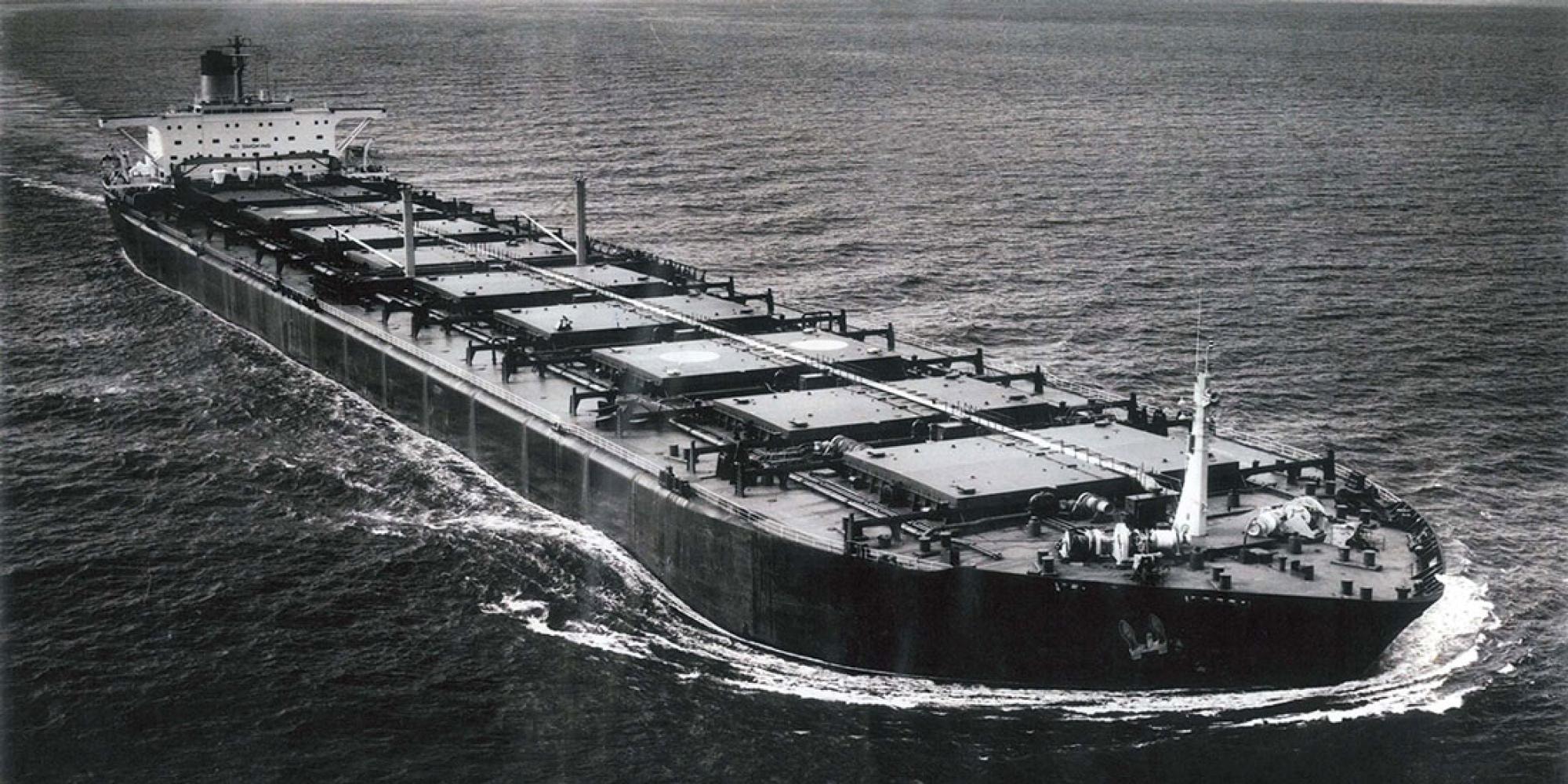
On 9th September 1980, Typhoon Orchid hit the south of Japan. This massive tropical storm caused a lot of devastation, including the loss of the M.V.Derbyshire, an OBO (Oil Bulk-Ore) combination carrier, which was on its final voyage from Sept-Îles, Quebec, Canada, to Kawasaki, Japan, carrying a cargo of 157,446 tonnes of iron ore.
Despite following weather routing advice, the Derbyshire was overwhelmed by the tropical storm and never issued a mayday distress message. All 42 crew members and 2 of their wives perished in the sinking.
20 years after the tragedy, the cause of the sinking was established as structural failure initiated by fatigue cracking in the hull. Initial investigations attributed the incident to crew negligence, but further investigations revealed design flaws in the ship’s structure, which, along with wave-induced cyclic loading, led to cracks propagating in critical structural components. The rough seas damaged the vessel’s deck fittings and hatch covers, leading to the flooding of the cargo holds and the eventual sinking of the ship
This incident underscored the urgent need for robust structural design, better fatigue crack detection in ships, and stronger construction standards to prevent fatigue-related failures.
Introduction
Material failure in ships is a significant concern in marine engineering. One of the most insidious and potentially catastrophic types of material failure in ships is fatigue racking.
This article delves into the phenomenon of fatigue cracking, its causes, mechanisms, consequences, detection, and preventive measures for fatigue cracks in vessels. It also explores existing treatment and management strategies associated with fatigue cracking in ships. This highlights the importance of early detection of fatigue cracks in ships and timely repair of fatigue cracking in ship structures.
What is Fatigue Cracking?

Fatigue cracking is a progressive and localized structural degradation that occurs when materials are subjected to repeated loading and unloading cycles. This means that the material experiences repetitive stress, which is often well below its ultimate tensile strength. Over time, these repeated stresses cause microscopic cracks to develop and propagate, eventually leading to macroscopic failure. Such crack initiation and propagation ultimately result in structural failure.
Causes of Fatigue Cracking in Ships
Understanding this process is essential for effective fatigue crack detection in ships and for reliable inspection of fatigue cracks in ships.
Dynamic Loads and Operational Factors
Ships are continuously exposed to dynamic loads from waves, cargo operations, and engine vibrations. The hull, in particular, experiences varying stresses as the ship moves through water. This cyclic loading can induce repeated stress cycles that eventually contribute to crack initiation and propagation, leading to fatigue cracking in the ship’s structure.
Material Deficiencies
Even the most meticulously constructed ships can suffer from material deficiencies. Imperfections in the metal, such as inclusions, voids, or residual stresses from welding, can act as stress concentrators and initiate fatigue cracking. The causes may be summarized as:
-
Welding Defects
Most ship structures are constructed using welded joints, which often introduce residual stresses and micro-cracks that act as stress concentrators, leading to fatigue failure.
-
Stress Concentrations
Structural discontinuities such as sharp corners, holes, and notches can lead to localized stress concentrations, making these areas more susceptible to fatigue cracking.
-
Corrosion Fatigue
The harsh marine environment causes corrosion, which weakens the material and accelerates fatigue crack growth. Temperature fluctuations can also contribute to the initiation and propagation of cracks.
-
Material Properties
The choice of material significantly affects fatigue performance. Poor-quality or aged materials with lower fracture toughness tend to develop fatigue cracks more quickly, emphasizing the need for proper preventive measures for fatigue cracks in vessels.
Mechanism of Fatigue Cracking
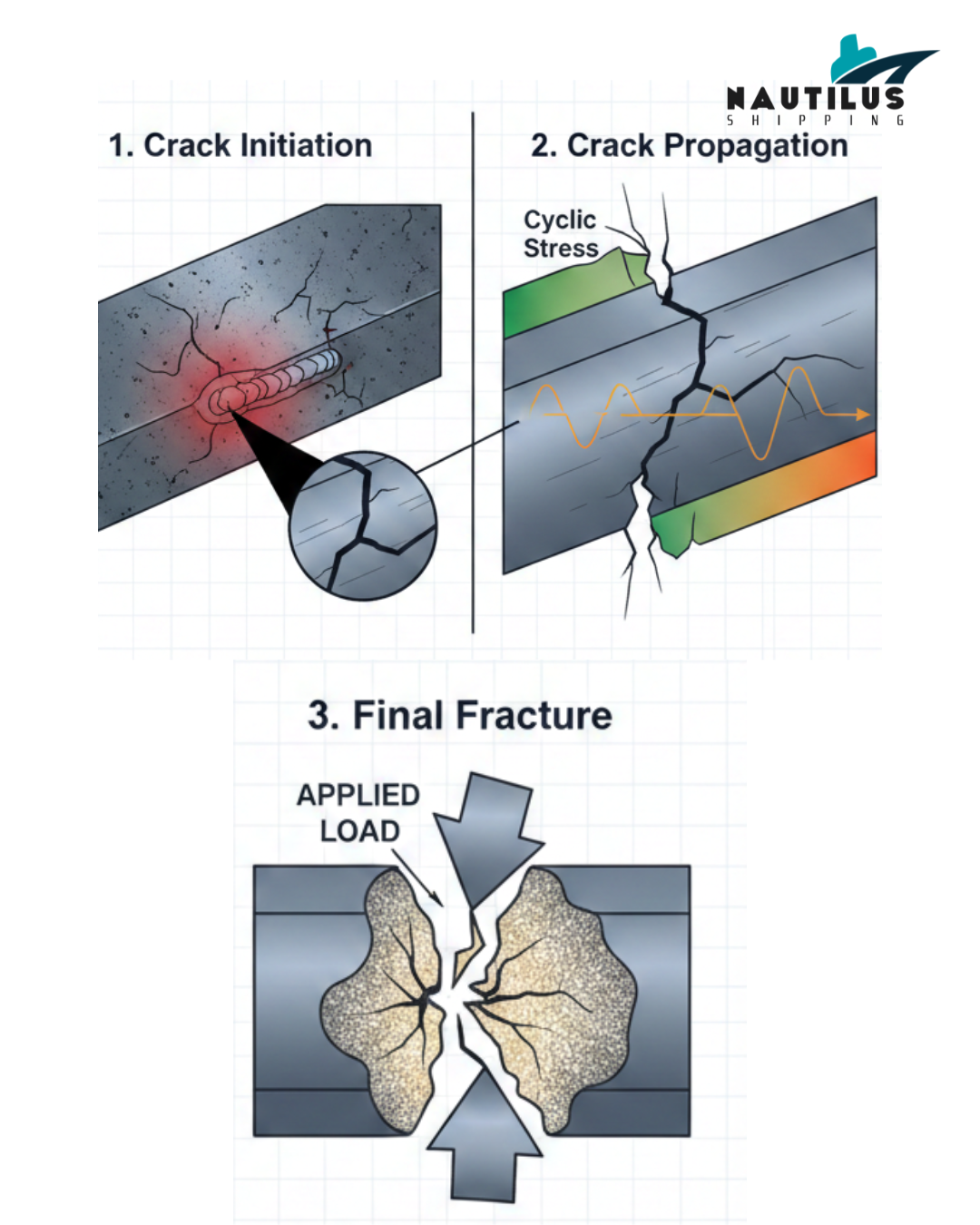
Fatigue cracking progresses through three main stages:
-
Crack Initiation: Small microscopic cracks develop at points of high stress concentration due to cyclic loading. This often occurs at weld defects, sharp corners, or corroded areas.
-
Crack Propagation: Once initiated, the crack grows progressively with each loading cycle. The rate of propagation depends on the magnitude of the cyclic stress, the material properties, and the presence of corrosive agents. As the crack length increases, the structural integrity of the material is compromised.
-
Final Fracture: Once the crack grows to a critical size, the remaining material cross-section can no longer support the applied stresses, resulting in a sudden and catastrophic failure.
Timely fatigue crack detection in ships during the initiation and propagation stages is essential to avoid catastrophic outcomes.
Consequences of Fatigue Cracking
Fatigue cracking in ships can lead to severe consequences, including:
-
Structural Failure: Cracks in critical components such as the hull, deck, or bulkheads can lead to catastrophic failure, endangering the vessel and crew.
-
Reduced Service Life: Persistent fatigue damage reduces the lifespan of the ship, increasing operational costs due to repairs and replacements.
-
Environmental Hazards: Structural failure in tankers or cargo ships can result in oil spills and pollution, causing severe environmental damage.
-
Safety Risks: Fatigue-related failures can compromise the safety of passengers and crew members, increasing the likelihood of maritime accidents.
Detection of Fatigue Cracking in Materials
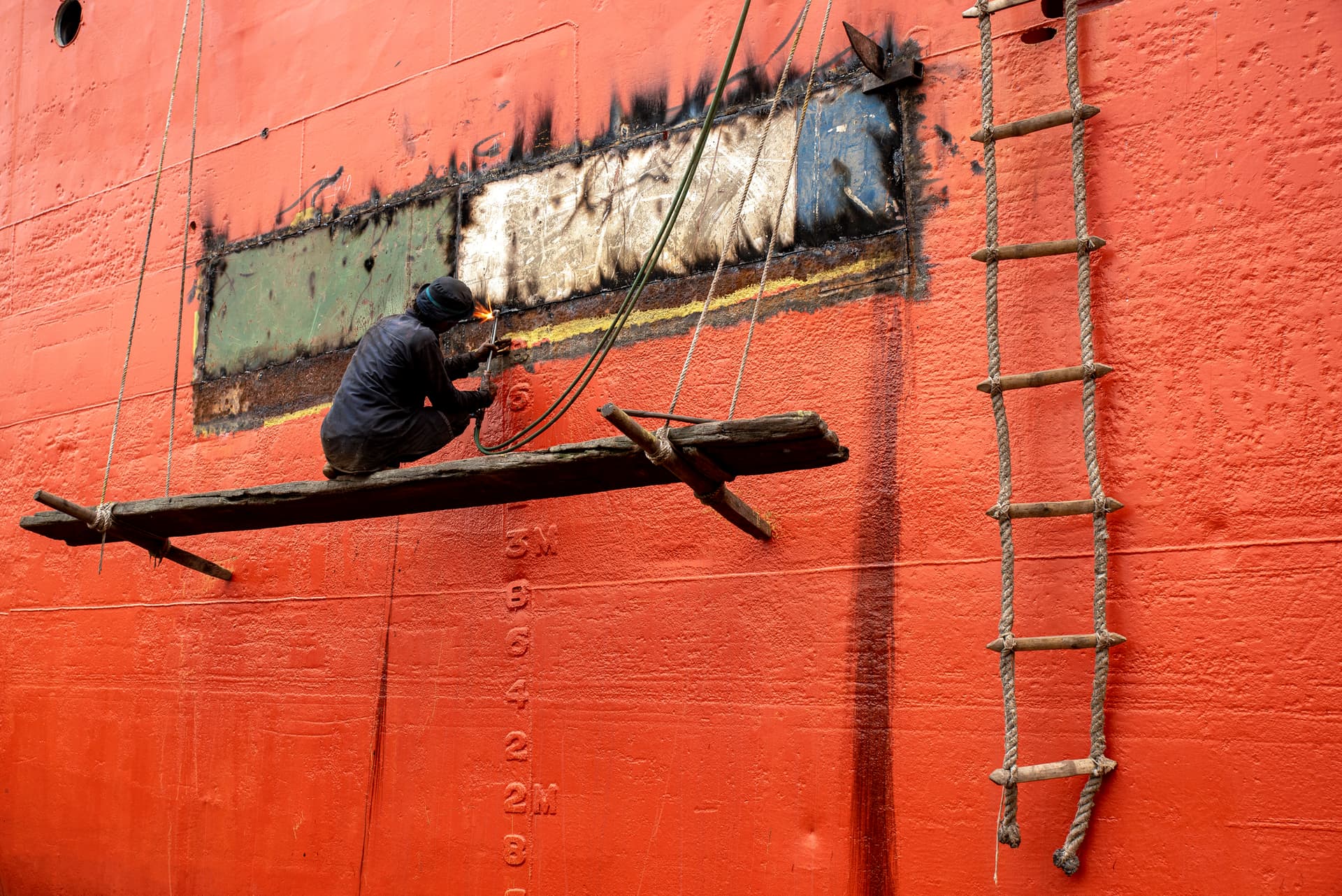
Early detection of fatigue cracking is crucial to preventing structural failure in ships. Various techniques are employed for the detection of fatigue cracks in ships, and thorough inspection of fatigue cracks in ships before they reach critical stages:
-
Visual Inspection: Regular manual inspections of ship structures, particularly in high-stress areas, can help detect surface cracks. However, this method may not identify subsurface cracks.
-
Ultrasonic Testing (UT): This non-destructive technique uses high-frequency sound waves to detect internal cracks within a material. UT is highly effective in identifying subsurface fatigue cracks.
-
Radiographic Testing (RT): X-rays or gamma rays are used to penetrate materials and create images that reveal internal flaws, including fatigue cracks.
-
Magnetic Particle Inspection (MPI): MPI is used to detect surface and near-surface cracks in ferromagnetic materials by applying a magnetic field and observing the patterns created by iron particles.
-
Dye Penetrant Testing (DPT): A liquid dye is applied to the material’s surface, penetrating into any cracks present. Afterwards, the excess dye is removed, and a developer is used to highlight the cracks under ultraviolet light.
-
Acoustic Emission Testing (AET): Sensors placed on the ship structure detect high-frequency acoustic signals emitted by growing cracks, allowing for real-time monitoring.
-
Strain Gauges and Structural Health Monitoring (SHM): Advanced monitoring systems equipped with sensors track stress variations and detect fatigue crack initiation before visible damage occurs.
Prevention and Mitigation Strategies
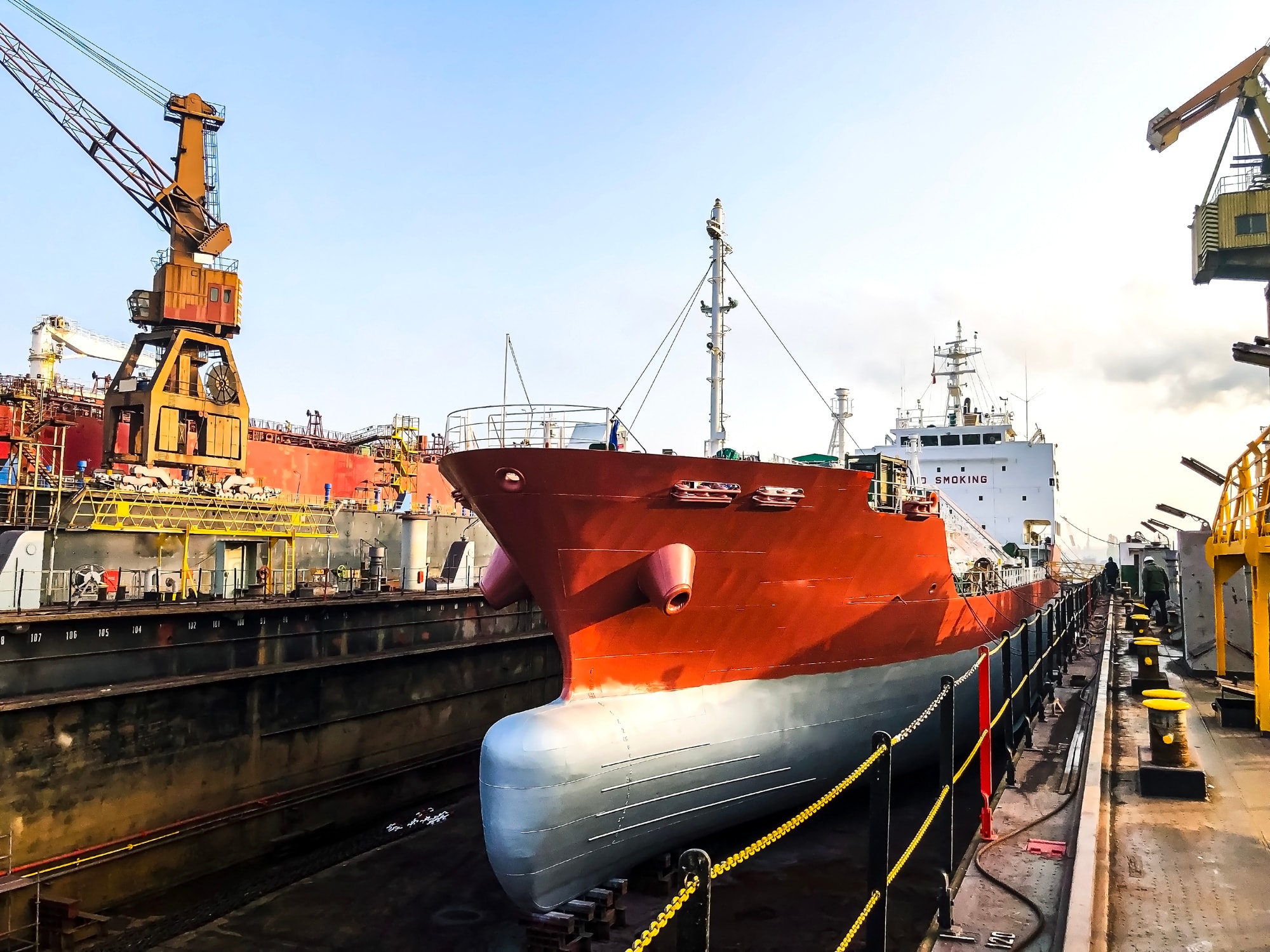
To prevent and mitigate, the following preventive measures for fatigue cracks in vessels can be implemented:
-
Improved Design Practices
-
Using finite element analysis (FEA) to predict high-stress areas
-
Avoiding sharp corners and stress concentrators in structural design
-
Incorporating fatigue-resistant materials and high-strength alloys
-
-
Quality Welding Techniques
-
Ensuring proper welding procedures to minimize residual stress
-
Conducting non-destructive testing (NDT) to detect micro-cracks in welded joints
-
-
Regular Inspection and Maintenance
-
Implementing scheduled ultrasonic and radiographic inspections to detect early-stage fatigue cracks
-
Using advanced monitoring systems, such as acoustic emission sensors, to track crack propagation
-
-
Corrosion Protection Measures
-
Applying protective coatings and cathodic protection to reduce corrosion-induced fatigue
-
Regularly cleaning and maintaining critical structural areas
-
-
Load Management
-
Avoiding excessive loading conditions that increase stress cycles
-
Monitoring wave-induced loads and adjusting ship speed accordingly
-
-
Fatigue Life Assessment
-
Employing fracture mechanics approaches to estimate fatigue life and plan preventive maintenance accordingly
-
Conducting periodic structural health monitoring to assess material degradation
-
Management and Treatment of Fatigue Cracks
When fatigue cracks are detected, immediate action is necessary to prevent catastrophic failure. Effective management and treatment involve the following approaches:
-
Crack Repair Techniques
-
Grinding and Polishing: Small cracks can be removed by grinding down the affected area and smoothing it to reduce stress concentration.
-
Weld Repair: Cracks in welded joints can be repaired through re-welding, but proper stress-relief treatments should follow to prevent recurrence.
-
Bolted or Clamped Repairs: In emergency cases, bolted or clamped patches can temporarily reinforce the affected area until permanent repairs are made.
-
-
Structural Reinforcement
-
Adding Stiffeners: Reinforcing plates and stiffeners can be added to redistribute stresses and prevent further crack propagation.
-
Composite Patch Repairs: Advanced composite materials can be applied to reinforce weakened areas and extend the structure’s life.
-
-
Stress Relief Treatments
-
Post-Weld Heat Treatment (PWHT): Applying heat to relieve residual stress in welded structures can improve fatigue resistance.
-
Shot Peening: A process that induces compressive stress on the surface, increasing resistance to crack growth.
-
-
Regular Monitoring and Follow-Up
-
Frequent Inspections: Increased frequency of ultrasonic and radiographic inspections should be conducted after repairs.
-
Data Logging and Predictive Maintenance: Digital monitoring systems should be used to track stress levels and predict future fatigue issues.
-
Conclusion
Fatigue cracking in ships is a significant engineering challenge that can lead to catastrophic failure if not properly managed. Understanding the causes and mechanisms of fatigue, coupled with effective design, maintenance, structured fatigue crack detection in ships, and proactive preventive measures for fatigue cracks in vessels, is crucial to ensuring the safety and longevity of ships.
In cases where fatigue cracks develop, timely repair of fatigue cracking in ship structures, combined with structural reinforcement and stress relief treatments, is essential to prevent severe structural failures.
By integrating advanced inspection techniques and consistent detection of fatigue cracks in ships, the maritime industry can significantly reduce the risks associated with fatigue failure and enhance the reliability of ship structures.