
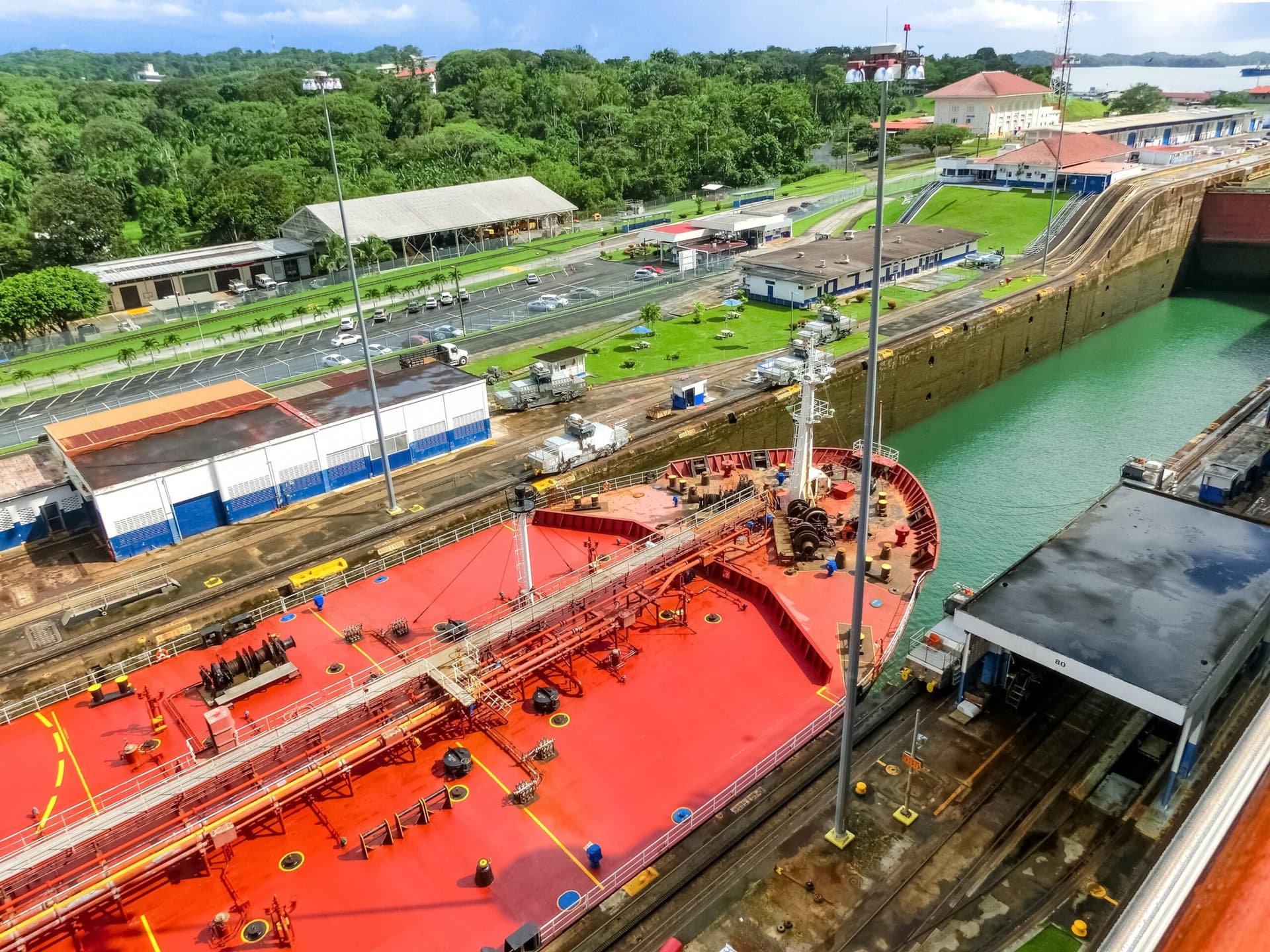
The Panama Canal is open for business in 2026, but it is operating under a noticeably tighter envelope. A developing El Niño cycle has pushed Gatun Lake water levels down, prompting the Panama Canal Authority to impose phased draft restrictions that will squeeze cargo capacity on Neopanamax transits through at least August. For shipowners running large vessels through Central America, the numbers have changed, and the stakes are real.
Key Takeaways
-
The Panama Canal Authority has reduced the maximum authorized draft at the Neopanamax locks to 15.09 meters (49.5 feet) tropical fresh water effective 3 July 2026, down from the design maximum of 15.24 m (50.0 ft). A further reduction to 14.94 m (49.0 ft) took effect on 24 July, with 14.78 m (48.5 ft) expected from 15 August.
-
Draft restrictions at the Panama Canal impact approximately 5% of global maritime commerce, touching supply chains for crude oil, liquefied natural gas, dry bulk and containerised goods.
-
ACP forecasts no full transit closures in 2026, but expects periods of tighter transit restrictions, variable Fresh Water Surcharges, and possible daily transit caps that could compress available slots.
-
Owners of tankers, bulk carriers, and large container ships may need to consider partial loading, draft reduction, or temporary rerouting via the Suez Canal or the Cape of Good Hope.
-
Nautilus Shipping supports clients with voyage planning, technical management, and commercial advisory to optimise operations around draft restrictions and water surcharge regimes.
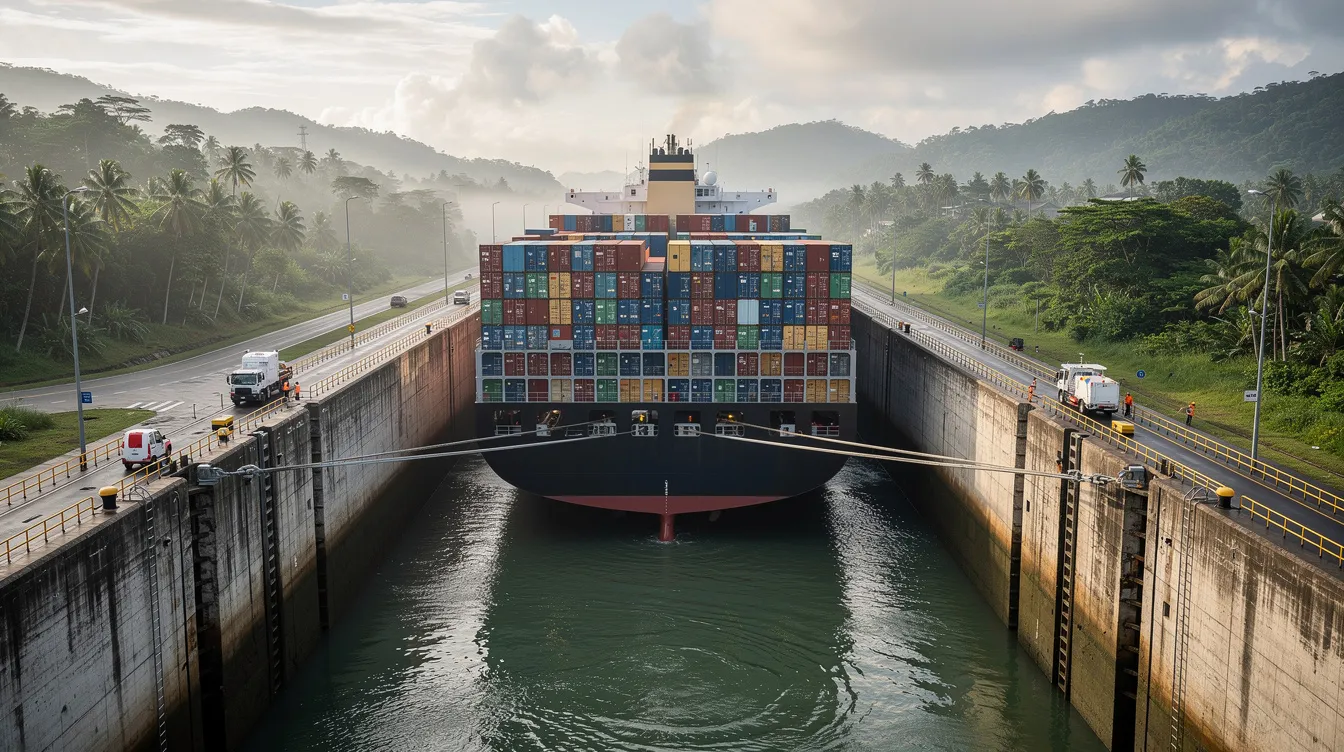
Panama Canal Draft Restrictions in 2026: Current Status and Key Dates
The Panama Canal remains fully operational in 2026, but under a tighter water management strategy driven by projected El Niño conditions. The canal authority’s Advisory A-22-2026 confirmed a draft reduction at the Neopanamax locks, setting the maximum authorised draft at 15.09 meters (49.5 feet) of tropical fresh water from 3 July 2026. This compares against the standard design ceiling of 15.24 m (50.0 ft). For context, draft was previously raised to 15.25 meters on 1 September 2024 after water conditions improved.
Key draft restrictions include 49.5 feet in July and 48.5 feet in August 2026. Specifically, draft limits for Neopanamax vessels were cut to 49.0 feet on July 24, 2026, with a further reduction to approximately 14.78 m (48.5 ft) planned from 15 August.
The Panama Canal locks and Gatun locks generally maintain a lower draft ceiling around 12.04–12.19 m (39.5–40.0 ft), with changes communicated via official Advisories to Shipping.
Other notable operational events in 2026:
-
9–17 June 2026: A planned dry-chamber overhaul of the east lane of the Gatun locks temporarily reduced daily transits to about 16–20 vessels, preceding the July draft changes.
-
25 July 2026: ACP temporarily suspended Period 3 daily auctions, effectively lowering booking capacity to 34 vessels per day.
-
The Panama Canal has capacity for 34 to 38 daily transits depending on conditions and scheduling.
-
The Panama Canal maintained 38 daily transits during the wet season before the current data prompted additional operational adjustments.
Based on current hydrological projections and recent rainfall, ACP does not foresee a full transit suspension in 2026 but will keep restrictions and booking slots under constant review. Official maximum draft and slot availability are published on the ACP website, and Nautilus Shipping monitors these notices in real time for managed vessels.
Drivers Behind the 2026 Draft Restrictions: El Niño, Gatun Lake and Water Policy
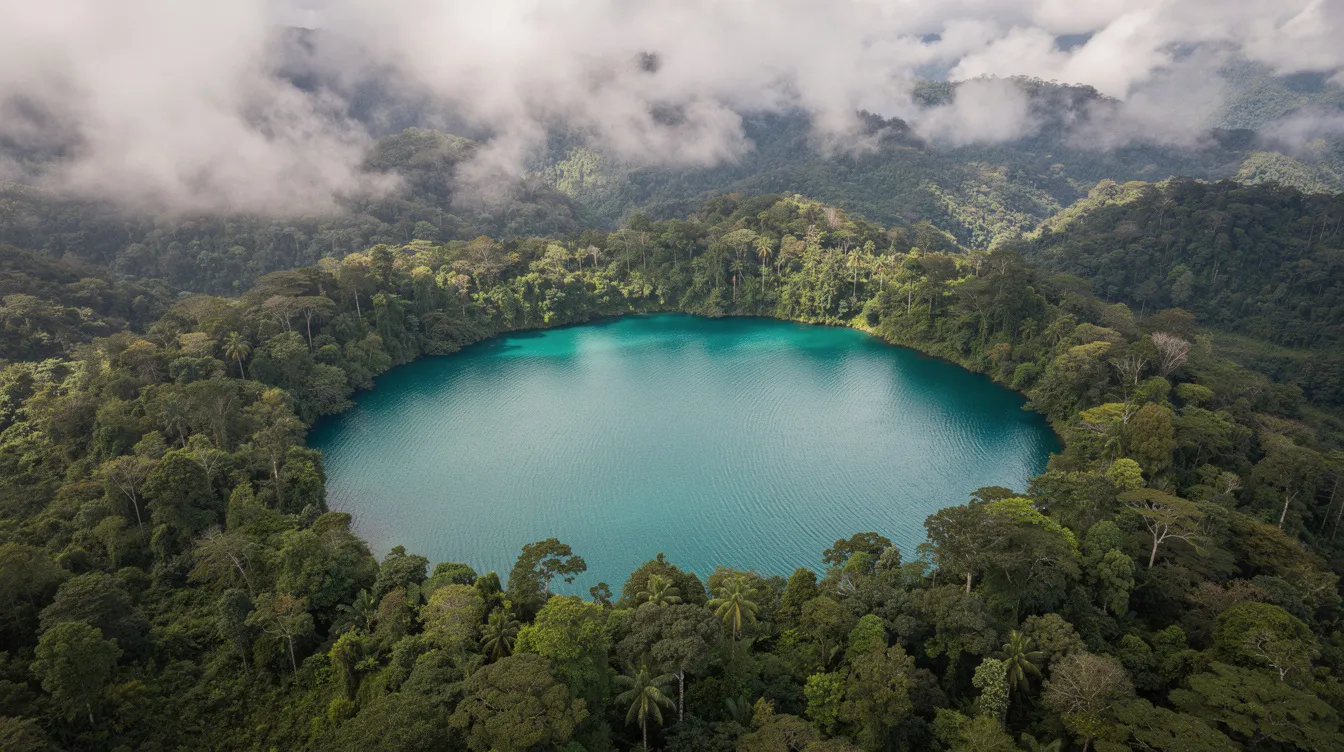
The canal is a freshwater system. Unlike open-ocean passages such as the Strait of Hormuz, every vessel transiting the Panama Canal consumes large volumes of freshwater, drawn mainly from Gatun Lake and Alhajuela Lakes. The canal requires significant rainfall to operate its locks, making it exceptionally sensitive to climate variability.
The El Niño Factor
The National Oceanic and Atmospheric Administration (NOAA) flagged a high probability of a strong El Niño in late 2025, and a 98% probability of El Niño forming is forecasted for late 2026. The El Niño phenomenon historically drives reduced rainfall around Panama, lowering inflows to Lake Gatun and shrinking water reserves. El Niño is projected to continue into early 2027, increasing drought likelihood into the subsequent year.
During the last major El Niño event, daily transits fell to just 22 ships, well below the canal’s normal capacity. The current restrictions are designed to prevent severe disruptions experienced during previous drought years like 2023–24, when emergency measures disrupted global supply chains.
How Lake Levels Drive Draft Limits
When lake levels decline, the Panama Canal Authority must reduce the maximum authorized draft for both Neopanamax and Panamax lanes to maintain under-keel clearance and lock safety. Gatun Lake’s water levels are directly affected by El Niño conditions. As of early July 2026, observed water levels sat at approximately 85.7 ft (~26.1 m), with hydrological projections pointing to a declining trend through the tropical Pacific dry season.
ACP’s Response: Water Management and Surcharges
The Panama Canal Authority is implementing proactive water management to mitigate El Niño impacts, with a strategy that includes:
-
Cross-filling between lock chambers to strengthen water reserves
-
Optimised scheduling to minimise lockages and conserve freshwater
-
Fresh Water Surcharge (FWS) introduced from 28 July 2026, scaling with Gatun Lake water levels
-
Weekly monitoring: ACP monitors water levels weekly using its “Gatun Water Level Projection” tools and five-year average water level charts to underpin decisions on draft reductions and surcharge thresholds
-
The canal’s water management strategy also includes monitoring hydrological projections and projected water levels to protect local drinking water supplies
Water-saving measures were first implemented at the locks in 2025 as part of its water conservation programme, and ACP has continued to refine them as part of its water management strategy heading into the coming months.
Unlike open-sea routes like the Cape of Good Hope, the Panama Canal is controlled by a single canal authority able to pre-emptively manage capacity-an important distinction from chokepoints like the Strait of Hormuz, where a Hormuz closure would be driven by geopolitical conflict rather than hydrology.
Operational and Commercial Impacts for Shipowners (and How Nautilus Shipping Supports You)
The 2026 draft restrictions mainly affect Neopanamax-size boxships, crude oil and product tankers, and large bulk carriers trading between Asia, the US Gulf/Atlantic, and ports in the Middle East. Anticipated draft restrictions will tighten cargo capacities for Neopanamax vessels throughout 2026, and the pronounced impacts will be felt across global trade flows.
Technical Implications
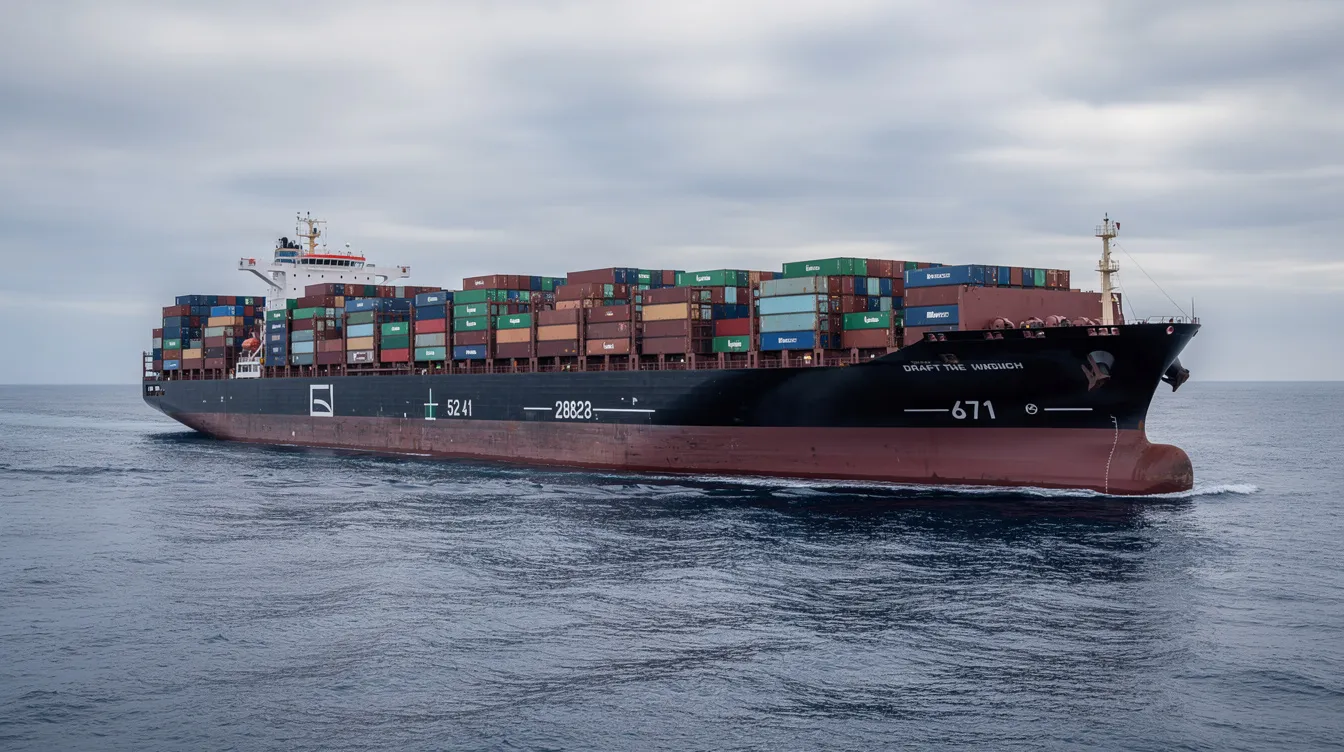
Every half-foot reduction in draft means ships must carry less cargo. A vessel designed for 15.24 m loaded draft that must now transit at 14.78 m could lose several thousand tonnes of intake depending on hull form. This forces:
-
Cargo trimming or partial loading
-
Ballast adjustments to meet stability and structural limits
-
Potential de-bunkering to reduce the maximum sailing draft
-
Updated stability documentation and trim calculations before approaching the canal
Commercial Consequences
Reduced cargo capacity due to draft restrictions can raise freight rates for importers. Lower draft limits increase shipping costs and may lead to delays in global trade. Fewer transit slots at the Panama Canal contribute to longer wait times for vessels transiting the waterway. Shipping companies face a direct hit to revenue when every transit carries a small fraction of the originally planned cargo volume.
The commercial picture includes:
-
Rising transit costs: Base tolls plus the variable Fresh Water Surcharge increase overall expense per canal transit
-
Surcharges from carriers: Major lines have introduced surcharges of up to $100 per TEU on Asia–US trades to compensate for lower water levels
-
Higher freight costs and fuel costs: Whether owners choose restricted canal transits or longer voyages via alternative routes, costs rise
-
Reduced demand for available slots: Fewer booking slots and higher costs may push some vessels toward rerouting
Some vessels may opt for longer alternative shipping routes to avoid canal restrictions. Diversions via the Suez Canal or around the Cape of Good Hope add 5–15 days on Asia–US Gulf voyages, increasing fuel burn, emissions, and crew fatigue. These detours can also worsen a vessel’s CII rating, which matters under IMO decarbonisation targets.
How Nautilus Shipping Supports You
Nautilus Shipping’s technical management and commercial advisory teams help shipowners navigate these conditions by:
-
Voyage planning that factors in draft restrictions, Gatun Lake forecasts, and projected water levels
-
Cargo intake and bunkering calculations to optimise vessel operating economics under restricted draft
-
Route comparison models evaluating Panama Canal plus surcharges versus alternate routes for a given vessel, cargo, and trade pattern
-
Crew management and seafarer welfare: Longer diversions and schedule disruptions require robust manning plans, fatigue management, and updated onboard procedures for canal transits. We closely monitor lake levels and ACP advisories so our clients don’t have to
The industry is entering a period in which the potential for further restrictions means owners should build flexibility into their schedules and commercial contracts.
FAQs
This section answers common operational questions owners and charterers raise about 2026 canal conditions.
1. How strict is the 15.09 m maximum authorised draft at the Neopanamax locks?
ACP enforces the published maximum authorized draft with very limited tolerance. Vessels arriving deeper than the limit may be required to lighten at anchorage, delay transit, or re-route at the owner’s expense. Gatun Lake’s maximum authorized draft of 15.09 meters applies as a hard ceiling-there is no “grace zone.” Nautilus Shipping ensures draft compliance through pre-arrival calculations, cargo plan reviews, and updated stability documentation before a vessel approaches the canal, reducing the risk of costly delays.
2. Will there be additional transit restrictions later in 2026?
ACP has indicated no planned full closures, but will tighten or relax draft and daily transit limits depending on actual Gatun Lake levels and rainfall patterns through the wet and dry seasons. Given that El Niño conditions are expected to persist, owners should assume some volatility in slot availability and draft ceilings in the coming months.
3. How does the Fresh Water Surcharge from 28 July 2026 affect total transit cost?
The variable Fresh Water Surcharge scales with Gatun Lake water levels: lower levels mean higher surcharges, applied differently to Neopanamax and Panamax transits. It is calculated as a percentage of the vessel’s total toll, with additional fixed portions based on vessel LOA.
4. Are alternative routes like Suez or the Cape of Good Hope realistic substitutes?
Suez or Cape of Good Hope deviations are technically straightforward but add significant distance, fuel burn, and time. Cape routes in particular can lengthen Asia–US Gulf crude oil or container voyages by 5–15 days. These options do not face a canal authority’s draft limits but are exposed to piracy risk zones, weather, and market-driven freight volatility. Rerouting decisions must be case-by-case, weighing the cost of a restricted Panama Canal transit against the expense and risk of the detour. The world’s major shipping companies are already making these calculations on a voyage-by-voyage basis.
The Panama Canal will remain a critical artery for global trade, but the margin for error in 2026 is thinner than it has been in the past. Shipowners who plan proactively-factoring in draft restrictions, surcharge economics, and alternate routing-will protect both their cargo and their bottom line.