
Key Takeaways
- Port terminals are specialized by cargo type-container terminals, dry bulk terminals, liquid bulk facilities-and form the operational backbone of global trade, with ports handling over 80% of world merchandise trade by volume.
- Efficient loading and unloading, yard planning, and gate/rail operations directly affect vessel turnaround time, demurrage costs, and supply chain reliability. Delays at terminals can disrupt entire supply chains.
- Automation is accelerating across modern terminals: remote-controlled cranes, terminal operating systems, and AI-driven yard planning now enable automated container terminals to exceed 45 moves per hour in efficiency.
- Safety standards, environmental compliance, and ESG pressures are reshaping how bulk cargo and liquid cargo terminals are designed and operated, requiring closer coordination between vessel and terminal teams.
Why Port Terminal Operations Matter in 2026
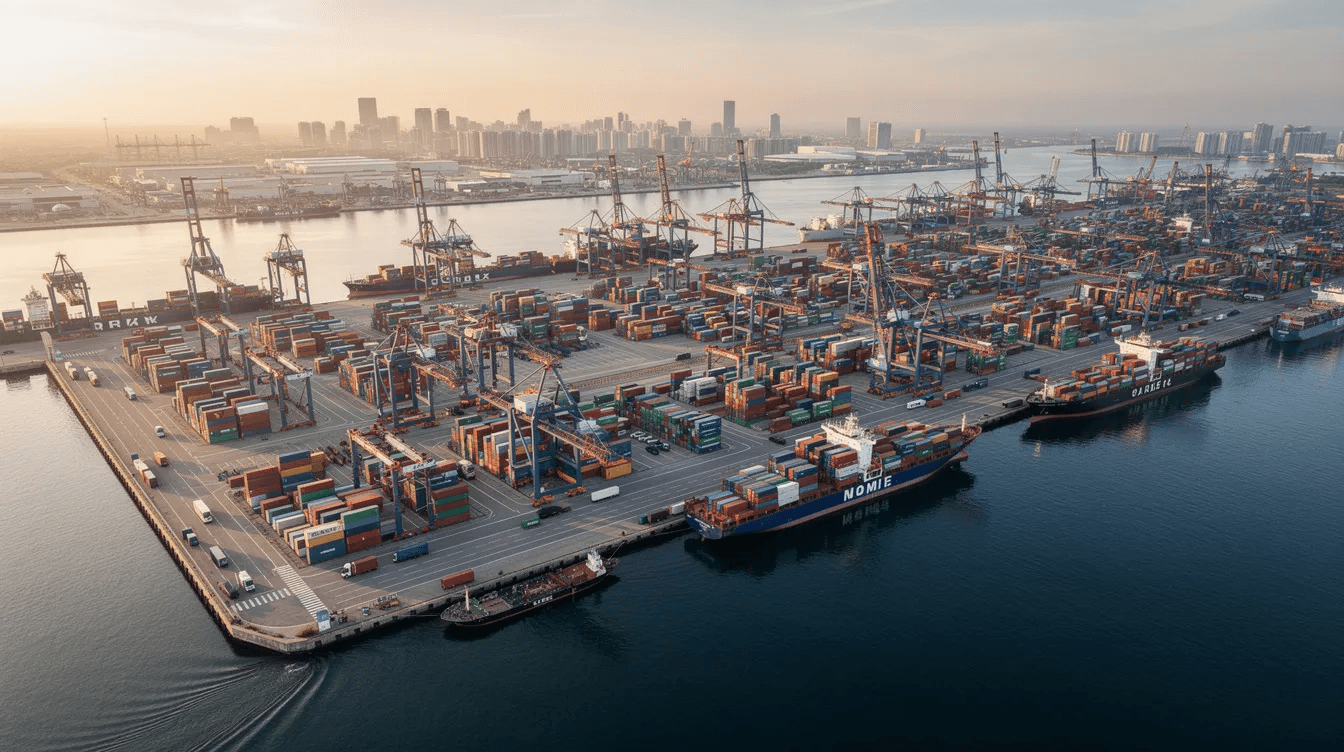
Port terminal operations transfer cargo and passengers between ships and land transport networks, making them critical nodes in the global supply chain. Ports handle the largest amounts of freight globally, surpassing other transport terminals. Port terminals act as vital economic bridges in global supply chains, and efficient terminal operations directly influence consumer prices and manufacturing schedules.
A “port terminal” is the interface where cargo handling, temporary storage, customs processing, and intermodal transfers connect ocean-going vessels to inland transportation networks. Most large ports now host multiple specialized cargo terminals: container terminals, bulk terminals for dry and liquid bulk, Ro-Ro terminals, and sometimes dedicated cruise or car facilities.
This article is a practical explainer aimed at ship-owners, operators, and maritime professionals who need to understand how terminal design and modern port operations affect voyage planning, fleet performance, and costs. It reflects Nautilus Shipping’s perspective as a ship management and maritime services provider that cooperates daily with terminal operators to coordinate berthing windows, crewing, documentation, vetting, and regulatory compliance.
Types of Port Terminals and What They’re Built For
Terminals are optimized around the physical nature of the cargo. Whether it is unitized containers, dry bulk commodities, liquid products, wheeled vehicles, or passengers, the infrastructure and specialized handling equipment differ dramatically. Here is how the main specialized terminal types break down:
- Container terminals handle standardized shipping containers measured in twenty-foot equivalent units (TEU). They feature high crane density, yard stacking systems, and TEU-based throughput metrics. Container terminals can process thousands of TEUs daily at major hubs.
- Dry bulk terminals manage unpackaged bulk commodities such as coal, iron ore, bauxite, grain, and fertilizers. They require large berths, conveyor systems for continuous cargo flow, stockpiles, and covered sheds or silos.
- Liquid bulk terminals serve crude oil, clean products, chemicals, and liquefied natural gas or LPG. Their infrastructure centers on pipelines, manifold systems, storage tanks, and tank farms with containment dikes.
- Ro-Ro and auto terminals use ramps and marshalling yards for wheeled cargo like vehicles and trailers, plus PDI (pre-delivery inspection) areas. Ro Ro terminals cater to wheeled cargo that drives on and off the vessel under its own power.
- Passenger and cruise terminals focus on people flow, baggage handling, and security rather than freight. Cruise ships require berths optimized for quick embarkation and disembarkation rather than cargo throughput.
Cargo characteristics-density, flow properties, hazard classification-determine quay length, draft requirements, berth equipment, and the layout of marine terminal facilities. Regionally, world ports like Shanghai and Singapore dominate container shipping, while iron ore bulk terminals cluster in Brazil and Western Australia, and liquid bulk facilities concentrate around Rotterdam and Houston.
Inside a Container Terminal: Operations Flow from Ship Arrival to Gate
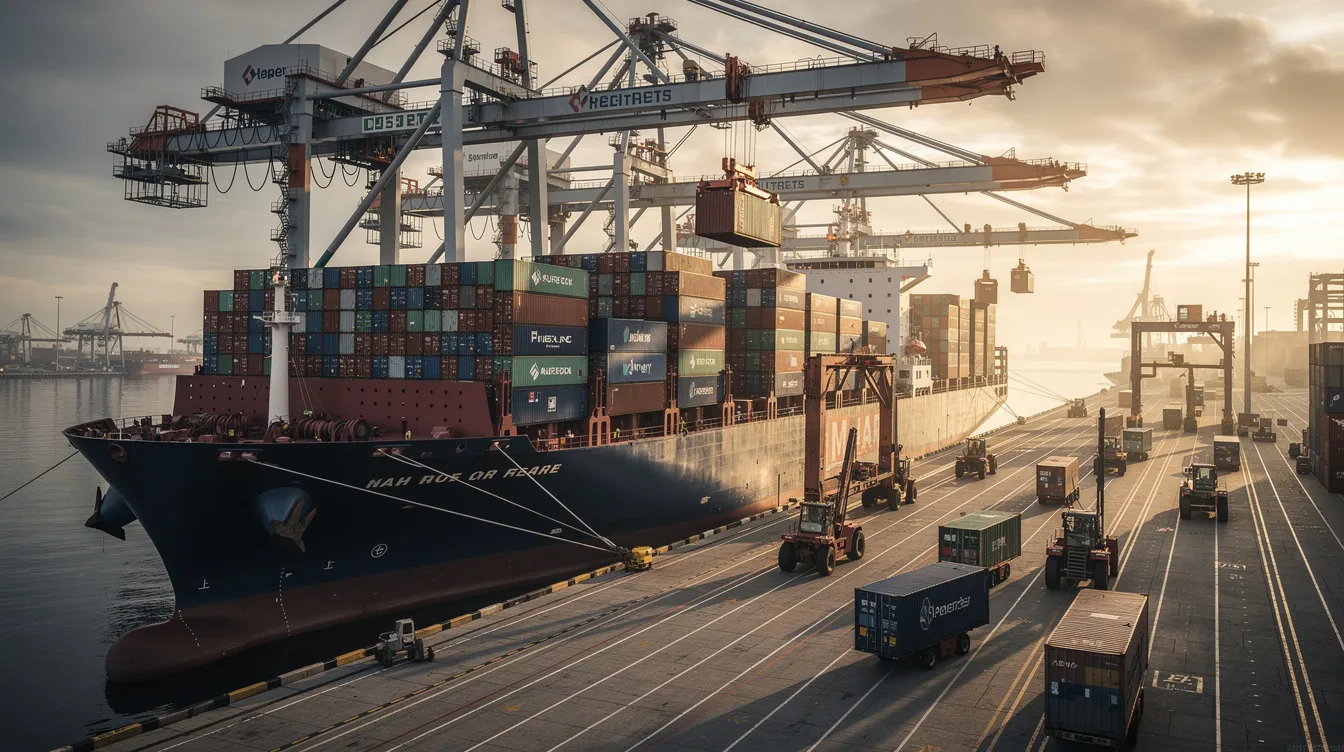
Container terminals are the backbone of modern liner shipping and usually the most automated and capital-intensive terminal type. Modern terminals can process thousands of containers daily with precise coordination. Here is the typical operational flow:
- Vessel arrival, pilotage, and berthing: Cargo ships approach a particular port’s pilot station, receive tugs, and are assigned berth windows tied to tidal constraints and schedule priority. Container terminal operators typically confirm windows within 24–48 hours of arrival.
- Loading and unloading by STS gantry cranes: Ship-to-shore gantry cranes lift containers between vessel and quay. Modern terminals can achieve 35 to 40 crane moves per hour, while automated container terminals can exceed 45 moves per hour through twin-lift and tandem operations.
- Transfer to yard: Terminal tractors, automated guided vehicles (AGVs), or straddle carriers move containers from the quayside to yard blocks.
- Yard stacking: Rubber-Tyred Gantry (RTG) cranes, Rail-Mounted Gantry (RMG) cranes, or automated stacking cranes organize containers by vessel, destination, weight, and category. Yard management organizes stacking and storing of cargo within terminal yards.
- Gate or rail departure: Gate operations process incoming and outgoing trucks and freight trains. Truck appointment systems and gate systems help control congestion, while on-dock rail connects modern container terminals to inland transport corridors.
In 2022, container ports handled about 866 million TEUs globally. By 2024, PSA International set a group record of 100.2 million TEU across its worldwide terminal assets. Port congestion occurs when too many vessels compete for limited terminal capacity, and high cargo volumes can overwhelm terminal berths and yard space. Robust yard planning, appointment systems, and real-time equipment dispatch mitigate peak-hour truck queues and schedule recovery when vessels arrive off-window.
Bulk Terminals: Handling Dry Cargo at Massive Scale
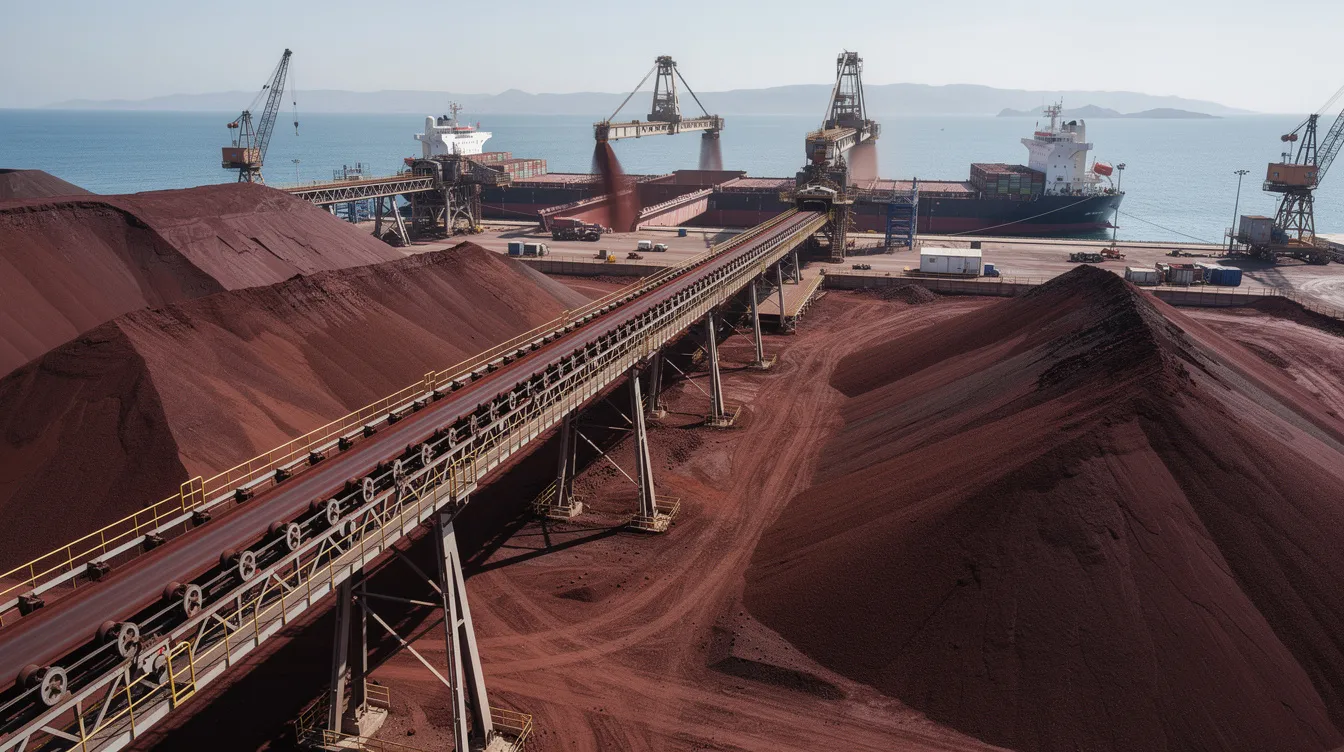
Dry bulk-iron ore, coal, grains, bauxite, cement, fertilizers-still accounts for a substantial share of seaborne volume, handled at dedicated dry bulk terminals. Bulk cargo terminals manage unpackaged bulk commodities at scale.
Typical layouts include:
- Deepwater berths for Capesize or Newcastlemax bulkers (200,000–300,000 DWT)
- Long conveyor galleries-Porto Sudeste’s terminal in Brazil runs over 13 km of belt conveyors with reclaiming capacity of 12,000 tonnes per hour
- Stacker–reclaimer machines managing open or covered stockpiles
- Rail or barge receiving systems feeding cargo to or from the yard
- Bulk terminals utilize conveyor systems for continuous cargo flow from stockpile to ship loader
The loading and unloading process works differently depending on direction:
- Imports: Grab unloaders or continuous ship unloaders discharge into hoppers, then onto conveyors leading to stockyards or silos. Pneumatic unloading equipment handles finer or lighter cargoes like cement and grain dust.
- Exports: Reclaimers feed ship loaders via belts; major iron ore terminals load at rates exceeding 10,000 t/h. Ship loading at Porto Sudeste runs at design capacities approaching 12,000 tph.
Dust-prone cargoes (coal, clinker, cement) require dust suppression and runoff control. Food-grade dry cargo (grain, soybeans) demands covered sheds, fumigation, and strict cleanliness standards to comply with bulk carrier safety standards. KPIs center on tonnes per hour, berth occupancy, and demurrage performance. Slow loading on large ore carriers generates substantial daily demurrage if terminal capacity or equipment usage falls short.
Liquid Bulk and Tanker Terminals: Pipelines, Manifolds and Safety
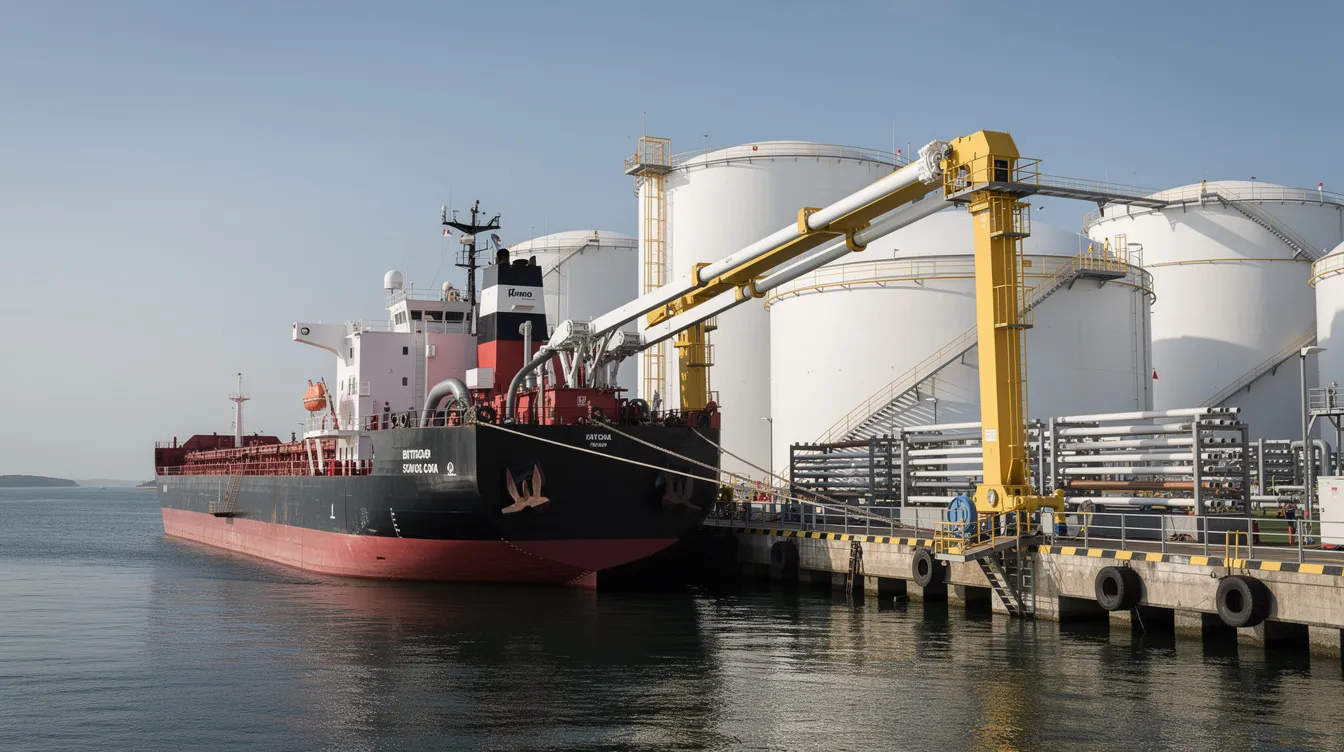
Liquid bulk terminals-handling crude oil, refined products, chemicals, LPG, and liquefied natural gas-require highly specialized infrastructure and strict safety regimes. Liquid cargo operations carry inherent fire, explosion, and pollution risks that demand a different operating philosophy from dry cargo handling facilities.
Core infrastructure includes:
- Dedicated jetties, single-point moorings, dolphins, fenders, and loading platforms sized for tankers from MR to VLCC class
- Hard arms and hoses for loading and unloading, connected to onshore pipeline manifolds
- Tank farms with segregated storage tanks-Jacintoport Terminal in Houston operates 58 tanks totaling approximately 4.58 million barrels of storage capacity, with floating roofs for volatile products and dikes for containment
- Vapor recovery units, emergency shutdown (ESD) systems, and inert gas connections
Operations are tightly controlled: cargo line-up plans, sequence and rate of pumping, ullaging, sampling, cargo compatibility checks, and pressure control are all coordinated between terminal and vessel officers. For tanker operations, the ISGOTT guidelines remain the key standard, supported by SIRE inspections, local environmental rules, inerting and gas-freeing requirements, and MARPOL Annex I compliance.
Because of fire and pollution risks, tanker terminal operations impose tighter restrictions on simultaneous work, hot work permits, and crew movement than typical dry cargo terminals. Ship-owners operating chemical tankers or LNG and LPG carriers must ensure cargo system readiness, proper pigging procedures, and crew familiarization before any transfer begins.
Core Cargo Handling Processes: Loading, Unloading and Yard Operations
Across container, bulk, and liquid terminals, cargo handling revolves around three core processes: loading and unloading at berth, horizontal transport, and storage or yard management. Cargo loading and unloading utilizes heavy machinery like cranes and ramp systems, and the specifics vary by terminal type:
- Containers: Vertical lifting in standardized units, crane cycles, and twin-lift operations. Container handling relies on STS cranes, reach stackers, and straddle carriers working in precise sequence.
- Dry cargo: Continuous or batch flow via grabs and conveyors, trimming in holds, and draft surveys to verify loaded quantity. Transferring cargo from ship to stockpile requires careful belt coordination.
- Liquid cargo: Controlled pumping through manifolds, line displacement, and cargo heating or cooling depending on product viscosity and specification.
For container terminal yard operations, planning is critical:
- Export stacks are organized by vessel, bay, and port of discharge
- Reefers, dangerous goods (IMDG), out-of-gauge, and transshipment containers are separated
- Yard density targets of 70–80% occupancy balance throughput against congestion risk
In bulk terminals, yard operations involve stockpile blending, segregation by quality grade, monitoring spontaneous combustion risk for coal, and moisture control for cargoes susceptible to liquefaction. Documentation coordinates cargo manifests and customs declarations for import or export, and inefficient customs processes can slow cargo movement and increase costs.
Poor coordination between vessel stowage plans, stevedoring teams, and yard planners leads to re-handles, increased truck turn times, and extended berth stays. Nautilus Shipping supports accurate and timely cargo documentation and stowage planning so terminal operators can optimize sequence and resources, reducing non-productive time.
Terminal Operating Systems (TOS) and Digital Integration
A terminal operating system is the central software platform orchestrating vessel planning, yard management, equipment dispatch, gate operations, and billing across port terminal assets. Terminal operating systems manage all terminal processes digitally, and leading commercial TOS suites typically include:
- Vessel module: Quay crane assignment, berth window management, and stowage interface with shipping lines for real-time bay plans
- Yard module: Container location tracking, stacking strategies, grounding optimization, and rehandle minimization
- Gate and rail module: Truck appointment systems, rail cut-off management, customs interface, and rail systems integration
Modern TOS integrate with shipping line systems for bay plans, customs and port community systems for automated clearance, and equipment control systems for remote-controlled cranes and AGVs. Real-time tracking systems enhance container visibility across terminals, ensuring freight forwarders and ship managers have current status data.
Advanced systems emerging in 2026 include AI-based berth and yard optimization, predictive maintenance from equipment telemetry, and digital twins for scenario planning. AI-powered systems improve data accuracy to 99.5% in terminals, while predictive maintenance reduces equipment failures in terminal operations. Research into intelligent planning systems has demonstrated measurable improvements in terminal throughput and reduction in processing times through mixed-integer programming and appointment optimization.
Measuring Terminal Performance: KPIs That Matter to Ship-Owners
Terminal performance directly impacts voyage duration, fuel consumption, and cost for ship-owners and charterers. Key performance indicators are used to measure terminal operating efficiency, and understanding them is essential for controlling vessel operating costs.
Container terminal KPIs:
- Crane moves per hour per crane and per vessel (benchmark: 25–35 moves/hour typical, 35–40 on well-equipped modern terminals)
- Vessel turnaround time from arrival to departure
- Berth productivity measured as moves per metre of quay
- Container dwell time (imports typically under 5–7 days at major hubs) and gate truck turn time (target under 45 minutes)
Dry and liquid bulk KPIs:
- Tonnes per hour for loading and unloading (8,000–12,000 t/h at major iron ore bulk terminals)
- Berth occupancy and berth throughput in million tonnes per year
- Waiting time versus time on berth, and resulting demurrage or despatch balances
Weather, labor availability, yard congestion, and equipment reliability all impact these KPIs. Labor shortages and industrial disputes can reduce terminal productivity significantly. Supply chain disruptions can occur when a terminal slows down due to congestion, and many ports struggle with outdated infrastructure and handling capacity constraints.
Global Terminal Operators and Ownership Structures
Since the 1990s, port terminal privatization and containerization have driven the rise of global terminal operators and port holding groups managing multiple container terminals and cargo terminals worldwide. In 2021, the top seven global terminal operators controlled 39.6% of container port activity, concentrating significant market power.
- Many port authorities function as landlords and regulators, while private or semi-public container terminal operators run day-to-day terminal management under concession agreements. A port terminal operator typically leases port terminals from the authority and invests in equipment and infrastructure.
- Global port operators pursue horizontal integration-expanding to new ports and regions-and sometimes vertical integration with shipping lines and inland logistics networks. Port development increasingly involves private capital under long-term concessions.
- By the early 2020s, several of these global terminal operators were headquartered in Asia, often linked to state-owned entities or major carrier groups, reflecting the dominance of Asian trade volumes.
Ownership concentration invites regulatory scrutiny over competition, pricing power, and service conditions, particularly at strategic transshipment hubs. Independent ship managers like Nautilus Shipping must understand these corporate structures when negotiating berthing priorities, service levels, and long-term cooperation with port operators.
Safety, Compliance and Environmental Performance in Terminal Operations
Port terminals are high-risk environments with heavy machinery, high traffic density, and-in the case of bulk cargo and liquid bulk terminals-significant environmental hazards. Environmental pressures require ports to invest in sustainability and compliance.
Core safety elements:
- The International Ship and Port Facility Security (ISPS) Code compliance with restricted areas, access control, and video surveillance
- Personal Protective Equipment (PPE) requirements, traffic segregation between people, trucks, and equipment, and safe-lifting procedures
- Emergency response plans covering fires, spills, collisions, and extreme weather events that can disrupt operations
Regulatory and customer-driven compliance:
- Compliance with IMO conventions (MARPOL, SOLAS), IMDG Code segregation, and local labor and HSE rules
- Oil majors’ vetting and terminal-specific regulations for tanker operations and crew readiness
Environmental focus areas:
- Air emissions reduction via shore power, hybrid or electric yard equipment, and low-emission truck programs
- Dust and runoff control for dry bulk; spill prevention systems for liquid cargo
- Increasing ESG reporting and carbon-intensity indicators for terminal operations and port calls
Nautilus Shipping aligns shipboard safety management systems and crew training with terminal rules to minimize incidents, reduce delays due to non-compliance, and support joint drills or inspections.
How Ship Management and Terminal Operations Intersect
Ship managers must synchronize vessel readiness, crew, documentation, and technical condition with the requirements of diverse terminals. This is where technical ship management connects directly to terminal efficiency.
Touchpoints with container terminals:
- Providing accurate pre-arrival information: ETA, cargo manifest, dangerous goods declarations, reefer container lists
- Coordinating stowage and stability plans with terminal planners to minimize re-handles and crane conflicts
- Ensuring crew familiarity with terminal safety rules and communication protocols
Touchpoints with bulk and liquid bulk terminals:
- Preparing holds to required cleanliness standards (grain, coal, cement) and arranging pre-loading inspections per load line and loading compliance requirements
- For tankers, ensuring cargo system readiness, inert gas systems, cargo heating, and documentation for terminal vetting inspections
Effective ship management reduces failed inspections, vetting-related delays, and non-productive time at berth caused by documentation problems or safety deficiencies. It also cuts overall port stay and bunker consumption associated with waiting and slow vessel operations. Efficient terminal operations can reduce consumer prices directly when vessel turnaround improves and port infrastructure works in concert with well-prepared ships.
Future of Port Terminal Operations: Automation, Data and Resilience
By the mid-2020s, pressure from larger vessels, volatile global trade flows, and decarbonization targets pushed terminals toward higher automation and smarter operations. Many ports struggle with outdated infrastructure and handling capacity constraints, accelerating investment in modern terminal operations.
Key innovation areas:
- Automated and remotely operated cranes, driverless terminal trucks, and automated stacking yards in major container terminals. Research from 2026 confirms that while full vehicle autonomy remains limited in mixed yard environments, scheduling automation and equipment coordination are advancing rapidly.
- AI-assisted berth and yard planning using historical data and live AIS to predict congestion and optimize sequences through advanced monitoring systems
- Real-time visibility platforms sharing ETA, berth status, and gate queues with shipping lines, truckers, freight forwarders, and ship managers
Resilience themes:
- Designing terminals to withstand extreme weather and sea-level rise with elevated critical infrastructure and redundancy in power and data links
- Business continuity planning for geopolitical disruptions, pandemics, or cyber incidents that can disrupt operations across storage facilities and port infrastructure
Sustainability and energy transition:
- Increasing shore power availability and alternative fuels infrastructure (LNG, methanol, ammonia) at cargo terminals
- Pressure to cut emissions from yard equipment and integrate terminals into green corridor initiatives
Nautilus Shipping monitors these trends to adapt fleet deployment, crew competencies, and fleet maintenance strategies-ensuring readiness for shore power connections, digital document exchange with terminals, and evolving operational efficiency requirements so clients remain competitive.
FAQ About Port Terminal Operations
How far in advance do terminals usually confirm a berth window?
Major container terminals typically provide a provisional berth window several days before arrival based on pro-forma liner schedules and updated ETAs, but final confirmation often comes within 24–48 hours of the vessel’s arrival at the pilot station. For bulk and tanker terminals, berth window confirmation tends to be tied more tightly to cargo readiness, laycan dates, and weather forecasts, meaning that even a confirmed window can shift if shore tanks are not ready or if a preceding vessel overruns its discharge time.
Why do some ports require specific crew training or certifications before allowing operations alongside?
High-risk terminals-especially liquid bulk and LNG facilities-frequently mandate documented evidence of crew familiarization, recent emergency drills, and completion of terminal-specific safety inductions before any cargo transfer begins. This is driven by the elevated fire, explosion, and pollution risks at these cargo handling facilities. Ship managers like Nautilus Shipping handle these requirements as part of crew management and HSQE systems, ensuring that all certificates, drill records, and induction completions are verified and communicated to the terminal before arrival at a particular port.
Can ship-owners influence terminal choice on a voyage, or is it fixed by charterers and cargo interests?
In liner trades, container terminal choice is largely fixed by the carrier’s network and concession agreements with specific port community stakeholders. In tramp bulk and tanker trades, the charter party, cargo buyer, and seller typically determine the loading and discharging terminals. However, ship-owners and managers can provide meaningful input regarding draft limits, berth equipment compatibility, historical performance issues, and project cargo requirements that may rule out certain facilities. This input is especially valuable when selecting between competing terminals within the same port complex.
What practical steps reduce the risk of demurrage at busy bulk and tanker terminals?
The most effective measures are accurate ETA reporting well in advance, early completion of all documentation, and ensuring the vessel is ready in all respects-holds cleaned and surveyed, tanks prepared, equipment tested, and safety gear operational. Maintaining close coordination between ship manager, charterer, agent, and terminal to adjust for congestion or weather-related delays is equally critical. Vessels that arrive with unresolved deficiencies or incomplete paperwork routinely lose their berth priority, generating costly waiting time.
How do terminal automation projects impact crews and ship operations at the berth?
From the ship’s perspective, increasing automation at modern container terminals and bulk facilities means more standardized communication procedures, stricter adherence to planned crane or loader sequences, and reduced tolerance for last-minute changes to stowage or loading plans. Crews must be familiar with digital data exchanges, safety interlocks on automated equipment, and clear protocols for reporting access issues or equipment faults while alongside. The trend toward automation does not eliminate human involvement but does raise expectations for precision and discipline in maritime operations at the berth.