
Key Takeaways
-
The solas amendments 2025 2026 cycle introduces sweeping changes across fire protection, navigational safety, cargo handling, life-saving equipment and environmental compliance that affect nearly every vessel type.
-
New pilot transfer arrangements under SOLAS Reg. V/23 become mandatory for new installations from 1 January 2028, with existing ships required to comply at the first survey on or after 1 January 2029.
-
SOLAS Chapter II-2 amendments enhance fire safety for ro-ro spaces from 2026, with phased retroactive requirements for existing passenger ships by 2028, alongside a full ban on PFOS-based fire-fighting foams.
-
Updates to grain loading manuals, electronic inclinometer mandates for bulk carriers and container ships, and new container loss reporting rules under SOLAS V directly impact day-to-day shipping operations.
-
Nautilus Shipping offers end-to-end compliance support through technical management, crew training, documentation updates and vessel audits, helping shipowners translate regulatory text into operational readiness.
Introduction: Why the 2025–2026 SOLAS Amendments Matter
The International Convention for the Safety of Life at Sea, widely known as the solas convention, has stood as the cornerstone of maritime safety since its first adoption in 1914, following the Titanic disaster of 1912. Administered by the international maritime organization, this international convention establishes minimum standards for the safe construction, equipment and operation of merchant ships. Through a continuous amendment cycle, new regulations are adopted to address emerging risks, technological developments and lessons learned from incidents at sea.
In 2025 and 2026, a substantial package of SOLAS amendments and linked international code updates-spanning the lsa code, the IMSBC Code, the IGF Code, the IGC Code and others-enters into force. These changes touch everything from fire protection and navigational equipment to cargo handling procedures and life saving appliances on board ships. Understanding and preparing for them is not optional; it is a regulatory obligation with real consequences for safety of life at sea.
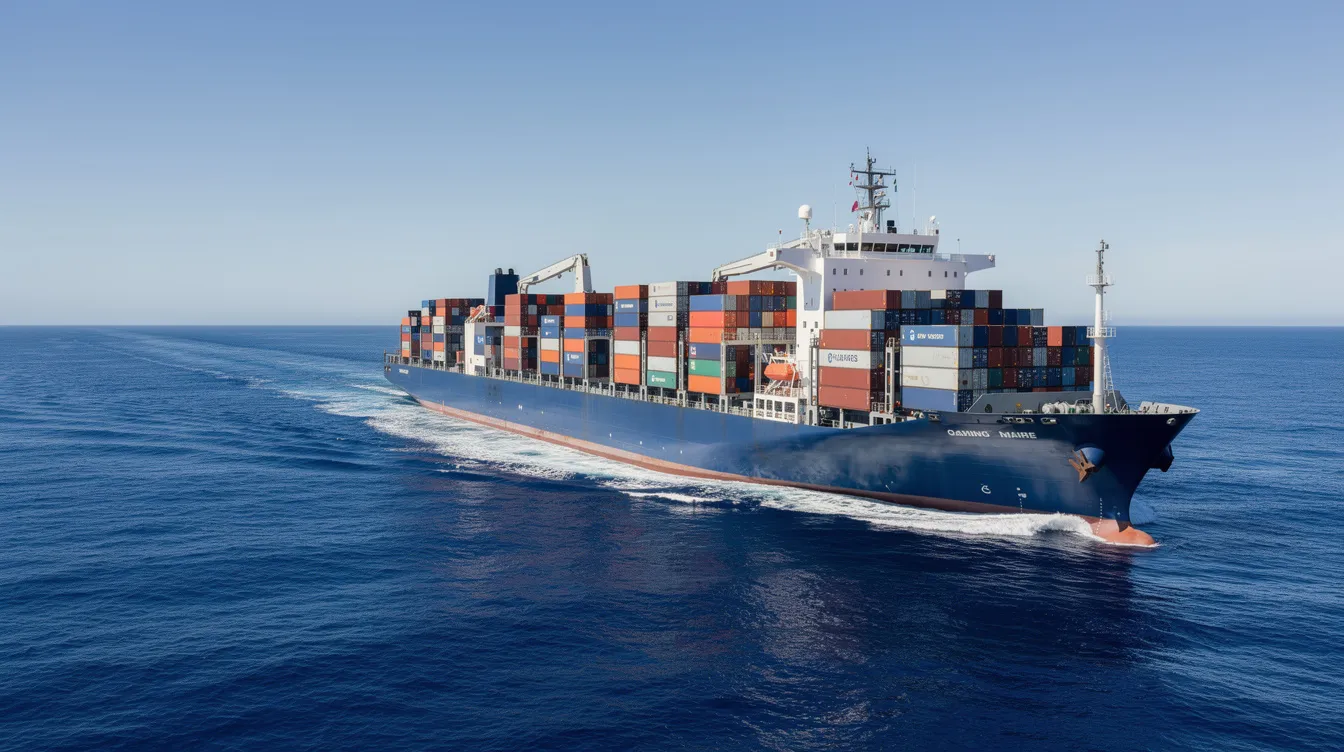
This article is written from Nautilus Shipping’s perspective as a ship-management and maritime services provider that supports owners with regulatory compliance, fleet performance and seafarer welfare. It is important to note that these SOLAS changes do not exist in isolation. They connect with other instruments such as the marpol annex framework, the hong kong convention, the international safety management code and the International Maritime Solid Bulk Cargoes (IMSBC) Code, forming a broader web of international regulations governing the maritime industry.
The sections that follow move from a chronological timeline of key dates through detailed breakdowns of fire safety, navigation, cargo, life-saving appliances, polar operations and ship recycling, concluding with practical guidance on what these changes mean for your fleet.
Timeline Overview of Key SOLAS Amendments (2025–2026 and Beyond)
Planning for regulatory change starts with understanding the dates. Below is a condensed timeline of the most significant SOLAS amendments 2025-2026 milestones and follow-on deadlines that shipowners should map against their fleet maintenance and survey schedules.
| Date | Instrument / Regulation | Key Change |
|---|---|---|
| 1 Jan 2025 | Selected SOLAS and code amendments (MSC.535(107)) | LSA Code updates on fall wires and release gear |
| 1 Jan 2026 | SOLAS Reg. II-2/20 (MSC.550(108)) | New fire safety measures for Ro-Ro ships are mandatory as of January 1, 2026 |
| 1 Jan 2026 | SOLAS Reg. V/19.2.12 | New SOLAS regulations mandate electronic inclinometers for certain vessels from 2026 (container ships and bulk carriers ≥ 3,000 GT, keel laid on or after this date) |
| 1 Jan 2026 | Grain Code (MSC.552(108)) | New optional loading condition for grain; Grain Loading Manuals must be updated |
| 1 Jan 2026 | SOLAS II-2 / PFOS ban | SOLAS amendments ban PFOS in fire extinguishing media by 2026; existing ships must comply at first survey on or after this date |
| 1 Jan 2026 | IMDG Code Amendment 42-24 | Updated dangerous goods classifications, stowage and segregation |
| 1 Jan 2026 | SOLAS V/31 & V/32 | Ships must report lost containers immediately under the new SOLAS amendments |
| 1 Jan 2028 | SOLAS Reg. V/23 (MSC.572(110)) | New pilot transfer arrangements are mandatory for new installations |
| 1 Jan 2028 | SOLAS II-2/20 (retroactive) | Existing passenger ships must retrofit video monitoring and detection systems in Ro-Ro spaces at the first survey on or after this date |
| 1 Jan 2029 | SOLAS Reg. V/23 (existing PTAs) | Existing ships under SOLAS Chapter I must comply with the first renewal survey on or after this date |
Each of these entries carries implications for budgets, dry-docking slots, equipment procurement and crew training. For example, ships constructed under a building contract signed in late 2025 will face the full suite of 2026 requirements from keel-laying. Owners of existing ships must check whether their vessels are due for a first renewal survey or other periodic survey within these windows.
Nautilus Shipping’s compliance teams can convert this timeline into a vessel-specific regulatory calendar for each managed ship, aligning survey cycles with retrofit schedules to minimise off-hire and control costs. Early coordination with a recognized organization or classification society is critical-waiting until the deadline year creates bottlenecks.
Fire Safety and Fuel-Related Amendments under SOLAS II-2 (2025–2026)
SOLAS Chapter II-2 governs fire protection, fire detection and fire extinction across a ship’s structure. The 2025–2026 amendment cycle delivers some of the most operationally significant changes in this SOLAS chapter, targeting three main areas: fuel flashpoint compliance, Ro-Ro and vehicle space fire safety, and the elimination of hazardous fire-fighting chemicals.
1. Fuel Flashpoint and Oil Fuel Supplier Certification
SOLAS amendments require oil fuel suppliers to certify flashpoint compliance for any fuel delivered to ships. Under the updated SOLAS II-2/4(2.1.9), oil fuel must meet a minimum flashpoint of 60°C, verified by the supplier’s test method and confirmed by a declaration signed by the supplier. This is particularly relevant for ships carrying oil fuel or bunkering blended fuels of uncertain origin.
MARPOL requires flashpoint information in bunker delivery notes, creating a parallel documentation chain. For ships using conventional fuel oil, the practical impact is straightforward: verify every delivery, retain certificates, and reject non-compliant batches. For ships carrying liquefied gases or using low flashpoint fuels such as LNG, complementary requirements in the IGF Code and IGC Code address design, materials and operational procedures. Gas carriers and LNG carriers must also meet updated fire protection standards for fuel storage and handling.
Ships using other low-flashpoint fuels-methanol, ammonia or hydrogen-face evolving detailed requirements as IMO continues to refine the regulatory framework for alternative fuels.
2. Ro-Ro and Vehicle Space Fire Protection
SOLAS Chapter II-2 amendments enhance fire safety for Ro-Ro spaces from 2026 through Resolution MSC.550(108). For ships constructed on or after 1 January 2026, the requirements include:
-
Individually identifiable fixed fire detection and alarm systems in Ro-Ro, vehicle and special category spaces
-
Video monitoring systems covering vehicle decks
-
Structural fire protection and arrangement of openings to contain fire spread
-
Fixed water-based extinguishing systems for weather decks intended for carrying motor vehicles
-
Enhanced ventilation controls and fire patrol procedures
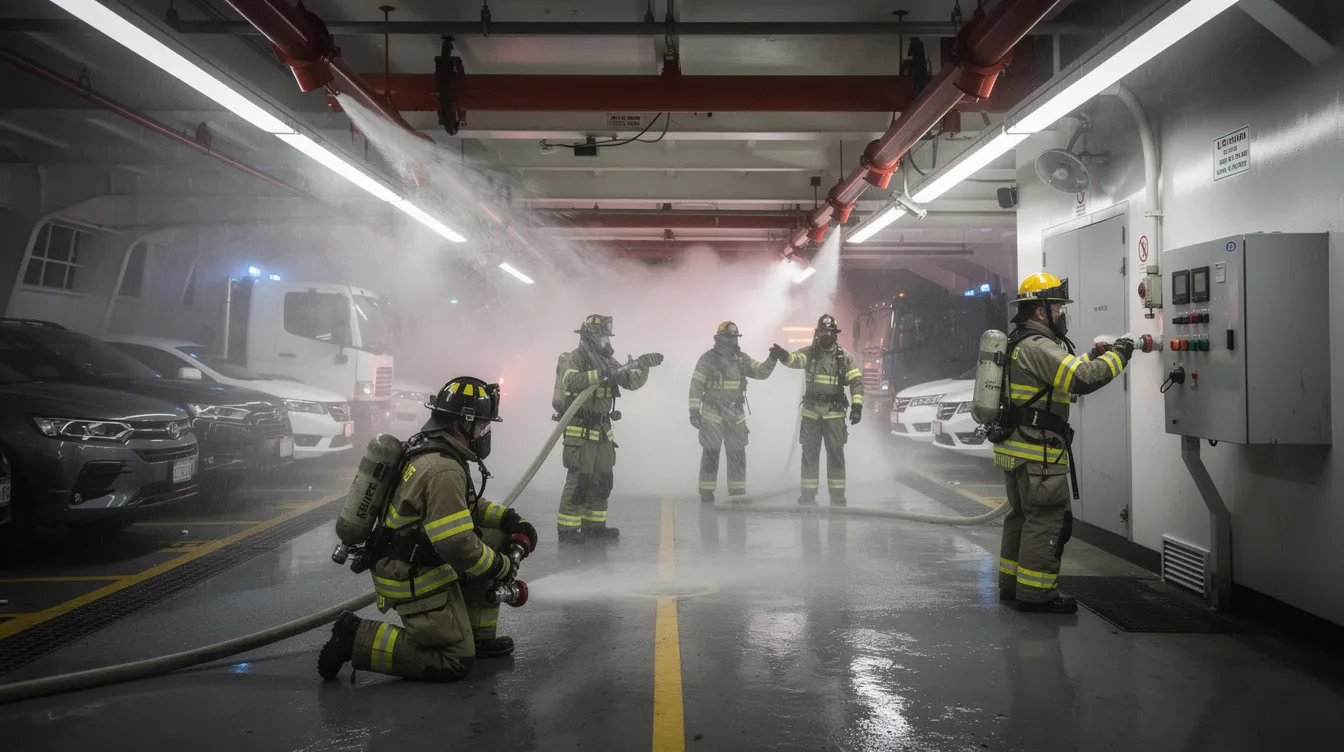
For passenger ships constructed before 1 January 2026, certain critical provisions-including fire detection upgrades and video monitoring-must be met no later than the first survey on or after 1 January 2028. This retroactive element is significant for ferry operators and cruise lines running older tonnage through Ro-Ro and special category spaces.
3. PFOS Ban
From 1 January 2026, ships constructed on or after that date may not use or store fire extinguishing media containing PFOS (perfluorooctane sulfonic acid). For existing ships built before that date, PFOS-containing media must be eliminated at the first survey on or after 1 January 2026.
Operationally, this means:
-
Conducting an inventory of all foam concentrates on board ships
-
Replacing non-compliant agents with PFOS-free alternatives
-
Updating safety data sheets and onboard documentation
-
Delivering crew familiarisation on the new media
This change aligns with broader environmental objectives and also eases future compliance with ship recycling obligations under the Hong Kong International Convention.
Navigational Safety: Pilot Transfer Arrangements and Bridge Equipment (SOLAS V)
SOLAS Chapter V forms the backbone of navigational safety for all ships on international voyages, covering everything from bridge equipment and chart carriage to maritime search and rescue coordination with coastal states.
Pilot Transfer Arrangements
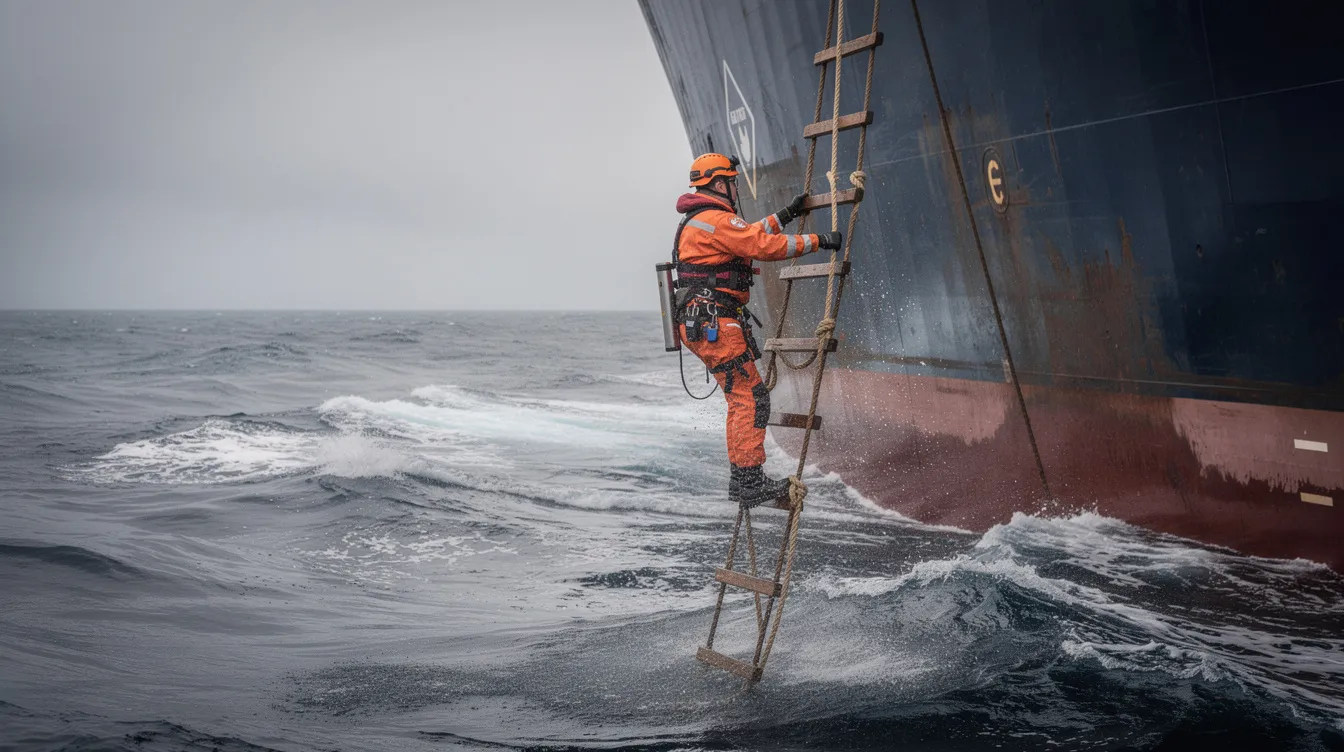
The amendments to SOLAS Reg. V/23, adopted via MSC.572(110) with accompanying performance standard MSC.576(110), elevate pilot transfer arrangements from recommended best practice to mandatory, enforceable standards. The changes cover:
-
Design, manufacture and safe construction of pilot ladders, combination ladders and platforms
-
Securing points and handholds for safe embarkation and disembarkation
-
Inspection, maintenance and replacement routines
-
Crew familiarisation with rigging, deployment and emergency fallback procedures
-
An explicit prohibition on mechanical pilot hoists
For new installations fitted on or after 1 January 2028, full compliance is required immediately. For existing ships subject to SOLAS Chapter I (cargo ships above 500 GT and all passenger ships on international voyages), existing pilot transfer arrangements must comply at the first survey on or after 1 January 2029. Smaller vessels or those in non-international trade have until 1 January 2030 under national administration oversight.
Shipowners should assess their current ladder inventory, securing points and platform arrangements during 2026–2027 to plan retrofits aligned with scheduled dry-dockings.
Electronic Inclinometers
New SOLAS regulations mandate electronic inclinometers for certain vessels from 2026. Specifically, new container ships and bulk carriers of 3,000 GT or more with keels laid on or after 1 January 2026 must carry equipment that determines, displays and records roll motions in real time. The performance standard (MSC.363(92)) specifies accuracy requirements, logging intervals and data storage resilience.
This data supports safer navigation and manoeuvring decisions and provides valuable evidence for post-incident analysis. Existing vessels are not required to retrofit inclinometers but may adopt them voluntarily-a worthwhile investment for vessels frequently carrying heavy or high-centre-of-gravity cargoes.
Container Loss Reporting
Strict new procedures for reporting lost containers aim to enhance maritime safety. Under amendments to SOLAS V/31 and V/32, ships must report lost containers immediately under the new SOLAS amendments, including particulars such as position, number of containers, cargo type and any hazardous contents. This information must be communicated to nearby ships, the coastal state and the flag state. The obligation links directly to maritime search coordination and supports the International Aeronautical and Maritime SAR framework (IAMSAR).
Cargo Handling and Stability: Grain, Solid Bulk Cargoes and Dangerous Goods
Cargo-related SOLAS amendments are closely intertwined with supporting international code instruments. The risks from cargo shifting, liquefaction, self-heating and chemical hazards make this one of the most operationally sensitive areas for bulk carriers, general cargo ships and vessels carrying packaged dangerous goods.
Grain Code Amendments
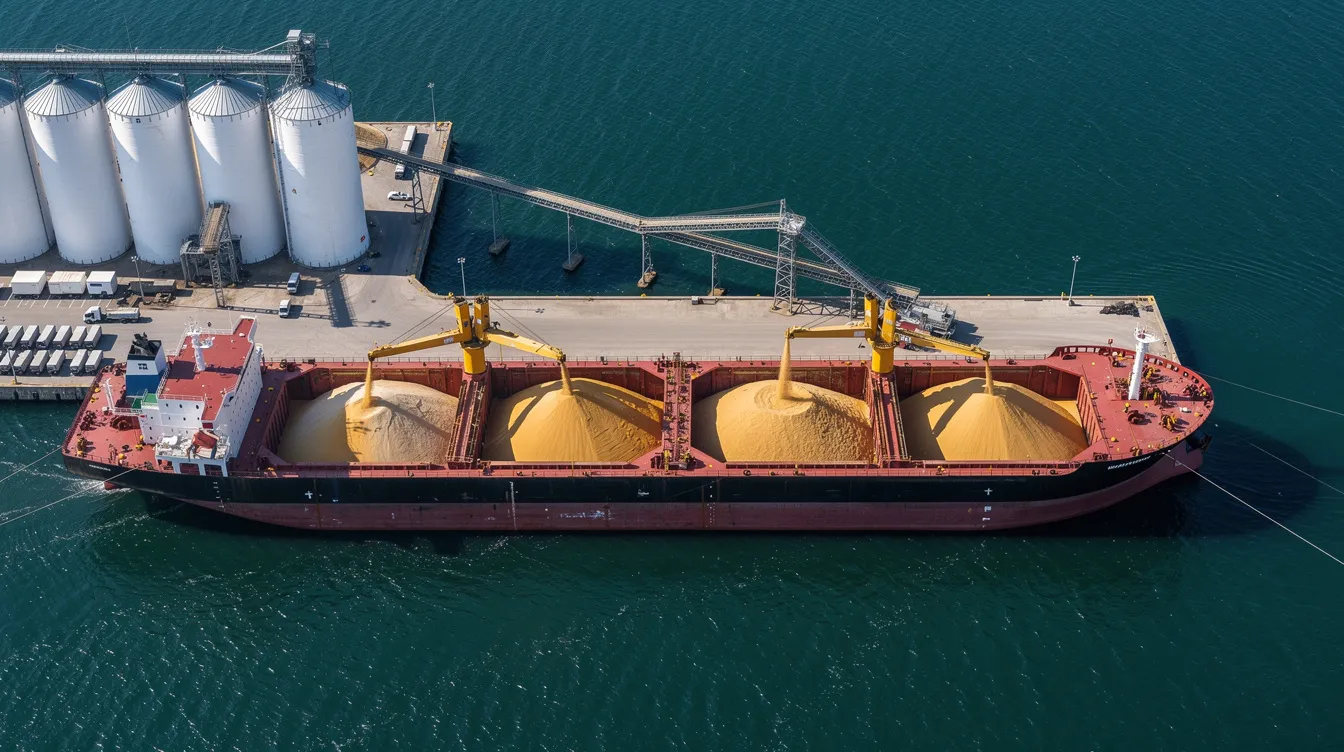
Resolution MSC.552(108), effective 1 January 2026, introduces a new optional loading condition under the Grain Code: “specially suitable compartment, partly filled in way of the hatch opening, with ends untrimmed.” In practical terms, this means that qualifying holds-those designed and maintained for the purpose-do not require trimming of grain ends outside the hatch perimeter, provided the loading surface is at or above the bottom edge of hatch end beams.
The assumed slope of grain after shifting is defined at 25° to the horizontal for both ends and the hatch area. Grain Loading Manuals and loading computers must incorporate these new heeling moment curves. This applies to all ships (new and existing) intending to use the condition. Updated Grain Loading Manuals require flag state or classification society approval. Failure to update them could lead to denial of loading at terminals or heightened port state control scrutiny.
IMSBC(International Maritime Solid Bulk Cargoes) Code Updates
The IMSBC Code covers the safe shipment of solid bulk cargoes. The IMSBC Code is part of the SOLAS framework and outlines risks and measures for solid bulk cargoes, including liquefaction-prone materials like nickel ore and bauxite, self-heating cargoes like coal, and chemically hazardous materials. Amendments to the IMSBC Code were adopted in 2023, introducing new cargo schedules, reclassified cargoes and revised test procedures. The IMSBC Code aims to enhance safety during cargo handling by strengthening shipper declarations, sampling requirements and transportable moisture limit testing.
Nautilus Shipping’s role in voyage planning and cargo risk assessments helps owners navigate the interaction between these international maritime solid bulk cargo requirements and commercial pressures from shippers and charterers.
Dangerous Goods (IMDG Code)
The IMDG Code is part of the SOLAS framework and aligns with UN transport recommendations for the classification, packaging, marking and transport of hazardous materials. Amendments to the IMDG Code were adopted in 2023, with the consolidated IMDG Code incorporating Amendment 42-24 entering mandatory application from 1 January 2026. IMDG Code updates ensure safe carriage of dangerous goods by refining classification criteria, stowage and segregation rules and documentation requirements.
For ship operators, this means updated dangerous goods manifests, revised stowage plans, refresher crew training and amended Safety Management System procedures.
Life-Saving Appliances and LSA Code Updates
The International Life-Saving Appliance Code, commonly referred to as the LSA Code, establishes minimum standards for the design, construction and performance of lifejackets, lifeboats, rescue boats, launching appliances and associated equipment under SOLAS Chapter III. The 2025–2026 amendment cycle brings incremental but important improvements to equipment reliability and crew safety during drills.
Key Changes
Recent IMO resolutions (including MSC.535(107) and subsequent decisions at MSC.110) tighten requirements in several areas:
-
Fall wires and hooks: Increased testing, strength and material quality standards for fall wires used in lifeboat davit systems, addressing failure modes observed in real incidents
-
On-load release gear: Stricter operational testing, calibration and maintenance intervals for on-load release gear, reducing the risk of accidental release during drills
-
Totally enclosed lifeboats: New ventilation requirements for enclosed spaces within totally enclosed lifeboats, applicable to installations on or after 1 January 2026
-
Thorough examination: Periodic thorough examination of all life-saving appliances and launching appliances, with documented results available for class and port state inspectors
Practical Implications for Fleet Management
These changes affect several areas of day-to-day fleet management:
-
Equipment purchasing and spare parts strategy: ensure new components meet updated performance standard requirements
-
Planned maintenance systems: update intervals for inspections, operational testing of release gear and wire replacement
-
Class surveys: prepare documentation ahead of periodic and renewal survey cycles
-
Muster lists and life-saving appliance plans must be updated to reflect any new equipment or procedures
-
Crew familiarisation programmes should include hands-on training with any modified or replacement equipment
Operational Impact on Shipowners and Managers
Regulatory text alone does not reveal the full operational impact of the SOLAS amendments 2025-2026 cycle. Behind each new requirement lies capital expenditure, operational cost, training time, documentation effort and potential downtime. The compounding effect across a mixed fleet can be substantial if not managed proactively.
Fleet-Wide Upgrades
The 2025–2026 amendments may require upgrades across multiple systems:
-
Pilot ladders, platforms and securing arrangements on every vessel calling at pilotage-mandatory ports
-
Fire-fighting systems, detection equipment and video monitoring on ro-ro passenger ships and ferries
-
Life-saving appliances, including lifeboat davits, fall wires and rescue boats
-
Updated Grain Loading Manuals and cargo documentation
Crew Management and Training
The human element is just as important as the hardware. Changes trigger new drills and updated Safety Management System procedures under the International Safety Management Code. Specific training areas include:
-
Ro-ro fire safety detection, suppression and evacuation procedures
-
Dangerous goods handling, stowage and emergency response
-
Pilot transfer arrangement, rigging, inspection and safety protocols
-
Polar operations survival and ice navigation
-
Bridge resource management for new navigational equipment
Amendments to the STCW Code recognize electronic certificates for seafarers, streamlining credential verification across flag states and reducing administrative burden during crew changes.
New SOLAS Chapter XV introduces safety requirements for industrial personnel (governed by the IP Code), expanding the regulatory umbrella to cover ships carrying industrial personnel such as offshore wind farm technicians, a growing segment of shipping operations.
Coordination with Authorities
Owners must coordinate with class societies, flag states and their recognized organization early to confirm interpretations of new regulations, agree on retrofit plans and secure survey windows. Differences in interpretation among administrations can create compliance gaps if not addressed proactively.
Nautilus Shipping’s integrated ship management services-technical management, vessel inspections, commercial operations and crew management-translate these SOLAS amendments into practical, vessel-specific action plans.
Nautilus Shipping’s Compliance and Advisory Support
Nautilus Shipping is positioned as a partner to shipowners seeking reliable, compliant and efficient operations under evolving SOLAS and related conventions. With a track record in managing bulk carriers, tankers, container ships, general cargo and specialised vessels, the company offers the depth and breadth needed to navigate complex regulatory transitions.
Core Services for SOLAS 2025–2026 Compliance
-
Gap analyses and vessel audits: Fleet-wide assessments identifying equipment, documentation and procedural gaps against the latest SOLAS amendments 2025 2026 requirements
-
Upgrade project management: Specification review for newbuilds, retrofit planning for existing ships, procurement of compliant equipment and yard coordination to minimise off-hire
-
Class and flag state liaison: Early engagement with classification societies and flag states to confirm acceptable equivalences and avoid last-minute surprises
-
Crew management and training: Tailored programmes covering fire safety, life saving appliances, dangerous goods, IAMSAR procedures and bridge resource management for new navigational requirements
-
Documentation updates: Grain Loading Manuals, pilot transfer arrangement records, fuel supplier flashpoint declarations, Safety Management System amendments and equipment inventories
-
Sustainability and environmental compliance: Connecting SOLAS fire and fuel requirements with MARPOL emission control, decarbonisation planning and ESG reporting
Whether your fleet consists of two vessels or twenty, the cost of non-compliance, detentions, safety incidents, and reputational damage far exceeds the investment in proactive preparation.
If you own or manage bulk carriers, tankers, container ships, general cargo or specialised vessels, now is the time to engage Nautilus Shipping and begin preparing for the 2025–2026 SOLAS amendments before survey windows narrow and yard capacity tightens.
FAQs
-
Which SOLAS amendments will most affect my fleet between 2025 and 2026?
The most impactful changes for many fleets are the fire safety updates for Ro-Ro and passenger ships under SOLAS II-2/20, cargo-related changes to grain loading manuals under the Grain Code, navigational safety improvements including pilot transfer arrangements under SOLAS V/23 (with later enforcement dates), and the ongoing LSA Code updates for lifeboats and rescue equipment. The PFOS ban and electronic inclinometer mandates also carry broad implications. The exact impact depends on vessel type, age, trading area, and existing equipment, so a ship-specific assessment with your technical manager or recognized organization is essential.
-
How far in advance should we start preparing for the new pilot transfer arrangement rules?
Although the SOLAS Reg. V/23 amendments apply from 1 January 2028 for new installations, owners should assess ladders, platforms, and securing arrangements during 2026–2027 to plan retrofits and budget allocations. Incorporating upgrades into scheduled dry-dockings can control costs and minimise off-hire time. Waiting until 2028 risks supply chain delays and limited yard availability.
-
Do the 2026 fire safety amendments apply to existing ships or only newbuilds?
Some of the SOLAS II-2/20 fire protection requirements for Ro-Ro and special category spaces apply to new passenger ships from their construction date, while others have retroactive elements that will be phased in for existing ships by around 2028 (at the first survey on or after 1 January 2028). The scope of retroactive provisions varies by paragraph; video monitoring and fire detection are among the areas flagged for retrofit. Owners should review flag state circulars and class society guidance to understand which provisions are mandatory for their existing tonnage.
-
How do these SOLAS changes relate to the ISM Code and our Safety Management System?
The International Safety Management Code requires companies to identify regulatory changes and update their Safety Management System accordingly, including risk assessments, procedures, checklists, training, and drills. Any change in equipment, cargo handling, or emergency response resulting from SOLAS amendments must be reflected in SMS documentation and crew familiarisation on board ships. Failing to update your SMS can result in non-conformities during ISM audits, with potential consequences for your Document of Compliance and Safety Management Certificates.
-
Can Nautilus Shipping manage compliance for a mixed fleet under different flags?
Nautilus Shipping supports fleets of bulk carriers, tankers, container ships, general cargo, and specialised vessels under multiple flag states by coordinating with each administration and classification society. Services include regulatory tracking, vessel-specific compliance plans, project management for retrofits, crew training coordination, and ongoing performance monitoring tied to safety and sustainability KPIs. Whether your vessels fly one flag or several, a single management partner with cross-flag expertise simplifies what would otherwise be an overwhelming coordination challenge.