
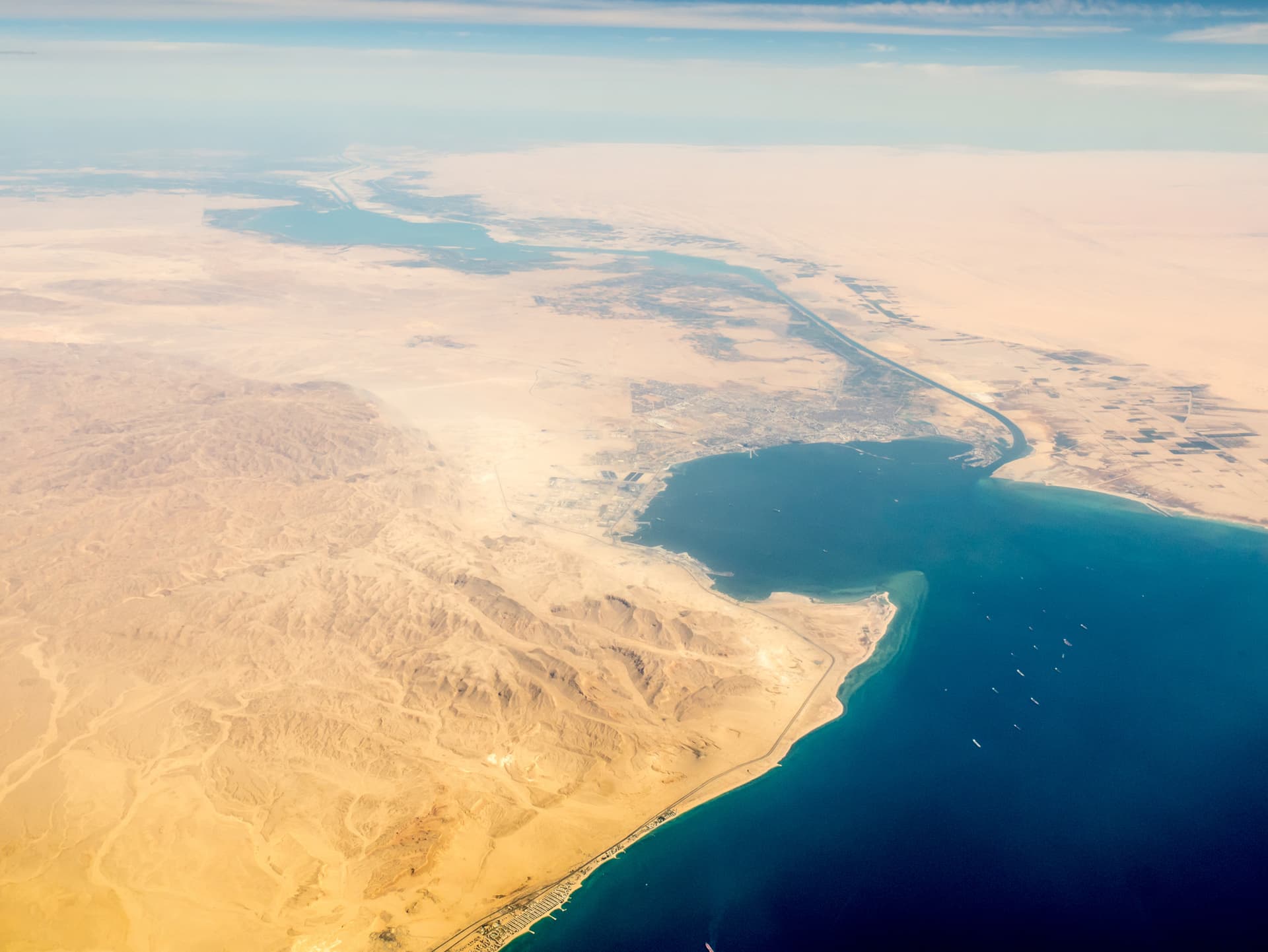
The Suez Canal reopening in 2026 marks a turning point for ocean shipping after more than two years of disruption. But this is not an overnight switch-it is a gradual return that creates both opportunities and fresh risks for shipowners. Here is what the transition means for your fleet, your margins, and your operations.
Key Takeaways
-
The Suez Canal reopening is happening service-by-service through 2026, not as a single event. Full normalization may not arrive until 2027.
-
Restoring the Suez route can reduce Asia–Europe transit times by 10–15 days and release roughly 6% of global fleet capacity back into the market.
-
Combined with new vessel deliveries and softer demand, the capacity release is expected to push freight rates downward-potentially by 25% globally in 2026-while keeping volatility high.
-
War-risk insurance costs, Red Sea security concerns, and port congestion at European terminals will sustain elevated risk premiums and operational uncertainty through at least late 2026.
-
Nautilus Shipping supports shipowners during this transition period with technical management, crew readiness, routing flexibility, and compliance-focused ship management.
Background: How the Red Sea Crisis Closed the Suez Gateway
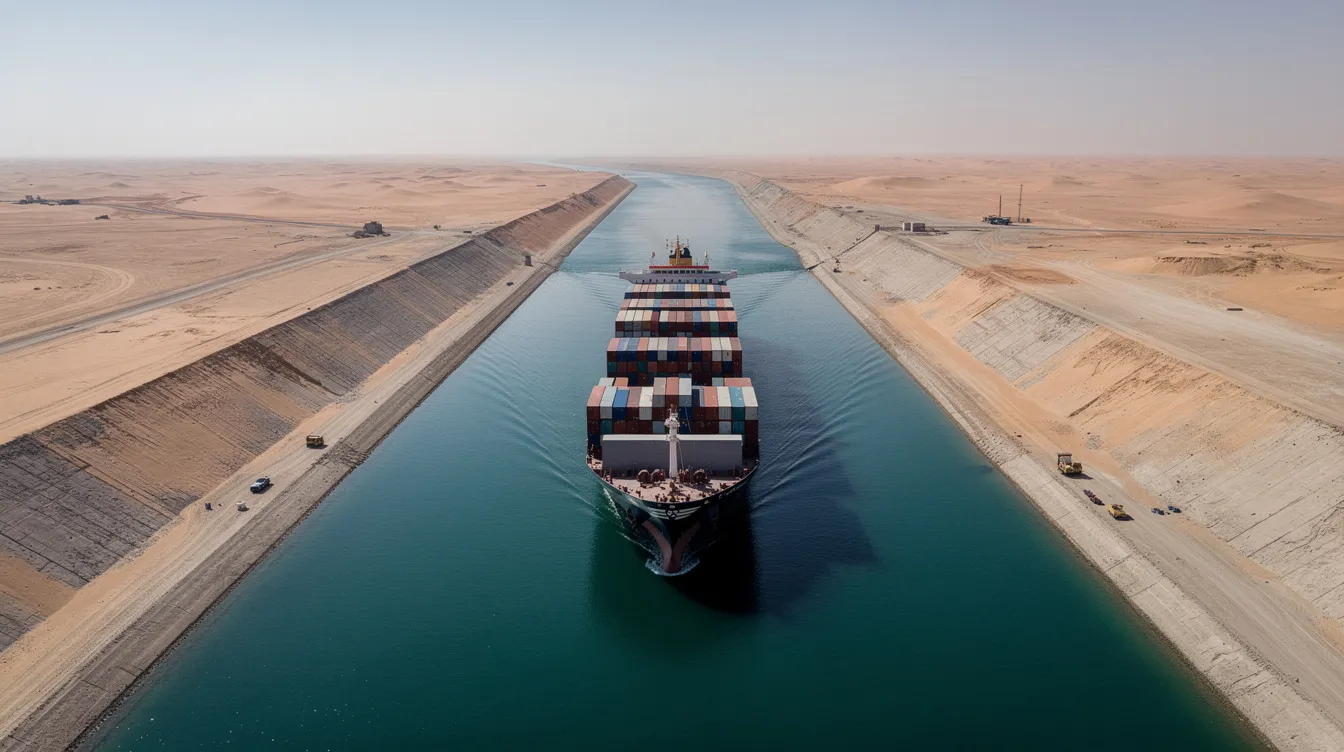
When Houthi attacks began in November 2023, a rebel group based in Yemen started attacking commercial vessels transiting the southern mouth of the Red Sea near the Bab el-Mandeb Strait. Attacks escalated rapidly-missiles and drones struck cargo ships, setting ablaze multiple vessels and injuring or killing several mariners. By late December 2023, the canal had been effectively closed to most mainline container traffic, and the effective closure persisted well into 2025.
Before the crisis, the Suez Canal handled about 12–15% of global trade and roughly 30% of container traffic worldwide, underscoring the canal’s importance as a choke point. Major carriers including Maersk, MSC, CMA CGM, and Hapag-Lloyd diverted container vessels and other commercial vessels via the Cape of Good Hope, adding 10–14 days to typical Asia–Europe voyages. Cape of Good Hope diversions absorbed 6% of global container shipping capacity and sent container shipping costs soaring. Fuel consumption spiked, war-risk insurance premiums surged near 1% of hull value per transit, and global supply chains suffered shock after shock-fueling port congestion, erratic sailing schedules, and sharply higher freight rates through 2024.
The Timeline to Suez Canal Reopening in 2026
The path from crisis to cautious return unfolded in stages. After mass diversions in late 2023 through Q1 2024, shipping lines spent 2024–2025 navigating elevated risk with only partial, stop-start use of the Red Sea by smaller operators. Diplomatic efforts, stepped-up naval patrols, and convoy-style passages through the southern Red Sea gradually reduced successful attacks by late 2025. Underwriters began cautiously reassessing war-risk premiums, setting the stage for a phased Suez Canal reopening in early 2026. Immediate benefits of reopening the canal may not be instant due to logistical adjustments-carriers are adding Suez-linked loops one at a time, reserving the right to divert back via the Cape route if conditions worsen.
Carrier Responses: Who Is Returning to Suez and How Fast?
CMA CGM plans to resume Suez services in January 2026, launching its INDAMEX full-loop service through the canal. That move shortened CMA CGM’s transit time from 105 days to 98 days via Suez, effectively removing at least four ships from the rotation and freeing capacity. Maersk and Hapag-Lloyd have taken a more cautious return approach, selectively routing their Gemini AE15 service through Suez by mid-2026 while keeping core network design ready for rapid reversion to the Cape route. Other container lines and alliances, including ONE, are adding limited Red Sea or Suez-linked loops from asian ports, signalling steady but incomplete normalization. For tramp shipping-tankers and bulkers-routing decisions remain voyage-specific, weighing charterer preferences, insurance costs, and real-time security updates.
Impact on Global Trade and Supply Chains
The return to Suez reshapes cargo flows across large swathes of the Asia–Europe, Middle East, and east coast trade lanes. Shorter routes via Suez unblock inventory trapped on longer Cape voyages, supporting faster stock rotation for European ports and Mediterranean importers. The return to the Suez Canal stabilises global supply chains and reduces unpredictability, encouraging shippers to shift from just-in-case back toward leaner safety stocks. Key hubs-Rotterdam, Antwerp-Bruges, Piraeus, Port Said, Jeddah-are seeing rising port calls as services realign, restoring traditional patterns for shipping goods between Asia and Europe.
Freight Rates, Capacity and Insurance Costs
The capacity release effect is significant. A sudden Suez reopening could release 7–8% effective capacity overnight; even a gradual return frees over two million TEU of global vessel capacity as shorter loops require fewer ships. The global container fleet is expected to grow by 5% in 2026 through new vessel deliveries, compounding pressure. Asia to Europe spot rates are already down 41% year-over-year, and freight rates could fall 25% globally in 2026. The Drewry World Container Index dropped to around $2,000 per 40-foot container, signalling a buyer’s market. Freight rates are expected to drop significantly in 2026, though spot rates may still spike during disruptions.
War-risk insurance premiums, while decreasing as successful transits restore confidence, remain well above pre-2023 levels-running 1–3% of hull value versus a pre-crisis baseline of roughly 0.25%. Lower bunker costs on Suez routes partially offset insurance costs, but underwriters are expected to demand months of incident-free sailing before premiums fully normalize, reducing transportation costs only gradually.
Transit Time and Schedule Reliability Effects
Pre-crisis, transit times from Shanghai to Rotterdam via Suez ran approximately 30 days. Cape detours stretched that to 42–45 days-nearly double that for some rotations when including port waits. A return to Suez could reduce transit times by 10–15 days on Asia–Europe lanes and roughly a week on some Asia–east coast routings, delivering faster transit times across the network. The Suez Canal reopening enables more reliable delivery schedules for shippers, though schedule reliability during Q1–Q3 2026 will be bumpy as carriers rebalance rotations and absorb bunching effects when early Suez voyages meet cape voyages at destination ports.
Port Congestion and Operational Bottlenecks
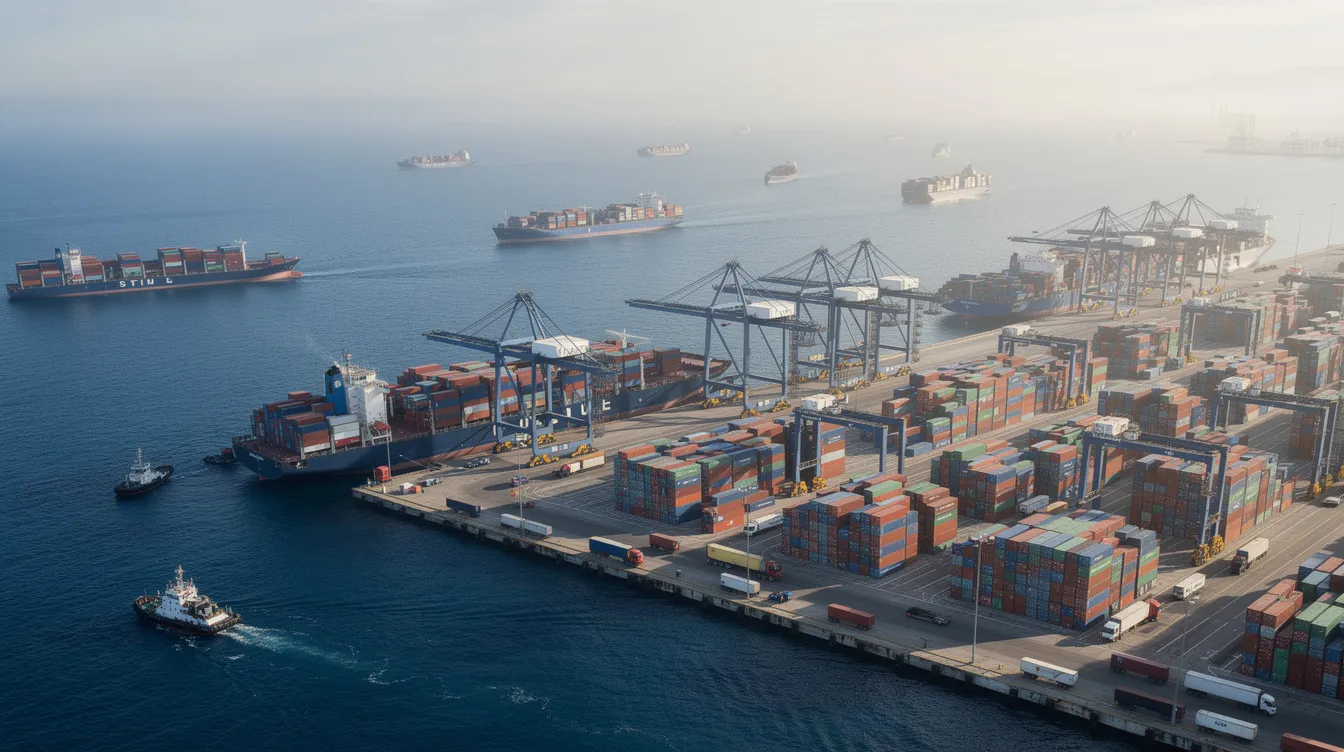
Restoring the Suez route may lead to a temporary spike in congestion at European ports. Overlapping cape-routed and new Suez-routed arrivals can create sharp vessel-call spikes-potentially 10–30% above normal weekly volumes at some European terminals. This congestion can erode ocean-freight savings through longer anchorage waits, congestion surcharges, and container imbalance.
For shipowners, well-planned port calls, accurate ETA reporting, and tight coordination with port agents are essential to minimize turnaround delays during the transition.
Risk Management: Security, Compliance and Safety in the Red Sea
While Houthi attacks have declined from 2023–2024 peaks, the threat has not disappeared, and risk can re-escalate quickly. Mitigation measures include adherence to naval advisories, designated transit corridors, speed adjustments, citadel drills, and strict compliance with flag-state and IMO guidance. Nautilus Shipping supports shipowners with voyage risk assessment, updated SMS procedures, and crew training to ensure safe, compliant transits through high-risk areas.
What Suez Reopening Means for Shipowners and Operators
Lower average voyage duration via Suez improves vessel utilization-loops that via Cape allowed roughly 15 annual voyages might permit 22–24 via Suez. But lower rates and higher volatility compress margins, making technical efficiency and fuel optimization more critical than during the tight 2024–2025 markets. Vessels and documentation must satisfy more stringent insurance and vetting requirements for Red Sea passages, and owners relying on third-party ship management should ensure their managers can adapt routing, crewing, and maintenance plans quickly.
Strategic Planning for 2026–2027: Practical Steps for Shipowners
-
Review deployment plans comparing Cape versus Suez economics under different insurance, bunker, and freight-rate scenarios.
-
Re-evaluate dry-dock schedules, hull cleaning, and CII compliance upgrades to benefit from more frequent Suez-based rotations.
-
Build flexibility into contracts-COAs and time charters-to account for fluctuating risk premiums and possible re-closures.
-
Partner with an experienced ship-management company like Nautilus Shipping to centralize technical, crewing, and operational decision-making and reduce execution risk.
Outlook: Will the Suez Canal Return to “Normal”?
Suez traffic volumes are likely to recover substantially by late 2026 or 2027, but full normalization depends on geopolitical stability. A permanent risk premium and more diversified routing patterns are here to stay. Decarbonization pressures, fleet overcapacity from vessel deliveries, and shifting manufacturing bases across Asia, India, and Africa will interact with Suez dynamics in complex ways. Shipowners who invest in efficient vessels, robust management, and agile operations will be best positioned for both high-rate spikes and low-rate periods. Nautilus Shipping will continue to monitor Red Sea and Suez developments and support clients in aligning fleet strategy with rapidly changing global shipping conditions.
FAQs
1. When will shipping through the Suez Canal be fully back to pre-2023 levels?
Most analysts expect a phased recovery through 2026, with volumes potentially approaching pre-crisis levels in late 2026 or 2027-assuming no major new security incidents. Full normalization also depends on insurance markets, naval commitments, and political developments in Yemen.
2. Will the Suez Canal Reopening immediately reduce freight rates?
Rates are already under pressure from fleet growth and slowing demand. Suez reopening accelerates this by releasing capacity, but short-term volatility remains likely with temporary spikes still possible. The medium-term trend points to lower rates and a softer market.
3. How should shipowners think about war-risk insurance for Red Sea transits in 2026?
Premiums remain above pre-crisis levels and vary by vessel type, flag, and underwriter risk appetite. Owners should work closely with brokers and ship managers to model route options and ensure policies, surveys, and onboard procedures meet current underwriter expectations.
4. Does it still make sense to route around the Cape of Good Hope after Suez reopening?
For some voyages-particularly where security tolerance is low, or insurance terms are restrictive- the Cape route may remain preferable despite higher fuel costs and longer transit. Owners and charterers should evaluate each voyage individually, comparing bunker, time, insurance, and risk costs under both options.
5. How can Nautilus Shipping help me adjust my fleet strategy for Suez reopening?
Nautilus Shipping provides integrated technical management, crew management, voyage risk assessment, and operational planning to align each vessel’s deployment with evolving Suez and Red Sea conditions. Contact us for a tailored assessment of how the Suez Canal reopening impacts your specific fleet and long-term strategy.