
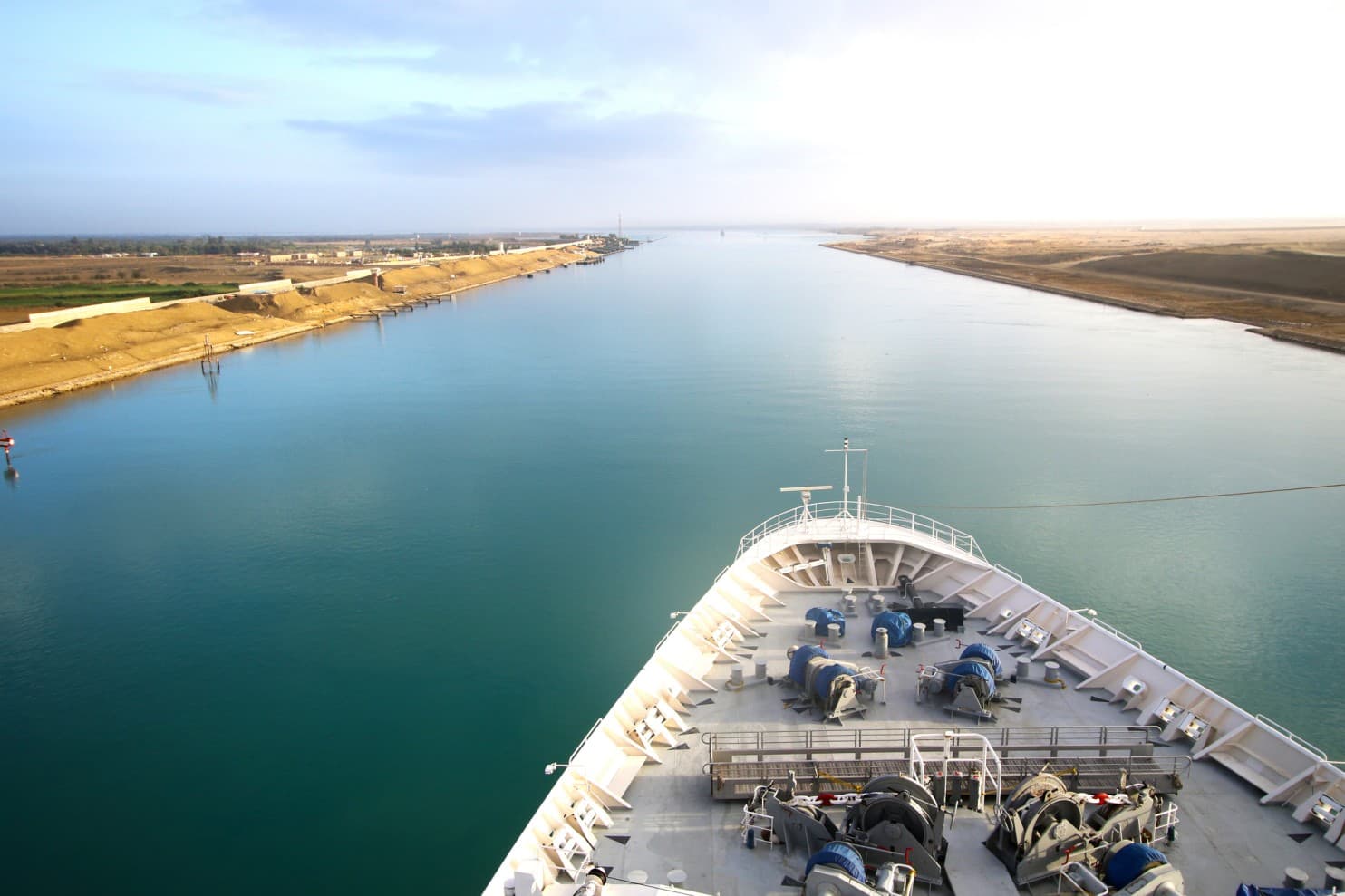
War risk insurance is experiencing extreme volatility in 2026. Geopolitical conflicts across the Red Sea, Bab al-Mandeb, and the Strait of Hormuz have turned what was once a marginal line item into a board-level financial concern. For ship owners and managers, understanding how premiums are calculated, where danger zones lie, and what operational steps reduce exposure is no longer optional-it is the difference between profitable trading and crippling cost overruns.
Key Takeaways
-
War risk insurance in 2026 is dominated by exposures in the Red Sea, Bab al-Mandeb, and the Strait of Hormuz. Insurance premiums in key corridors range from approximately 0.5% to over 10% of hull value depending on route, timing, and vessel type.
-
For large crude oil tankers, a single transit through a high risk area can add millions in additional war risk insurance costs and security measures. Insurance for a 270,000-metric-tonne tanker could cost about $21 million for a Hormuz transit at peak tension.
-
Insurers, the Joint War Committee (JWC), IBF/ITF designations, and sovereign backstop schemes together determine what is insurable, at what price, and under which crewing and operational conditions.
-
Nautilus Shipping’s role as a ship manager is to integrate routing, technical management, crew procedures, and documentation so that owners can secure compliant war risk cover on commercially viable terms.
-
If you need help planning voyages or fleet-wide risk mitigation, contact Nautilus Shipping for a vessel-specific discussion.
War Risk Insurance in 2026: Context and Definitions
Since 2024, conflicts around strategic chokepoints have transformed war risk from a niche insurance product into a cost that shipping companies must plan for at the highest level. War risk insurance is affected by geopolitical conflicts and regional instability, and the scope of exposures has widened dramatically.
War risk insurance refers to separate covers-hull and machinery, P&I liability, and cargo-designed to respond to losses from acts of war, terrorism, piracy, and political violence. These perils are explicitly excluded from standard marine policies. War risk zones are identified by the Joint War Committee, a body operating under the Lloyd’s Market Association that designates geographic areas where elevated threats trigger Additional Premiums (AP) when a vessel enters those zones.
It is worth distinguishing war risk from adjacent products: political risk insurance covers expropriation and sovereign default; K&R addresses kidnap and ransom; cyber war endorsements handle digital attacks on navigation or control systems. Each operates under different terms.
From Nautilus Shipping’s perspective, we do not sell insurance. But our decisions on technical condition, crew training, route selection, and compliance documentation directly affect the risk profile that underwriters assess-and therefore the price, coverage, and availability of war risk cover for owners.
High Risk Areas in 2026: Red Sea, Hormuz and Beyond
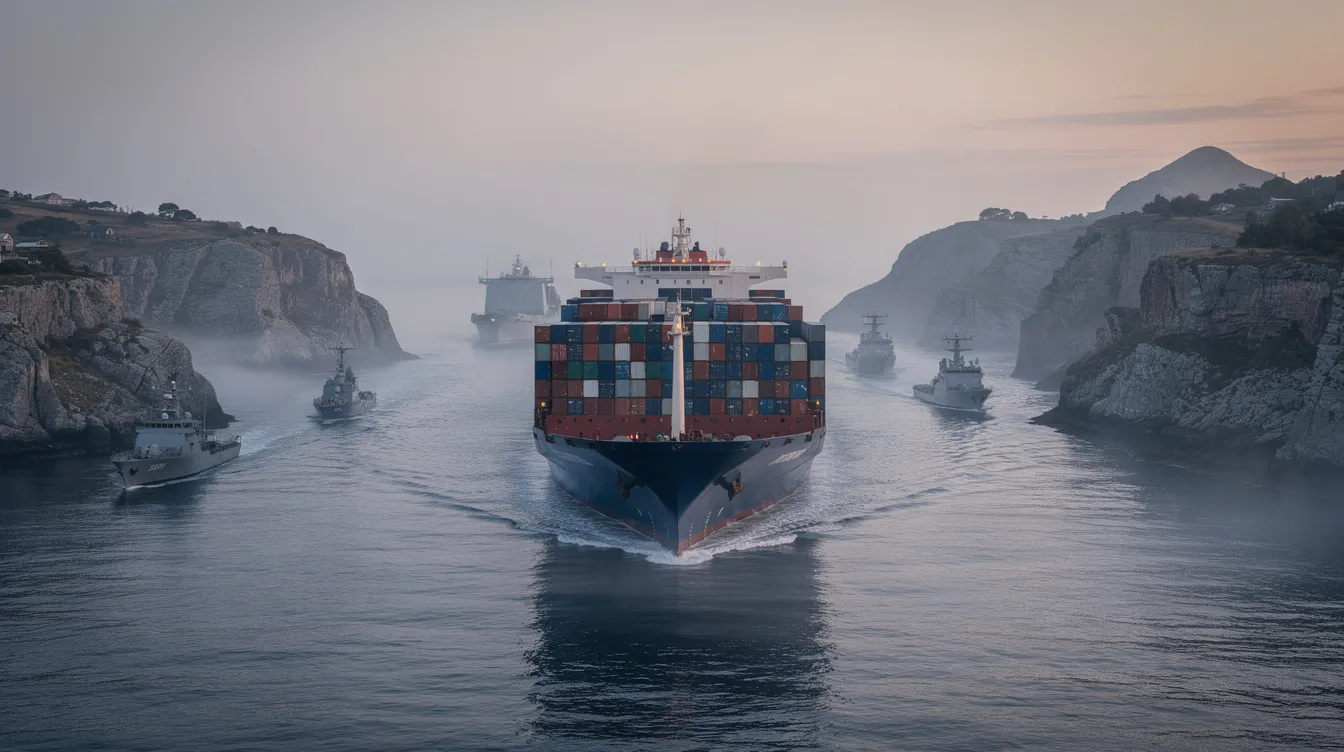
In mid-2026, the most consequential high-risk areas for commercial ships are the Red Sea and Bab al-Mandeb, the Strait of Hormuz and Persian Gulf, and parts of the Black Sea. High-risk zones are seeing tighter coverage terms and increased premiums across all three corridors.
Red Sea and Bab al-Mandeb. Bab al-Mandeb is 29 km wide at its narrowest point, making vessels transiting it acutely vulnerable. Emerging threats like drone strikes are shaping policy changes in war risk insurance here. Houthi missile and drone activity since late 2023 has driven Bab al-Mandab transit activity to fall by nearly 30% recently, with total crossings dropping on certain days to levels not seen in over a decade. Bab al-Mandeb premiums currently stand at 0.5% of hull value for ships transiting the most exposed corridors. War risk premiums for the Red Sea surged from 0.4% to 1% in mid-2025, and insurance premiums for Red Sea transit rose from 0.4% to 1% of ship value, remaining structurally elevated even after a partial ceasefire. Many maritime insurers issued cancellation notices for war-risk coverage in these high-risk zones, and short-notice cancellations are common in high-risk areas like the Arabian Gulf.
Strait of Hormuz. The Strait of Hormuz sees 120-140 vessels daily, carrying a substantial share of global oil supply. Insurance costs for Hormuz increased to 7.5-10% of hull value during peak tension periods, a dramatic shift from the pre-conflict range of 1-3%. Some 329 vessels operate in the Persian Gulf requiring insurance coverage, and insurance coverage for those 329 vessels in the Persian Gulf totals $352 billion, underscoring the enormous exposure that insurers carry. As Marcus Baker, global head of marine at Marsh, has noted, the market has never faced this concentration of insured value in active conflict zones simultaneously.
Black Sea and beyond. In the Black Sea, war risk APs for Ukrainian port calls have climbed above 1% of vessel value, with Russian ports quoted at 0.6-0.8%. Nautilus Shipping continuously monitors JWC circulars and area updates to plan routes around these evolving designations. For broader context on regional piracy and security risks, see our analysis of top maritime piracy hotspots in 2026.
How War Risk Insurance Costs Are Calculated
War risk insurance costs in 2026 combine a basic annual premium with voyage-specific Additional Premiums triggered when a vessel enters a declared war risk zone. The war risk insurance market is becoming more differentiated and dynamic, with several factors driving the actual price paid.
Key pricing drivers include:
-
Hull value and vessel type – a VLCC versus a feeder container ship versus a bulk carrier will be priced differently
-
Trade and cargo – crude oil, refined products, or high-value cargo each carry different risk profiles
-
Route and duration – time spent in listed areas, proximity to active threats
-
Threat intelligence – recent attack history, real-time data from AIS and intelligence platforms
-
Owner/manager track record – safety compliance, security audits, maintenance history, main engine and systems reliability
Insurance pricing may vary greatly based on specific asset routes and conditions. For example, in mid-2026, a 270,000-DWT crude oil tanker valued at USD 210 million might pay AP of approximately USD 21 million (around 10% of hull value) for a single high-tension Hormuz transit. The same vessel would face USD 1-2 million (0.5-1%) in the Red Sea, determined by convoy protection, timing, and routing. War-risk insurance costs in Hormuz rose to 7.5-10% of hull value across the tanker segment.
Insurers are implementing higher deductibles for vessels in high-risk zones and adding exclusions for cyber acts, pre-existing damage, and certain weapon types. Coverage for war risk insurance is becoming more exclusionary and complex. Insurers are also shifting to voyage-by-voyage underwriting due to volatility, and real-time information is being used for dynamic pricing in insurance. Premiums can increase dramatically after attacks and decline if risks recede, sometimes within hours.
Insurers are increasing the scrutiny of vessel routes and ownership for policies, reviewing flag state, beneficial ownership, and classification society records. From a budgeting standpoint, Nautilus Shipping helps owners model war risk line items per voyage, integrating them with crew, technical, and commercial operating budgets.
Impact on Crude Oil Trades, Freight Rates and the Global Economy
War risk insurance costs are no longer a marginal surcharge. For crude oil shipments through the Strait of Hormuz, they have become a structural component of voyage economics that affects the global economy.
By mid-2026, shipping crude oil from the Persian Gulf to China via Hormuz was assessed at approximately USD 78 per metric tonne-roughly four times the five-year pre-conflict average. War risk insurance alone accounted for USD 20+ per tonne for large tankers on this route. These costs feed directly into freight rates for tankers and container ships, then into refinery margins, commodity prices, and consumer inflation worldwide.
Behavioural changes are visible. Many owners and charterers are rerouting vessels around the Cape of Good Hope to avoid the Red Sea and the Suez Canal, accepting longer voyages through the Indian Ocean, higher fuel burn, and elevated time charter equivalents rather than paying peak premiums. This shift tightens vessel supply on traditional routes and further raises insurance rates.
Some owners refuse to call particular ports at any price, which reduces the pool of vessels trading in affected corridors. Government intervention in war risk insurance is expected to increase by 2026 to keep energy and container logistics corridors open. State-backed schemes, such as the US International Development Finance Corporation (DFC), have provided reinsurance facilities covering hull, cargo, and third-party liability when commercial policies were cancelled or priced prohibitively.
From Nautilus Shipping’s perspective, route selection and commercial strategy must now integrate war risk alongside market freight signals. For a deeper look at how Red Sea disruptions affect trade flows, see our dedicated analysis.
Legal, Regulatory and Labour Dimensions: JWC, IBF, ITF and CBAs
War risk in 2026 is not only an insurance pricing issue. It is tightly bound to legal compliance, seafarer welfare, and collective bargaining obligations that owners must maintain.
The Joint War Committee at Lloyd’s designates war and high-risk areas that trigger war risk clauses in hull, cargo, and charterparty contracts. The IBF (International Bargaining Forum) updated its risk area list on 23 July 2026, covering the Strait of Hormuz, Bab al-Mandeb, and the Black Sea with designations for warlike operations, high risk, and extended risk. The ITF’s list was updated on 11 May 2026.
These designations carry practical consequences for crew: mandatory briefings before a vessel enters a zone, the right to refuse sailing, additional pay and bonus structures, increased life and disability cover, and evacuation rights. Under MLC 2006 and CBAs, owners must inform seafarers before entering these areas and display updated lists onboard.
Nautilus Shipping’s crew management ensures that contracts, payroll, and benefits reflect the latest IBF/ITF conditions, and that voyage planning aligns seafarer entitlements with war risk insurance terms so owners remain both compliant and insurable under their MLC 2006 obligations.
Operational and Technical Risk Mitigation at Vessel Level
Underwriters in 2026 increasingly differentiate premiums based on how well a ship is managed technically and operationally, not just on which danger zones it enters. The nature of underwriting scrutiny has expanded to cover operational readiness in granular detail.
Core technical measures a ship manager like Nautilus Shipping implements include:
-
Enhanced ISM and ISPS procedures for high-risk areas
-
Hardening of decks, accommodation, and bridge windows
-
Citadel arrangements with independent communications and access control
-
Redundant navigation and communication systems resistant to jamming and spoofing
-
Rigorous planned maintenance of propulsion, including main engine systems, to ensure vessels can maintain tactical speed in chokepoints
Navigational practices matter to the same extent: adherence to corridor recommendations, convoy sailing, security reporting to UKMTO and coalition naval forces, and separation management at chokepoints all reduce exposure.
Crew training is subject to increasingly specific requirements-drills for missile and drone attack, piracy boarding attempts, medical emergency response, crisis communications, and psychological support pre- and post-transit. Meticulous documentation-risk assessments, toolbox meetings, security logs-is often requested by underwriters before offering or renewing cover at acceptable insurance rates.
Nautilus Shipping integrates these elements into our technical ship management and vessel inspection programs, reducing both the probability and severity of incidents and supporting better terms for owners in the war risk market.
Strategic Planning for Ship Owners: Cost, Routing and Charterparty Terms
In 2026, ship owners must treat war risk as a strategic planning variable, not an afterthought paid at the last minute before a voyage.
Charterparty allocation is a central question: who pays Additional Premiums, who selects the route, and how off-hire, deviation, and safe port warranties operate when a route crosses a war risk zone. The circumstances of each charter differ, and owners should ensure that their contracts address AP cost-sharing explicitly.
The trade-off between direct insurance costs and alternative routing is real. A Suez Canal and Red Sea transit with AP versus a Cape of Good Hope routing involves higher bunker consumption, longer transit time, and carbon cost implications under EU ETS and CII regimes. Owners benefit from systematic scenario planning: multiple route options per trade, sensitivity analysis at 0.5%, 1%, 5%, and 10% of hull value, and mapping how each scenario affects earnings and crew contracts.
Digital tools and data-AIS tracking, risk intelligence platforms, carbon calculators-play a growing role in this business of optimising routing for both security and commercial return. Nautilus Shipping combines technical management and commercial operations to help owners plan routes and strategies that minimise risk-adjusted cost and protect long-term asset ownership value.
If you want structured war risk planning for your fleet, reach out through our Contact Us page.
The Role of Governments and Sovereign Backstops
As private insurance markets reach capacity limits, governments may act as insurers of last resort during concentrated risks. This act of sovereign intervention keeps critical shipping lanes open when commercial cover is withdrawn.
Notable 2024–2026 developments include the US DFC’s multi-billion-dollar political and war risk reinsurance facilities supporting vessels trading through the Strait of Hormuz. These schemes typically operate above a certain attachment point: the government absorbs losses beyond a threshold, enabling private underwriters to continue writing policies on key routes while limiting their maximum exposure.
The implications include potential market distortion-some fleets effectively receive subsidised coverage based on flag or ownership, while others do not. However, owners still need robust management standards to qualify. Poor safety or security records may disqualify ships even when a sovereign program exists.
Nautilus Shipping monitors the availability and conditions of such backstops and helps owners align technical and crewing standards so they can access these facilities where relevant.
How Nautilus Shipping Supports Owners on War Risk in 2026
Nautilus Shipping is a full-service ship management company focused on performance, compliance, and sustainable operations-qualities that are now critical inputs into war risk insurability.
We support owners through:
-
Ship and technical management that keep vessels class-compliant and attractive to underwriters
-
Crew management aligned with IBF, ITF, and MLC 2006 obligations in warlike and high risk areas, including seafarer welfare and rotation planning
-
Voyage planning and commercial services that integrate war risk, EU ETS, and fuel optimisation
-
Vessel inspections and audits, including war risk readiness checks covering security hardware, ISPS procedures, crew drills, record-keeping, and contingency plans for Red Sea, Hormuz, and similar corridors
Our focus on seafarer welfare-counselling, rotation planning, and onboard support-helps maintain safe, motivated crews when repeatedly sailing near danger zones. Managers who invest in these fundamentals protect both their people and their owners’ financial position.
Ship owners reevaluating their war risk exposure, routes, or management arrangements should contact Nautilus Shipping for a vessel-specific risk mitigation and cost analysis discussion.
FAQs
These FAQs address practical questions that often arise in discussions with ship owners but may not be fully covered in the sections above.
1. Is war risk insurance mandatory for transiting areas like the Red Sea or Strait of Hormuz?
Regulators do not generally mandate war risk insurance by law. However, financiers, charterers, and P&I Clubs effectively make it a de facto requirement for vessels transiting JWC-listed high risk areas. Sailing without valid war risk cover can breach loan covenants and charterparty terms, leaving an owner exposed to both physical and financial risk.
2. How quickly can war risk premiums change, and how should I plan for that?
Rates can move within days-or even hours-after a major incident. In early March 2026, war risk for Hormuz doubled after escalations. Owners should build flexible clauses into charterparties, maintain real-time intelligence feeds, and work with managers like Nautilus Shipping to keep alternative routes and commercial scenarios ready at all times.
3. Does war risk insurance cover crew injury, death, or psychological trauma?
Crew compensation typically comes via P&I Clubs and employment contracts, not war risk hull policies. IBF and ITF zone designations trigger additional benefits-extra pay, life and disability cover, evacuation rights-but these are separate from hull war risk premiums. Owners must ensure their crew agreements and P&I cover are aligned with the range of risks their seafarers face.
4. Can I fully avoid war risk costs by rerouting around high risk areas?
Rerouting-for example, around the Cape of Good Hope-can reduce or eliminate AP for some voyages but adds fuel cost, transit time, carbon exposure, and opportunity cost. Owners need to compare total cost of rerouting versus paying war risk premiums for each trade and season, accounting for the full extent of operational and emissions impacts.
5. How can Nautilus Shipping help me if I already have a preferred insurance broker?
Nautilus Shipping works alongside the owner’s chosen broker. We do not replace them. Instead, we strengthen the technical, operational, and crew management foundations that underwriters assess when setting terms. That means better premiums, fewer exclusions, smoother claims handling, and a stronger position to qualify for sovereign backstop facilities where they exist.