Key Takeaways
Load line marks on ships define the maximum permitted limit to which a vessel may be safely immersed under specific seasonal, geographical, and water-density conditions. These markings are mandatory under the International Load Line Convention (ICLL 1966/1988) and remain one of the most scrutinized items during port state control inspections worldwide.
- The load line disc, deck line, and seasonal line marks (S, T, W, WNA, F, TF) form a unified system that indicates the maximum safe loading depth for vessels-all must be understood together to prevent vessel overloading and PSC detention.
- Legal compliance is determined by the midship mean draft relative to the appropriate load line for the current zone; fresh water versus sea water density requires specific corrections using the fresh water allowance.
- A valid International Load Line Certificate is a core statutory document, normally valid for five years with annual and intermediate surveys.
- Load lines ensure adequate freeboard for vessel stability, structural strength, and sufficient reserve buoyancy against heavy seas.
- Nautilus Shipping helps owners maintain continuous compliance through integrated technical management, crew training, and pre-PSC audit support.
Introduction: What Is a Load Line and Why It Matters Today
A load line-also called the Plimsoll line or international load line-is the legally assigned safe immersion limit permanently marked on a ship’s hull. It tells everyone from the master to port state control officers exactly how deep a ship loaded with cargo, fuel, and stores may sit in the water before safety margins are compromised.
Load line markings protect three things simultaneously: stability, reserve buoyancy, and structural integrity. Maintaining adequate freeboard is essential for preventing flooding and maintaining stability, and the load line system supports safe vessel operations across different maritime environments. When a vessel is overloaded beyond its appropriate load line, it loses the freeboard that keeps waves off deck, reduces reserve buoyancy that prevents foundering, and increases excessive stress on hull girders. Load lines prevent ships from being overloaded-a principle that has saved countless lives since the concept was first codified.
These rules apply to most seagoing ships of 24 metres and above and are enforced globally through the International Load Line Convention (1966) and its 1988 Protocol. The key physical elements-deck line, load line disc, seasonal load line markings, and the load line certificate-work as a single compliance package. Nautilus Shipping integrates load line compliance into day-to-day technical management, voyage planning, and inspections for the fleets it manages.
History and Evolution of Load Line Marks
In the mid-19th century, British merchant vessels were routinely overloaded-so-called “coffin ships” that sailed with dangerously low freeboard, often resulting in catastrophic loss of life. Public outrage eventually forced reform.
Samuel Plimsoll advocated for load lines in the 1870s, campaigning tirelessly against the practice of sending unseaworthy ships to sea for profit. His efforts led to the Unseaworthy Ships Bill, and ultimately the Merchant Shipping Act 1876, which made load line marks compulsory on British-registered ships-the ship’s Plimsoll line was born.
Key milestones in the evolution of load line rules:
- Lloyd’s Register introduced loading recommendations in 1835, establishing early freeboard guidance for underwriters and shipowners.
- The Merchant Shipping Act 1894 codified the disc’s position relative to a deck line, standardising dimensions.
- The International Load Line Convention was first adopted in 1930, creating the first multilateral treaty on safe loading.
- By 1966, the International Load Line Convention was re-examined and amended, producing the framework still in force today; 161 countries adhere to the 1966 Load Line Convention.
- The 1988 Protocol aligned load line survey and certification cycles with SOLAS and MARPOL, streamlining statutory oversight.
Components of Load Line Markings on the Hull
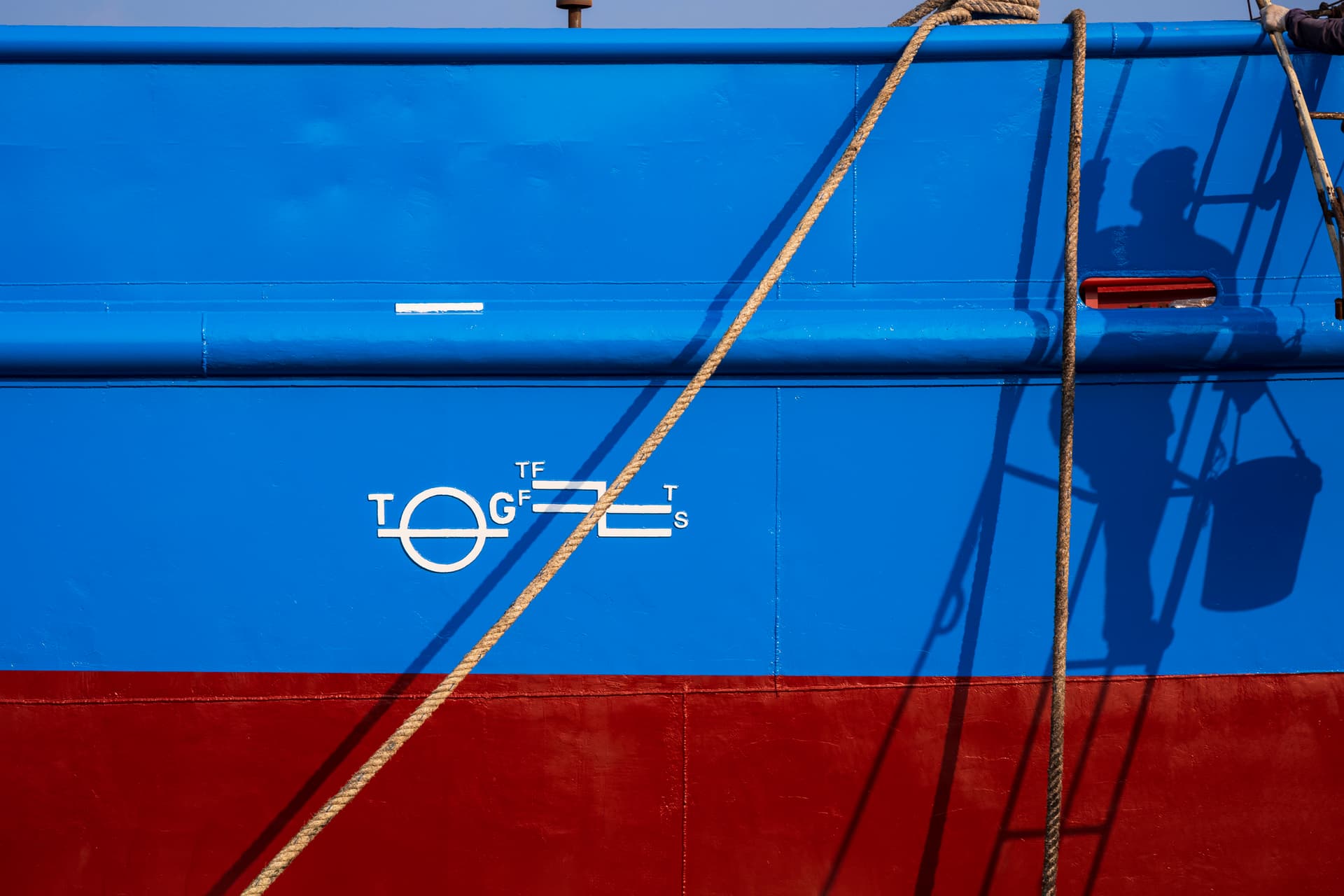
Complete load line markings on a vessel comprise three main elements: the deck line, the load line disc, and the adjacent horizontal line marks for different loading conditions. Together, they form a special marking positioned amidships on both the port and starboard sides.
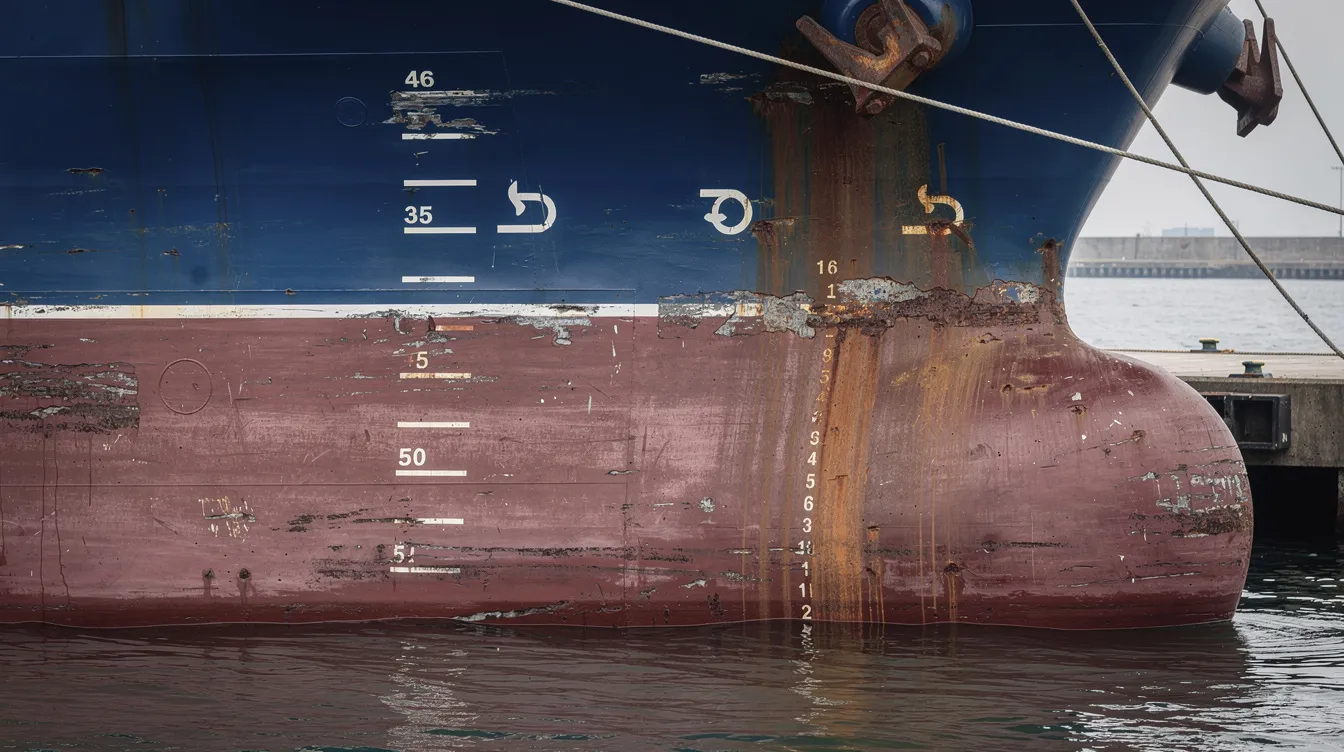
The deck line is a horizontal line 300 mm long and 25 mm high. Its upper edge passes through the point where the freeboard deck (typically the uppermost continuous deck) meets the shell plating. Surveyors use it as the reference datum from which freeboard is measured.
The load line disc-also called the Plimsoll disc or line disc-is a circular ring 300 mm in diameter with a 25 mm thick horizontal line through its centre. A vertical line 25 mm wide is placed 540 mm forward of the disc’s centre. The load line symbol often includes the initials of the assigning classification society (e.g., LR, BV, DNV) lettered above and below the disc.
From this vertical line extend the horizontal lines extending forward and aft, each 230 mm long and 25 mm wide. Standard load line markings include Summer (S), Tropical (T), and Winter (W), along with Winter North Atlantic (WNA), Fresh Water (F), and Tropical Fresh Water (TF). These markings must be permanently affixed-by welding, centre-punching, or durable paint in a contrasting colour to the hull so they remain legible throughout the certificate period.
Standard Load Line Marks and Their Meanings
The summer load line is the reference from which all other load lines are positioned. The summer freeboard line corresponds to the assigned summer freeboard recorded on the International Load Line Certificate, and the summer draft marked on the hull establishes the baseline for every seasonal calculation.
Load lines vary based on water density and geographical zones. Here is what each mark represents:
- Summer (S): The main reference. The summer mark defines the maximum depth a vessel may be immersed in salt water during the summer zone. The ship’s waterline equals this line at full summer load.
- Tropical (T): Positioned 1/48th of the summer draft above the summer line. The tropical load line permits slightly deeper loading in calmer tropical waters.
- Winter (W): Positioned 1/48th of the summer draft below the summer line. The winter load line reflects the need for greater freeboard in harsher winter conditions.
- Winter North Atlantic (WNA): The Winter North Atlantic load line is 50 mm below the Winter line. It applies to vessels under 100 m operating in the North Atlantic during winter-a region of particularly severe weather.
- Fresh Water (F): The fresh water load line sits above the summer line by the calculated fresh water allowance, compensating for the lower buoyancy of fresh water compared to salt water. The fresh water mark indicates the maximum draft when floating in fresh water under summer conditions.
- Tropical Fresh Water (TF): Positioned above the tropical line by the same fresh water allowance (fresh water T), for loading in tropical freshwater ports.
Seasonal loading limits account for weather severity and water density variations, and the “international load line” terminology refers to this standardised global system of marks under the Load Line Convention.
Timber and Special Load Line Markings
Ships carrying timber deck cargo that meet specific design and stowage criteria receive separate timber load line markings. These marks are prefixed with “L” for lumber: LS (Summer Timber), LT, LW, LWNA, LF, and LTF.
The summer timber load line allows deeper immersion than the standard summer mark because properly secured timber deck cargo contributes to reserve buoyancy and wave resistance. However, this concession applies only when timber stowage, securing, and loading conform strictly to the approved loading manual. The timber Winter load line is 1/36th below the Lumber Summer line, while the winter timber load line for the North Atlantic (LWNA) typically coincides with the standard WNA level to maintain safety margins. Freshwater load lines are marked higher due to lower density, and the same principle applies to timber freshwater marks (LF, LTF).
Other load lines exist for specialised purposes. Some passenger ships carry subdivision load line marks (P1, P2) that support safe alternative loading conditions under damage stability criteria, but these may never exceed the deepest standard salt water marks. Timber load lines and these other special marks are recorded alongside the standard marks on the vessel’s load line certificate.
International Load Line Convention and Certificate
The International Load Line Convention (ICLL 1966), in force since 21 July 1968 and updated by its 1988 Protocol, is the legal basis for assigning freeboard and load line markings worldwide. Load lines are regulated under the International Convention on Load Lines, and the convention requires minimum freeboard based on ship type, length, sheer, superstructures, and bow height.
The convention applies to most seagoing vessels of 24 m or more on international voyages. Exemptions include warships, fishing vessels, pleasure craft, and certain domestic voyages governed by national load line regulations.
An International Load Line Certificate records:
- Assigned freeboards for each seasonal and freshwater condition
- Exact location of the deck line and load line disc
- Details of all horizontal line marks and their vertical positions
- Fresh water allowance
- Freeboard deck definition and validity dates
Ships receive an International Load Line Certificate valid for five years. The certification cycle includes initial survey at construction, annual and intermediate surveys verifying markings and watertight integrity, and a renewal survey-usually conducted in dry dock. A load line certificate issued by a recognised classification society on behalf of the flag state is a core statutory document that must remain continuously in force.
Nautilus Shipping manages these statutory surveys on behalf of owners, coordinating with classification societies and flag administrations to keep the International Load Line Certificate valid at all times.
How to Read and Apply Load Line Markings in Practice
Understanding load line marks in practice means knowing that legal compliance is based on the midship draft corresponding to the relevant load line, not just forward or aft drafts. Load line marks are essential for regulatory inspections by port state control officers, and load line marks help ensure compliance with international safety regulations.
Officers should follow these steps:
- Take draft readings at forward, aft, and midship draft marks on both the port and starboard sides.
- Correct for trim to determine the true mean draft at midships.
- Visually confirm which seasonal or fresh water line the ship’s waterline is closest to, and verify the water line does not submerge the appropriate Plimsoll line for the current zone.
The current and upcoming load line zones-Tropical, Summer, Winter, or Winter North Atlantic-determine which line must remain visible above water at each leg of the voyage. A ship may never intentionally submerge the appropriate load line for the zone it is in or about to enter, even if departing from a less restrictive summer zone.
Masters and chief officers should carry official load line zone charts (e.g., NP 49) on the bridge and incorporate load line checks into cargo planning and pre-departure routines.
Fresh Water vs Sea Water: Density Corrections and FWA
Fresh water (approximately 1,000 kg/m³) is less dense than typical sea water (~1,025 kg/m³), so a vessel sinks deeper in fresh water for the same displacement. This is why the freshwater load line is positioned above the summer load waterline.
The fresh water allowance is the vertical distance between the summer salt water line and the fresh water mark. It is calculated using hydrostatic particulars at the assigned summer draft: FWA = Δ / (4 × TPC), expressed in millimetres, where Δ is displacement, and TPC is tonnes per centimetre immersion.
In practice, officers loading in rivers, estuaries, or ports with brackish water must:
- Measure dock water density using a hydrometer
- Calculate the Dock Water Allowance (DWA) proportionally: DWA = FWA × ((1.025 − ρ_DW) / 0.025)
- Apply the correction to determine permissible loading draft
The fresh water marks F and TF may be submerged only when the ship is actually floating in fresh water. Once the vessel enters salt water, it naturally rises towards the corresponding sea water mark, restoring the required minimum freeboard.
Nautilus Shipping’s technical management teams assist masters with density corrections and draft survey calculations, particularly for bulk carrier and tanker trades where small errors translate into large cargo discrepancies.
Operational Planning: Load Line Zones, Draft Limits and Voyage Safety
The world’s oceans are divided into load line zones-Tropical, Summer, Winter, and Winter North Atlantic-published by IMO and national hydrographic offices. These zones govern which line is applicable along a route and during which seasonal periods.
Commercial and technical teams should plan voyages by:
- Identifying all load line zones along the intended route and their seasonal periods
- Basing the maximum load on the most restrictive zone the vessel will transit (often Winter or WNA)
- Never “overloading now and correcting later”-this practice is both prohibited and unsafe
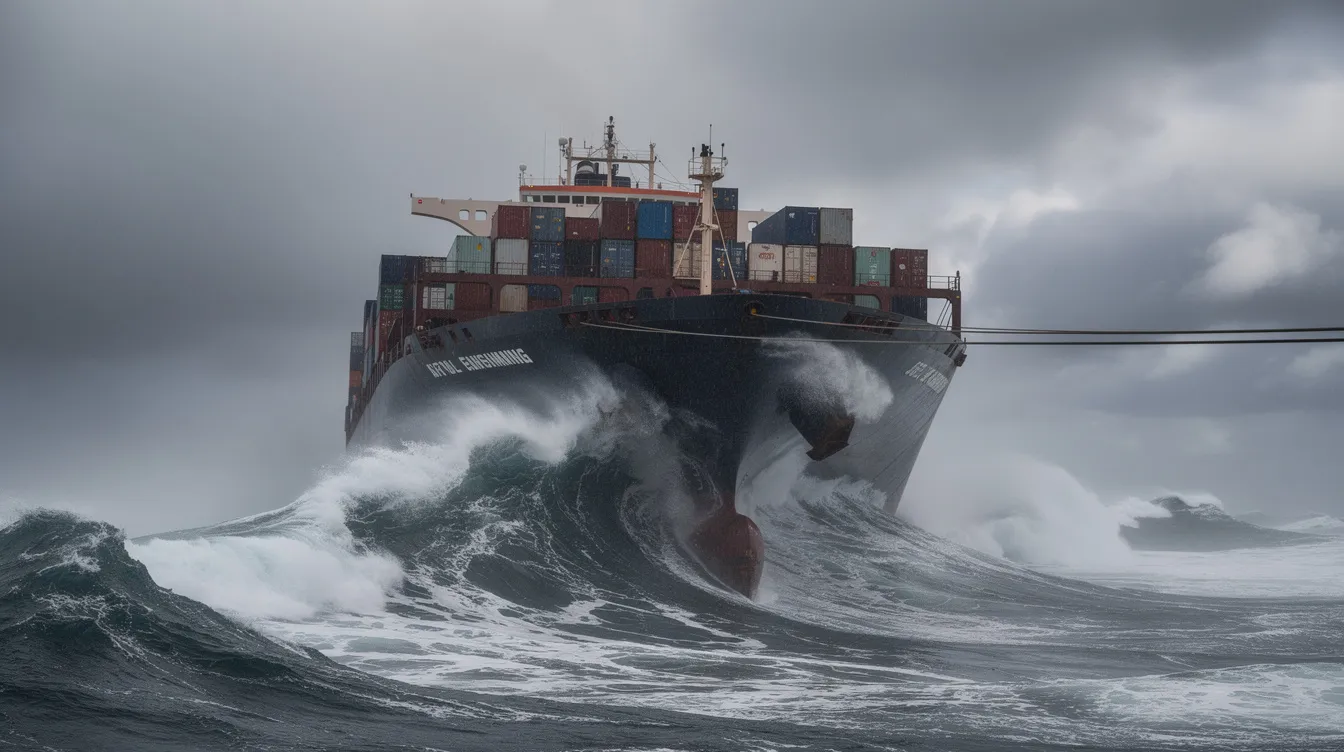
Maintaining reserve buoyancy helps vessels withstand heavy seas without capsizing, and overloading a vessel can reduce its stability and increase the risk of capsizing. The load line system addresses stability, hull stresses, and reserve buoyancy simultaneously, which is why load line compliance must be integrated with cargo intake calculations, bunker planning, and stability booklet limits.
Load line checks belong in port turnaround planning, final trimming, and pre-sailing checklists, with clear responsibilities assigned to the chief officer, master, and shore-based operations. Proper loading prevents excessive bending moments on the vessel’s hull-a concern especially relevant for long bulk carriers and large tankers.
Nautilus Shipping integrates load line considerations into cargo stowage planning, weather routing, and fleet efficiency management to balance safety, compliance, and commercial performance.
Surveys, Maintenance and Common Compliance Pitfalls
Load line marks are part of a broader watertight and weathertight integrity regime verified during statutory and class surveys. Load line regulations are enforced by port state control inspections, and deficiencies in this area remain a significant cause of detentions worldwide.
Typical survey checks related to load lines include:
- Condition and legibility of the deck line, load line disc, and all line markings on both sides
- Condition and closing arrangements of hatch covers, doors, air pipes, ventilators, and freeing ports that influence freeboard assignment
- Consistency of markings with the International Load Line Certificate drawings
Common problems that lead to deficiencies or detention:
- Faded or repainted marks at incorrect heights or dimensions
- Undocumented steel renewals affecting freeboard calculations
- Inoperative closing appliances (hatch covers, weathertight doors)
- Structural or equipment modifications made without class/flag approval
Ships violating load line regulations may face detention, and non-compliance can lead to fines by port state control authorities. In severe or repeated cases, load line violations can result in withdrawal of Class by authorities. According to the USCG 2024 PSC Annual Report, load line deficiencies accounted for approximately 1.33% of all detentions. In Australia’s 2023 inspection data, general cargo and multi-purpose vessels had detention rates exceeding 11%, with load line defects among the frequent detainable deficiency categories.
Any structural or equipment change affecting freeboard or watertight integrity must be submitted to the classification society and flag administration for approval and may require re-survey and re-issuance of the load line certificate.
Nautilus Shipping’s vessel inspection services include pre-PSC inspections and internal audits focused on load line integrity and related statutory items.
Nautilus Shipping’s Role in Load Line Compliance and Fleet Management
Nautilus Shipping is a B2B ship-management and maritime services provider focused on safety, regulatory compliance, and operational performance. For owners of bulk carriers, tankers, container ships, and general cargo vessels, load line compliance is a daily operational discipline-not a one-time survey exercise.
Nautilus integrates load line requirements into:
- Technical management: Structural repairs, freeboard deck integrity, main deck and hatch cover maintenance, and ensuring the load line makes sense against the vessel’s current condition.
- Crew management: Training officers and crew to interpret load line markings, conduct draft readings on both the port and starboard sides, and apply density corrections accurately through structured crew training programmes.
- Commercial ship services: Cargo intake calculations, voyage planning against load line zones, and ensuring sufficient freeboard is maintained at every stage of the voyage.
Practical tools include standardised pre-departure checklists with load line checks, digital documentation of International Load Line Certificates, and regular internal vessel inspections. The result for shipowners: reduced PSC detentions, fewer class findings, optimised deadweight utilisation within the legal limit, and an improved safety culture on board.
If you are looking to strengthen load line compliance across your fleet, engage Nautilus Shipping for a comprehensive review of your current practices.
FAQ: Load Line Marks on Ships
These FAQs address practical questions that masters, officers, and owners frequently raise regarding load line marks, certificates, and daily operations.
How is the position of the load line disc and deck line determined on a new ship?
During design and construction, naval architects calculate the minimum freeboard using ICLL 1966 rules, factoring in vessel length, sheer, superstructures, bow height, and hull form. The classification society and flag administration approve these calculations and specify the exact vertical distance from the freeboard deck (deck line) to the summer load line. The load line disc is then positioned with its centre at the assigned summer freeboard below the deck line, per approved drawings. Surveyors verify as-built dimensions before the International Load Line Certificate is issued, confirming that markings match the approved freeboard plan.
What happens if load line marks are accidentally painted over or become illegible?
Obscured or inaccurate load line markings are a detainable deficiency during PSC or class surveys because they prevent verification of legal draft limits. The crew should report the issue immediately to the company and arrange for marks to be repainted precisely to approved dimensions and positions-ideally under surveyor supervision. Nautilus Shipping can coordinate rapid attendance by class or flag representatives and provide correct drawings so marks are restored accurately before departure.
Can a ship ever legally exceed its summer load line if stability calculations show it is safe?
No. Exceeding the assigned summer load line or any applicable seasonal load line is not permitted regardless of internal stability calculations. The assigned freeboard reflects not just stability but structural strength, reserve buoyancy, and standardised safety margins under the International Load Line Convention. Any desire to change the load line assignment-for example, after major structural modifications-must go through a full re-assessment and re-certification by the classification society and flag state, not ad hoc operational decisions.
How do draft surveys relate to load line compliance?
Draft surveys use observed drafts at forward, amidship, and aft marks plus hydrostatic data and water density to calculate displacement and cargo quantity. While the survey focuses on cargo weight, it simultaneously confirms that the mean draft does not exceed the relevant load line and that required freeboard is maintained. Nautilus Shipping supports owners with accurate draft survey procedures and independent verification to protect both commercial and regulatory interests.
Do coastal or domestic voyages always follow International Load Line Convention rules?
Ships on purely domestic voyages may be subject to national load line regulations instead of, or in addition to, ICLL 1966, depending on the flag state. Many administrations align their domestic rules closely with the convention, but some smaller vessels or special trades may have modified requirements or exemptions. Owners should confirm which load line regime applies to each vessel and trade by consulting their flag administration or Nautilus Shipping to ensure certificates and markings match the operational profile.